Explore what’s Inside the B-2 Stealth Bombers That Struck Iran’s Nuclear Sites. In a dramatic show of power and precision, the United States deployed its elite fleet of B-2 stealth bombers for a 37-hour round-trip mission from Missouri to Iran, targeting three of Iran’s most critical nuclear sites. The $2 billion aircraft, equipped with microwaves, restrooms, mini-fridges, and sleeping space, led one of the longest bombing raids since the 9/11 retaliation strikes.
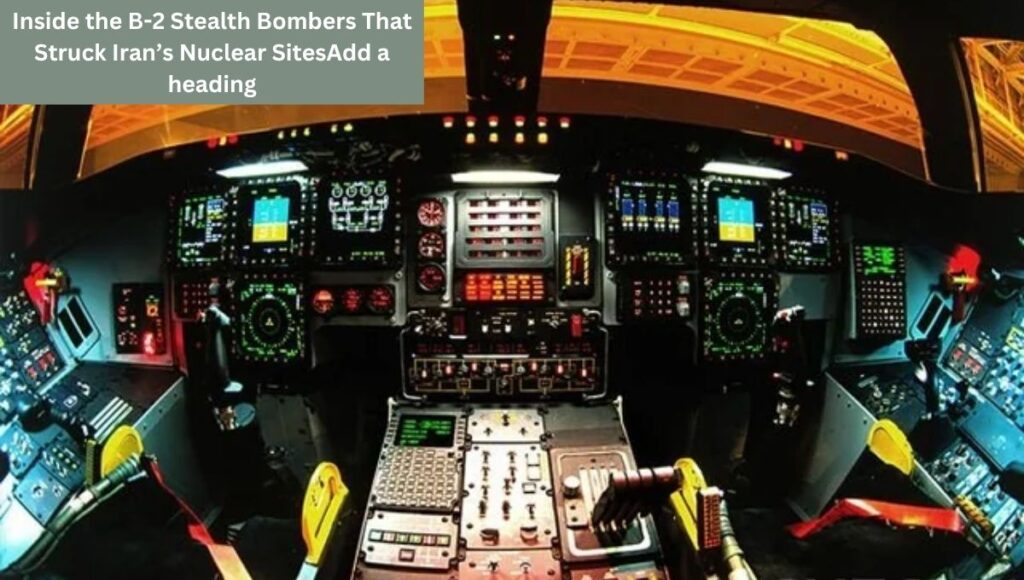
Inside the B-2 Stealth Bombers That Struck Iran’s Nuclear Sites
Operation “Midnight Hammer”: A Precision Strike
The mission, dubbed Operation Midnight Hammer, began on June 20 when seven B-2 Spirit bombers took off from Whiteman Air Force Base in Missouri.
The goal: neutralize Iran’s nuclear capabilities by hitting key sites at Fordow, Natanz, and Isfahan.
At 6:40 PM ET on June 21, the lead B-2 dropped two GBU-57 Massive Ordnance Penetrators, 30,000-pound “bunker buster” bombs, on fortified Iranian targets.
Over the course of a 25-minute attack, the bombers delivered 14 bunker-busters in total. This marked the first-ever combat use of the GBU-57.
High-Tech Bombers with Human-Centric Design
While designed for stealth and deadly precision, the B-2 bombers also showcase surprising onboard comforts.
These long-range aircraft, originally built to deliver nuclear payloads to the Soviet Union, include microwaves, chemical toilets, mini-refrigerators, and rest areas.
This ergonomic design helps the two-man crew endure grueling missions like the 37-hour journey to Iran and back. One pilot can fly while the other sleeps on a cot in a dedicated space within the cockpit.
According to retired Lt. Gen. Steve Basham, former B-2 pilot and Deputy Commander of U.S. European Command, pilots receive nutritional and sleep education before missions.
Foods like turkey sandwiches on wheat (no cheese) are preferred to avoid digestive issues, as each aircraft has only a chemical toilet.
A Feat of Engineering and Strategy
The B-2 Spirit boasts a 172-foot wingspan, stealth profile, and fly-by-wire system, allowing it to evade radar and infrared detection.
It flies approximately 6,000 nautical miles without refueling, though this mission required multiple mid-air refuelings a difficult task made harder by fatigue and limited visibility.
Unlike older bombers such as the B-1B and B-52, the B-2 only requires two pilots, relying heavily on automation and sophisticated avionics to execute missions.
As fatigue sets in, coordination becomes more challenging, especially during aerial refueling done nearly blind at night.
Flying Under the Radar Literally
To maintain operational secrecy, the mission was conducted under near-total radio silence. A decoy group of aircraft even flew westward to divert attention, while the real bombers headed east toward Iran.
As the B-2s approached Iranian airspace, they linked up with fighter escorts and support aircraft in an exacting formation, guided by precise synchronization and minimal communication.
Before the B-2s struck, a U.S. submarine launched more than two dozen Tomahawk cruise missiles to destroy air defenses and clear the path.
This multi-layered offensive demonstrates America’s unmatched military coordination and strike capability.
Built for Nuclear Warfare, Used for Modern Threats
First introduced in 1997, the B-2 bomber remains one of the most advanced aircraft in the world. Of the 21 originally built, only 19 are operational today after a 2008 crash.
Each costs over $2 billion, and the operating cost per hour is about $65,000. Despite its age, the B-2 remains at the cutting edge of strategic bombing, thanks to regular software and avionics upgrades.
However, it will eventually be replaced by the B-21 Raider, a new-generation stealth bomber currently in development.
The Longest Mission Since 9/11
The Fordow bombing marks the longest B-2 mission since strikes on Afghanistan in 2001. In those early post-9/11 operations, B-2s flew similar ultra-long sorties, showcasing America’s ability to strike anywhere on the planet without needing to base forces abroad.
The 37-hour non-stop round-trip not only tested the pilots’ endurance but also highlighted the military’s capacity for global reach and technological superiority.
“There is not another military in the world that could have done this,” said President Donald Trump, hailing the mission as a “spectacular military success.”
Preparing for the Human Factor
Flying a B-2 bomber isn’t just about avionics and weaponry it’s about human resilience. Pilots undergo sleep studies, learn about circadian rhythms, and receive custom dietary advice to prepare for the mission.
“We are trained to know what wakes us up and what helps us sleep,” said Basham.Sunflower seeds, bland snacks, and hydration strategies are used to keep pilot’s alert.
Every detail down to food selection impacts alertness, digestion, and stress management, all vital for ensuring mission success under extreme conditions.
Future of the B-2 and Strategic Bombing
As the B-2 approaches three decades of service, it continues to dominate the skies through missions like Operation Midnight Hammer. Its successful deployment over Iran proves its continued relevance in modern warfare, especially in nuclear deterrence and precision strike operations.
The B-2’s successor, the B-21 Raider, promises more stealth, automation, and survivability. Yet, until that transition is complete, the Spirit will remain the pinnacle of U.S. strategic air power a flying fortress of stealth, strength, and surprising comfort.
Also Read: How B-2 Bomber Secrets Were Sold to China: The Spy Story of Noshir Gowadia
Also Read: What are B-2 Stealth Bombers and why US used it to target nuclear sites in Iran | Explained
Related Posts:
- 3 Explosive Conditions Iran Sets to End War with US…

- 11 Explosive Warnings as Trump Vows to ‘Knock the…

- 10 Explosive Warnings as Donald Trump Calls Iran…

- 7 Powerful Facts About Ayatollah Ali Khamenei’s…

- 7 Explosive Impacts of Trump’s 25% Iran Tariff on…

- 9 Explosive Claims as Trump Says US Winning Iran War