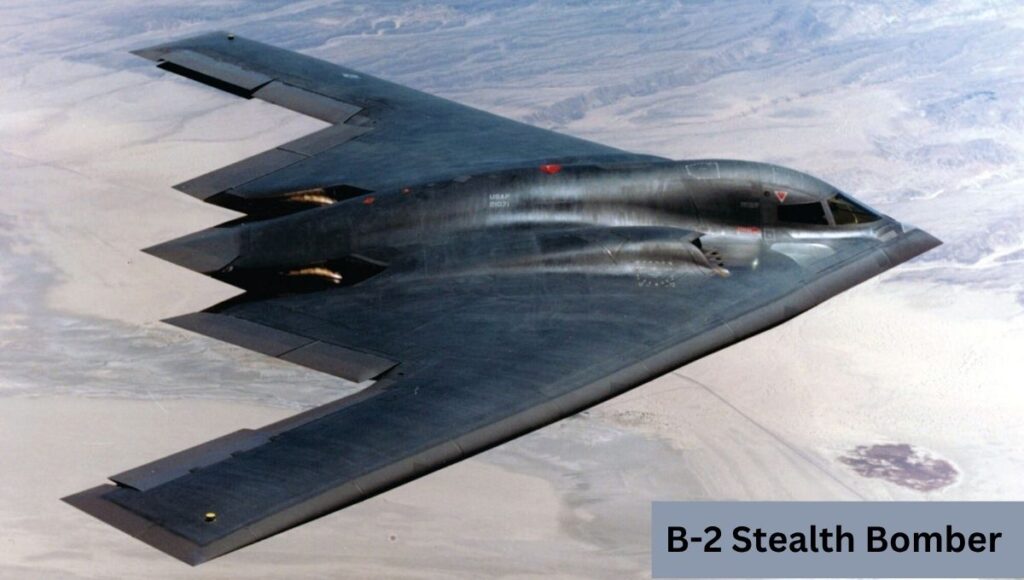
B-2 Spirit Stealth Bomber is so hard to catch, but What If the B-2 Stealth Bomber Was Caught? How the US Planned for That Moment. On June 21, the B-2 Spirit stealth bombers of the U.S. Air Force carried out a daring, high-stakes 37-hour mission to strike deeply buried Iranian nuclear sites at Fordow, Natanz, and Isfahan.
The mission, part of Operation Midnight Hammer, involved dropping a record number of GBU-57 bunker buster bombs, marking the first combat use of this enormous ordnance. While the mission was a success, many are asking: what if the B-2 bombers had been detected mid-air? Could the stealth aircraft defend itself in contested enemy airspace? Let’s dive into what makes the B-2 Spirit so hard to catch and what happens if it is.
What If the B-2 Stealth Bomber Was Caught? How the US Planned for That Moment
Why the B-2 Bombers Grabbed Global Attention
The B-2 Spirit isn’t new it first flew in 1989 but it’s still one of the most secretive and capable aircraft in the U.S. arsenal.
Designed to penetrate heavily defended airspace and deliver conventional or nuclear bombs, it remains unmatched for long-range stealth missions.
This recent mission to Iran brought renewed attention to the aircraft. The U.S. deployed seven B-2 bombers to drop Massive Ordnance Penetrators (MOPs) 13.5-ton bombs designed to destroy fortified underground bunkers.
Following the attack, Iran’s parliament, the Majlis, voted to close the Strait of Hormuz, escalating tensions and underscoring the mission’s geopolitical impact.
What If the B-2 Had Been Detected Mid-Mission?
Despite its stealth capabilities, no aircraft is invisible. If detected by enemy radar, the B-2 bomber can quickly shift into defensive mode. Here’s how:
1. Advanced Warning Systems
The B-2 is equipped with Radar Warning Receivers (RWRs) and missile approach sensors, which alert the crew the moment they’re scanned or targeted. These sensors detect radar emissions or missile lock-ons, giving pilots a critical early warning.
2. Defensive Management System (DMS)
Once a threat is identified, the Defensive Management System automatically analyzes it and suggests evasive action. The upgraded DMS-M variant enhances radar and threat identification, helping pilots avoid dangerous zones.
3. Electronic Countermeasures (ECM)
The B-2 employs internal electronic jammers to disrupt enemy radar. These systems emit noise or false signals to confuse surface-to-air missile (SAM) systems. The bomber can also work with EA-18G Growlers using the Next Generation Jammer to suppress advanced radar threats.
4. Chaff, Flares, and Decoys
If an incoming missile is detected, the bomber can deploy chaff small radar-reflective strips and infrared flares to mislead radar-guided and heat-seeking missiles. While the B-2’s full decoy systems are classified, this form of electronic and physical defense is standard protocol.
How Stealth Features Help It Stay Undetected
The B-2 is hard to detect in the first place. Its low radar cross-section, radar-absorbent material, curved design, and S-shaped engine inlets all contribute to its stealth.
Even if it is detected, pilots can alter their route or descend to lower altitudes using terrain-following radar to hide from detection. This mix of stealth and agility gives the B-2 incredible survivability in enemy territory.
Bunker Buster Bombs: The GBU-57 MOP
At the heart of this mission were bunker buster bombs specifically, the GBU-57 Massive Ordnance Penetrator (MOP). These are the largest non-nuclear bombs in the U.S. arsenal, weighing approximately 13.5 tonnes (30,000 lbs).
What Makes the MOP Special?
- Designed to destroy fortified underground facilities
- Can penetrate up to 60 meters underground
- Used only by B-2 stealth bombers, which can carry two at a time
- Likely fewer than 20 units exist due to their cost and complexity
Iran’s nuclear facilities like Fordow are buried under layers of reinforced concrete and rock, making them nearly invulnerable to traditional bombs. The MOP was the only viable option short of using nuclear weapons.
Why Only the U.S. Can Use the MOP
The MOP is not just large it’s massive. It requires a specialized aircraft like the B-2 Spirit to carry and release it accurately.
While ideas have circulated about adapting cargo planes like the C-130 Hercules to deploy MOPs, such concepts remain theoretical.
This gives the U.S. a unique capability to target deeply buried enemy infrastructure that even close allies like Israel currently lack.
What Comes Next for Iran and the Region?
The U.S. has reportedly told Iran through backchannels that this was a limited strike, not a broader campaign for regime change. But Iran’s reaction is still uncertain.
- It may retaliate against U.S. bases or allies like Israel
- It could disrupt global oil flows by closing the Strait of Hormuz
- Or, it may double down on its nuclear ambitions
The attack may paradoxically push Iran closer to developing a nuclear weapon, seeing that lack of nuclear deterrence left it vulnerable. North Korea’s relative immunity to strikes is a case in point.
Conclusion: The B-2’s Role in a New Era of Warfare
The B-2 Spirit’s role in the Iran strike highlights its continued relevance in modern combat. With unmatched stealth, long-range strike capability, and advanced defenses, the bomber remains America’s ace in the sky.
But the mission also underscores a dangerous truth: when conventional power hits underground targets, only the biggest bombs and most advanced aircraft can get the job done. And only the United States has that combination right now.
Also Read: US B-2 Bombers Strike Iran’s Nuclear Sites: Why Fordow, Natanz, and Esfahan Were Targeted