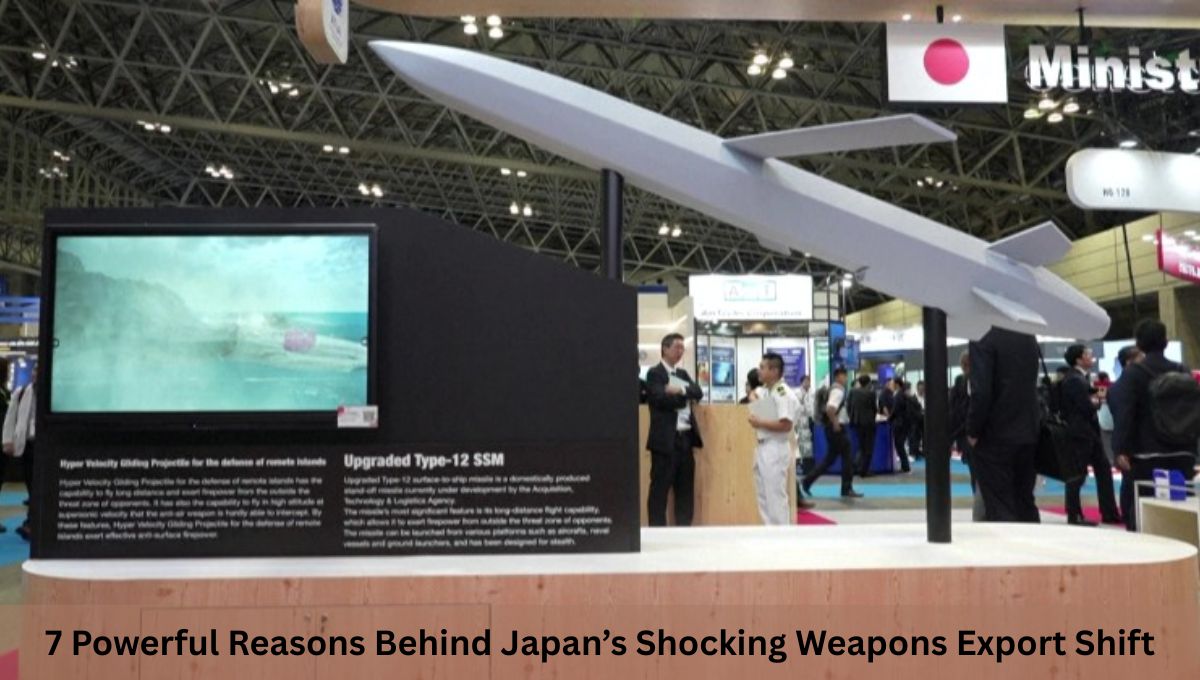
7 Powerful Reasons Behind Japan’s Shocking Weapons Export Shift from Its pacifist past. Japan has taken a decisive step that could reshape global security dynamics. In a landmark move, the government led by Sanae Takaichi has lifted a decades-old ban on exporting lethal weapons—marking one of the most significant departures from its post-war pacifist doctrine.
Thank you for reading this post, don't forget to subscribe!For a country that built its identity on peace after World War II, this shift signals a profound transformation—not just in policy, but in how Japan sees its role in an increasingly volatile world.
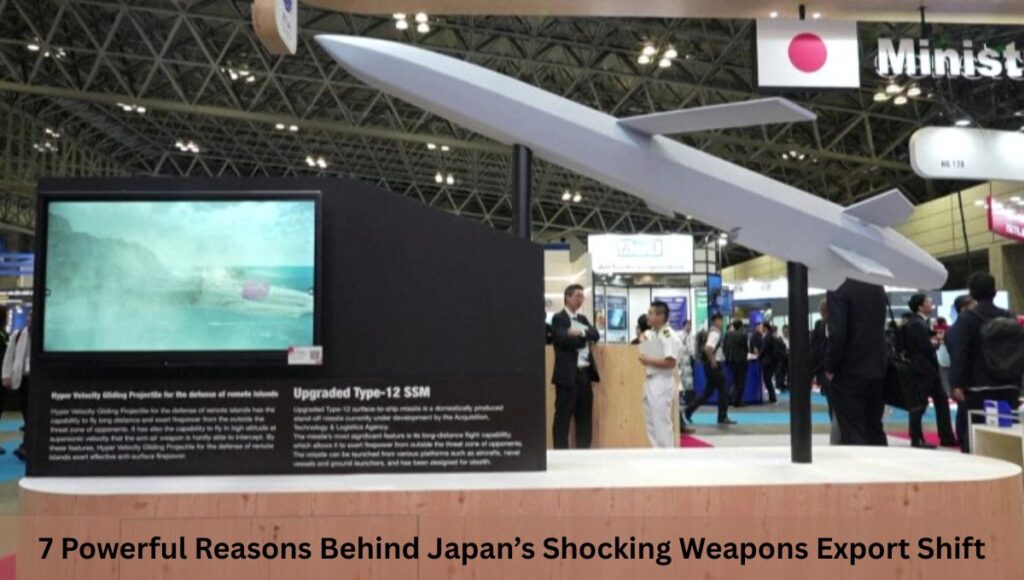
7 Powerful Reasons Behind Japan’s Shocking Weapons Export Shift
A Turning Point in Japan’s Post-War Identity
Since 1947, Japan’s security framework has been guided by Article 9—a clause that renounces war and prohibits maintaining offensive military forces.
For decades, this principle translated into:
- Strict limits on military activity
- A near-total ban on arms exports
- Heavy reliance on the United States for security
Now, that paradigm is changing. The new policy allows Japan to export lethal military equipment—including missiles, warships, and potentially fighter jets—under strict government oversight.
Takaichi framed the move as a necessity rather than a departure from peace:
“No single country can protect its own security alone in today’s environment.”
Why Japan Made This Bold Move
1. Rising Regional Threats
Japan faces mounting pressure from:
- China’s growing military presence in the Indo-Pacific
- North Korea’s missile and nuclear programs
Tensions around Taiwan and the East China Sea have intensified strategic concerns.
2. Global Conflicts Reshaping Security Thinking
Wars such as:
- Russia-Ukraine War
- Ongoing instability in the Middle East
have exposed the importance of sustained military supply chains and allied cooperation. Japan now aims to actively contribute rather than remain a passive supporter.
3. Strain on US Security Guarantees
Japan has long depended on the U.S. security umbrella. But shifting geopolitical priorities and resource constraints have raised questions about long-term reliability.
This policy allows Japan to:
- Share defense responsibilities
- Strengthen alliances
- Reduce overdependence
4. Strengthening the Defence Industry
Japan’s defense sector has historically struggled due to limited domestic demand.
Opening exports:
- Expands market access
- Lowers production costs
- Boosts innovation and competitiveness
Companies like Mitsubishi Heavy Industries are expected to benefit significantly.
5. Growing Demand from Allies
Countries across Asia, Europe, and the Pacific are actively seeking alternatives to U.S. arms suppliers.
Potential buyers include:
- Australia
- Philippines
- Poland
- Germany
Japan’s reputation for high-quality technology makes it a strong contender.
6. Strategic Indo-Pacific Positioning
Japan is increasingly positioning itself as a central player in Indo-Pacific security frameworks like the Quad (with India, the U.S., and Australia).
This shift strengthens:
- Regional deterrence
- Military interoperability
- Strategic partnerships
7. Evolution, Not Abandonment, of Pacifism
Despite the shift, Japan insists it remains committed to peace.
The government will:
- Screen all exports strictly
- Restrict sales to approved partner nations
- Avoid supplying active conflict zones (in principle)
What Exactly Has Changed?
Previously, Japan’s export rules limited military sales to five categories:
- Rescue
- Transport
- Surveillance
- Warning systems
- Minesweeping
Now:
- These restrictions are removed
- Lethal systems are allowed
- Decisions are made case-by-case
However, safeguards remain:
- Exports must align with national security interests
- Recipients must comply with international law
- Monitoring mechanisms will be enforced
Global Reactions: Support and Concern
Support from Allies
Countries like:
- Australia
- United States
- Germany
- Philippines
have welcomed the move.
They see it as:
- Strengthening collective defense
- Diversifying global supply chains
- Enhancing regional stability
Strong Opposition from China
China has expressed serious concern, warning of:
- “Reckless militarization”
- Rising regional tensions
This reflects deeper geopolitical rivalry, especially over Taiwan and maritime dominance.
Domestic Opposition in Japan
Not everyone at home supports the change.
Protesters have:
- Defended Article 9
- Warned against militarization
- Raised concerns about global conflict escalation
Slogans like “No War” highlight public anxiety.
Japan’s Expanding Military Capabilities
Japan has been quietly modernizing its military:
Key Developments:
- Defense spending increased to ~2% of GDP
- Acquisition of long-range missiles
- Development of stealth aircraft and drones
- Joint fighter jet program with the UK and Italy
Advanced Platforms:
- Soryu and Taigei submarines
- Mogami-class frigates
- Izumo-class helicopter carriers
These systems position Japan among the most technologically advanced defense producers.
What This Means for India
India stands to benefit significantly.
Strategic Opportunities:
- Expanded defense cooperation
- Co-development of military technology
- Access to advanced Japanese systems
India and Japan already collaborate under:
- Quad framework
- Bilateral defense agreements
- Technology-sharing initiatives
Potential areas:
- Jet engine development
- Naval systems
- Advanced radar technologies
Economic Implications
The move transforms Japan into a potential major arms exporter.
Benefits:
- Increased industrial output
- Job creation
- Technology innovation
- Stronger global competitiveness
It also integrates Japan into global defense supply chains, which are currently under strain.
Risks and Challenges
Despite advantages, risks remain:
1. Escalation of Global Tensions
More arms in circulation could fuel conflicts.
2. Diplomatic Fallout
Relations with China and neighboring countries may worsen.
3. Ethical Concerns
Balancing profit with peace will be critical.
4. Policy Implementation
Strict oversight will be needed to prevent misuse.
A Historic Shift with Global Impact
Japan’s decision to lift its ban on lethal weapons exports is more than a policy change—it’s a strategic pivot.
It reflects:
- A changing world order
- Increasing geopolitical competition
- The need for shared security responsibility
While Japan insists it remains a peace-loving nation, its actions signal a more assertive role on the global stage.
Conclusion
Japan is redefining itself—from a pacifist state shaped by post-war trauma to a proactive security player navigating modern geopolitical realities.
The implications will be far-reaching:
- For Asia’s power balance
- For global defense markets
- For alliances like the Quad
Whether this shift enhances stability or fuels new tensions will depend on how responsibly it is executed.
One thing is clear:
Japan is no longer standing on the sidelines.
Also Read: 7 Shocking Revelations on China’s Alleged Weapons Plan for Iran Amid Fragile Ceasefire
Also Read: “Peace-loving nation”: Japan eases arms export curbs to allow global weapon sales
Related Posts:
- Sanae Takaichi Becomes Japan’s First Female Prime…

- Japan 2025: Conservative Powerhouse Sanae Takaichi…

- 12 Explosive Shifts as Japan’s Iron Lady Takaichi…

- 7 Explosive Reasons Japan’s Winter Election Could…

- 7 Alarming Signals in the China–Japan Clash Over PM…
- 7 Explosive Ways Donald Trump Pressures Japan Over…