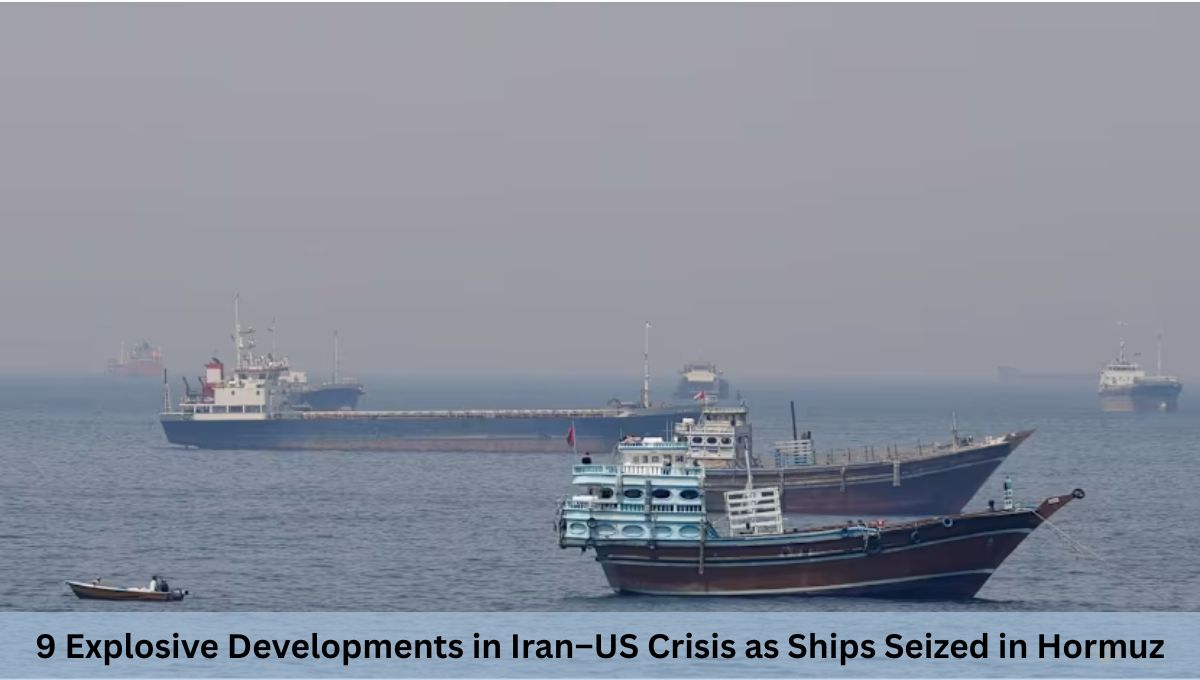
9 Explosive Developments in Iran–US Crisis as Ships Seized in Hormuz despite fragile ceasefire. The ongoing geopolitical confrontation between Iran and the United States has entered a volatile new phase, with Tehran seizing multiple commercial vessels in the strategically critical Strait of Hormuz.
The escalation comes at a delicate moment—just as Washington announced an indefinite extension of a fragile ceasefire—highlighting the widening gap between diplomatic rhetoric and on-ground realities.
This development has sent shockwaves across global markets, disrupted maritime trade, and raised serious concerns about the future of energy security.
As tensions escalate, the Strait of Hormuz—already one of the world’s most sensitive chokepoints—has once again become the focal point of international attention.
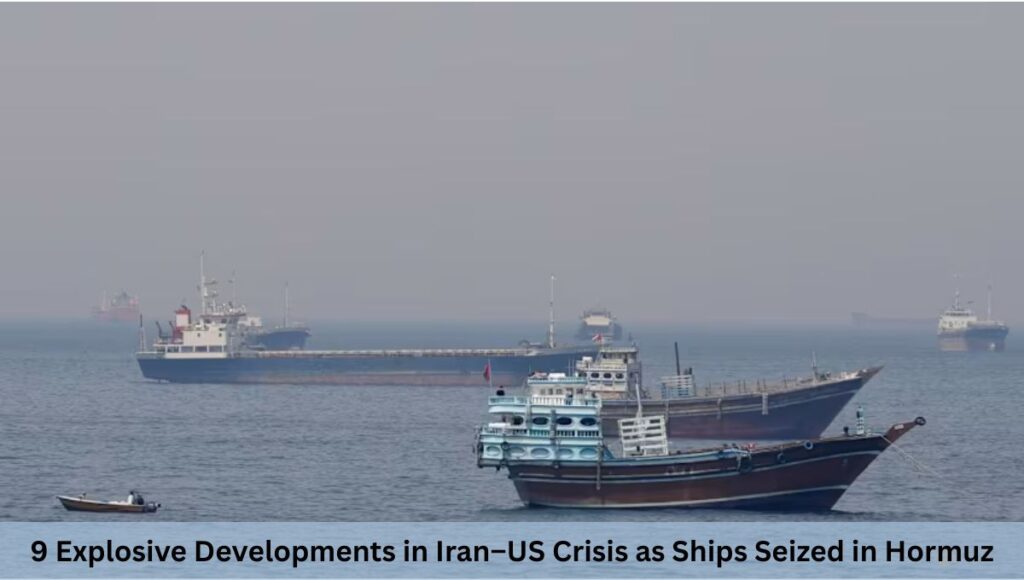
9 Explosive Developments in Iran–US Crisis as Ships Seized in Hormuz
A Strategic Waterway Under Pressure
The Strait of Hormuz is not just another maritime route—it is the lifeline of global energy supply.
Roughly 20% of the world’s oil and a significant portion of liquefied natural gas pass through this narrow corridor connecting the Persian Gulf to international waters.
Before the outbreak of hostilities earlier this year, approximately 130 vessels transited the strait daily.
That number has now dropped dramatically, with only a handful of ships attempting the journey amid rising risks.
Iran’s recent actions have effectively tightened its grip over the waterway.
By seizing vessels and targeting others, Tehran is signaling its willingness to assert control over maritime traffic—transforming the strait into a geopolitical leverage point.
What Triggered the Latest Escalation?
The immediate trigger for the crisis appears to be a combination of military, economic, and diplomatic tensions.
1. US Ceasefire Extension Without Consensus
The United States announced an indefinite extension of the ceasefire, citing the need for Iran to present a unified proposal for peace talks.
However, Iranian officials did not acknowledge or accept this extension, creating ambiguity over the truce’s legitimacy.
Washington has maintained a naval blockade on Iranian ports, aimed at restricting Tehran’s oil exports and economic activity.
Iran considers this blockade an act of war, undermining any prospects for genuine negotiations.
3. Tit-for-Tat Maritime Actions
Reports indicate that US forces recently intercepted Iranian vessels in regional waters.
Iran’s seizure of foreign ships appears to be a retaliatory move, reinforcing its stance against perceived aggression.
Details of the Ship Seizures
Iran’s Islamic Revolutionary Guard Corps (IRGC) confirmed that it had seized two commercial vessels in the Strait of Hormuz, citing “maritime violations.”
Key Incidents:
- Two container ships were detained and escorted to Iranian shores
- A third vessel was reportedly fired upon but managed to continue sailing
- One ship sustained significant damage to its bridge after being targeted
Iran claims the vessels:
- Operated without proper authorization
- Tampered with navigation systems
- Ignored warnings from Iranian forces
Shipping companies and maritime agencies have confirmed parts of these incidents, though independent verification remains limited.
Iran’s Strategic Messaging
Iran’s actions are not merely tactical—they are deeply strategic.
Assertion of Sovereignty
Tehran is emphasizing its authority over the Strait of Hormuz, insisting that all vessels must coordinate passage with its forces.
Economic Leverage
By restricting access, Iran can influence global oil prices and pressure international stakeholders to reconsider sanctions and blockades.
Negotiation Tactic
Control over the strait provides Iran with a powerful bargaining chip in future diplomatic talks.
Iranian officials have made it clear:
a full ceasefire is contingent upon lifting the US naval blockade.
The US Position and Response
The United States has taken a cautious yet firm stance.
Ceasefire Extension
Washington has framed the extension as a diplomatic opportunity, allowing time for negotiations to resume.
Blockade Continuation
Despite calls for de-escalation, the US has maintained its naval blockade, signaling that economic pressure will remain a core strategy.
Characterization of Iran’s Actions
US officials have labeled the ship seizures as “piracy,” arguing that they violate international norms—even if they do not directly breach the ceasefire.
Global Oil Markets React
One of the most immediate impacts of the crisis has been felt in energy markets.
Rising Oil Prices
- Brent crude surged past $100 per barrel
- Prices have climbed significantly since the conflict began
Supply Chain Disruptions
- Reduced shipping through the strait has constrained supply
- Major economies are tapping into reserves
- Energy costs are rising globally
Market Uncertainty
The lack of clarity around the ceasefire and ongoing hostilities has created a volatile environment for investors and policymakers alike.
Impact on Global Trade and Shipping
The Strait of Hormuz is a critical artery for international trade—not just oil.
Shipping Risks Increase
- Insurance premiums for vessels have surged
- Shipping companies are rerouting or delaying shipments
Reduced Traffic
Daily vessel movement has dropped sharply, affecting supply chains across industries.
Maritime Security Concerns
The escalation has raised questions about the safety of international waters and the enforcement of maritime law.
India and Regional Implications
The crisis has particular significance for countries like India, which rely heavily on energy imports through the Strait of Hormuz.
Direct Impact
- A vessel bound for India was among those seized
- Previous incidents involved attacks on India-linked ships
Diplomatic Tensions
India has expressed concern and engaged diplomatically with Iran to ensure the safety of its maritime interests.
Energy Security Risks
Any prolonged disruption could affect fuel prices and economic stability in energy-dependent nations.
The Role of Pakistan in Mediation
Pakistan has emerged as a key intermediary in the crisis.
Mediation Efforts
- Facilitated initial rounds of talks between Iran and the US
- Attempted to bring both sides back to the negotiating table
Challenges
- Talks have stalled due to deep differences
- Both sides have failed to attend scheduled meetings
Outlook
While Pakistan’s role remains crucial, the path to meaningful dialogue is uncertain.
Core Disputes Blocking Peace
Several fundamental issues continue to hinder progress:
Nuclear Program
The US demands that Iran halt uranium enrichment, while Iran insists its program is peaceful.
Sanctions and Reparations
Iran seeks the lifting of sanctions and compensation for damages caused by the conflict.
Control of the Strait
Iran wants recognition of its authority over the Strait of Hormuz.
Regional Conflicts
Iran has linked ceasefire discussions to broader regional dynamics, including conflicts involving allied groups.
Human and Regional Cost of the Conflict
Beyond geopolitics, the war has had a devastating human impact.
Casualties
- Thousands killed across the Middle East
- Significant losses in Iran and neighboring regions
Infrastructure Damage
- Critical facilities targeted
- Economic activity severely disrupted
Humanitarian Concerns
International organizations have warned about potential violations of humanitarian law, particularly regarding threats to civilian infrastructure.
Mixed Signals from Tehran
Iran’s messaging has been inconsistent, reflecting internal divisions.
Hardline Position
Military leadership emphasizes resistance and control over strategic assets.
Diplomatic Signals
Some officials suggest openness to negotiations under the right conditions.
Strategic Ambiguity
This dual approach allows Iran to maintain leverage while keeping options open.
A Fragile Ceasefire with No Clear Future
The current ceasefire is marked by uncertainty.
No Defined Timeline
The US has not set a deadline for negotiations, creating an open-ended situation.
Lack of Mutual Agreement
Iran has not formally accepted the extension, undermining its credibility.
Continued Hostilities
Ongoing maritime incidents indicate that tensions remain high despite the ceasefire.
What Happens Next?
Several scenarios could unfold:
1. Renewed Negotiations
Diplomatic efforts could resume, leading to a temporary easing of tensions.
2. Escalation
Further military actions could trigger a broader regional conflict.
3. Prolonged Stalemate
The current situation—marked by sporadic incidents and limited engagement—could persist.
Global Implications
The crisis extends far beyond the Middle East.
Economic Impact
- Rising energy costs
- Inflationary pressures worldwide
Geopolitical Shifts
- Changing alliances
- Increased role of regional mediators
Security Concerns
- Threats to international shipping
- Potential for wider conflict
Conclusion
The seizure of ships in the Strait of Hormuz marks a critical escalation in the Iran–US conflict, underscoring the fragile nature of the current ceasefire and the deep-rooted issues that continue to divide the two sides.
With global energy markets on edge, trade routes disrupted, and diplomatic efforts faltering, the situation remains highly volatile.
The Strait of Hormuz, once a symbol of global connectivity, has become a flashpoint of geopolitical tension—one that could shape the future of international relations and economic stability.
For now, the world watches closely as events unfold, aware that even a small miscalculation in this high-stakes environment could have far-reaching consequences.
Also Read: 7 Explosive Claims on Seized Iran Ship: China Link Sparks Global Alarm
Also Read: ‘Impossible’ to reopen strait of Hormuz amid ‘flagrant’ ceasefire breaches, Iran says
Related Posts:
- 9 Explosive Claims as Trump Says US Winning Iran War

- 7 Powerful Facts About Ayatollah Ali Khamenei’s…

- 3 Explosive Conditions Iran Sets to End War with US…
- 5 Major Takeaways from the US Supreme Court's…

- 7 Heartbreaking Facts About Venezuela's Earthquake Disaster
- 10 Explosive Warnings as Donald Trump Calls Iran…