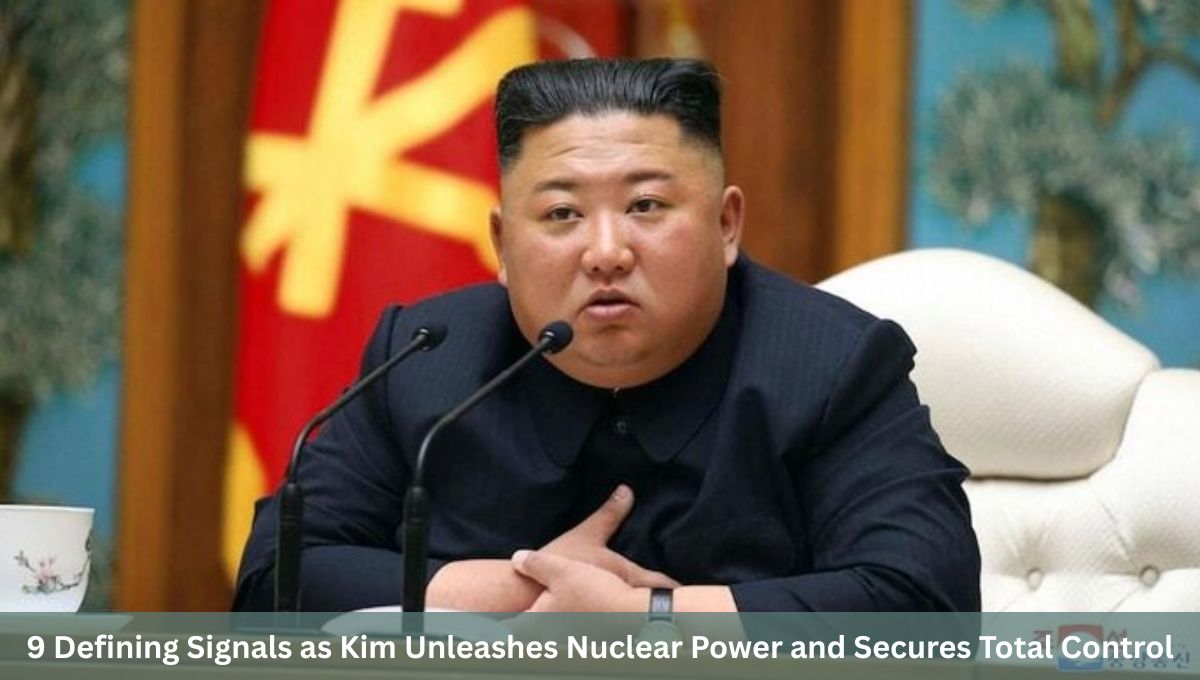
9 Defining Signals as Kim Unleashes Nuclear Power and Secures Total Control after re-election as ruling party leader. North Korea has once again placed nuclear power and political unity at the heart of its national narrative, re-electing Kim Jong Un as general secretary of the ruling Workers’ Party of Korea during a rare, once-in-five-years party congress in Pyongyang.
The tightly choreographed political gathering, attended by thousands of party elites and military officials, offered a rare glimpse into the inner workings of one of the world’s most secretive states.
It also reinforced a clear message:
Kim’s authority is unchallenged, and North Korea’s nuclear trajectory is accelerating despite sanctions, diplomatic isolation, and global pressure.
State media framed the congress as both a celebration of past achievements and a launchpad for the next phase of national strategy—one that blends military deterrence, economic resilience, and political continuity.
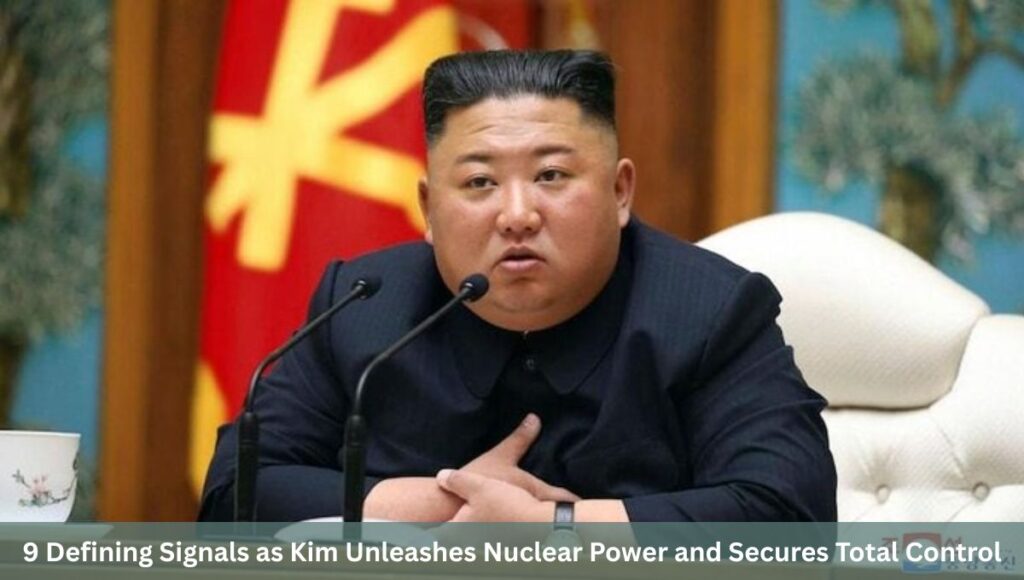
9 Defining Signals as Kim Unleashes Nuclear Power and Secures Total Control
A Rare Congress With Strategic Weight
The Workers’ Party congress is the highest decision-making body in North Korea, shaping everything from diplomacy and economic planning to war preparedness.
Convened only nine times since the country’s founding, the meeting carries enormous symbolic and practical significance.
This year’s congress marked the fourth such gathering under Kim’s rule and only the second since the title of party leader was formally changed to “general secretary.”
Delegates unanimously approved Kim’s re-election, a move portrayed by state media as reflecting the “unshakable will” of the party, the military, and the people.
According to the Korean Central News Agency, the decision underscored Kim’s role as the architect of a stronger, more secure state capable of confronting “any form of war.”
Nuclear Power at the Core of the Message
From Deterrent to Central Pillar
One of the most striking features of the congress was the explicit emphasis on nuclear forces as the backbone of national defense.
Party statements credited Kim with “radically improving” North Korea’s nuclear deterrent and transforming the armed forces into an “elite and powerful army.”
Under Kim’s leadership, North Korea’s nuclear program has evolved from a limited capability into a sophisticated arsenal featuring miniaturized warheads, solid-fuel missiles, and long-range delivery systems capable of reaching regional adversaries and, potentially, the United States mainland.
Although North Korea has not conducted a nuclear test in more than eight years, analysts believe the pause reflects technical refinement rather than restraint.
Scientists are thought to be focused on portability, survivability, and integration with conventional forces.
Missiles on Display Before the Congress
Just days before the congress opened, Kim presided over the unveiling of dozens of nuclear-capable rocket launchers, describing them as “wonderful” and “attractive.”
Photographs released by state media showed launch vehicles lined up in precise formation outside Pyongyang’s House of Culture.
The timing was deliberate. The display served as a visual reminder to both domestic elites and foreign governments that North Korea’s military modernization continues unabated.
Military Loyalty and Absolute Control
Senior military leaders publicly pledged loyalty to Kim during the congress, reinforcing the long-standing principle that the Korean People’s Army remains inseparable from the ruling party.
A party statement praised Kim for reshaping the armed forces into a self-reliant institution capable of acting independently in the event of conflict.
This narrative reflects Pyongyang’s belief that nuclear weapons are essential not only for deterrence but also for regime survival.
Political analysts view the reaffirmation of Kim’s authority as evidence that North Korea has moved beyond crisis management into a phase of confident, long-term rule.
Economic Promises Amid Sanctions Pressure
Balancing Guns and Growth
While nuclear achievements dominated the headlines, Kim also used the congress to emphasize economic development and living standards—an increasingly prominent theme in his leadership narrative.
In his opening address, Kim described the past five years as a “proud period” marked by resilience in the face of sanctions, natural disasters, and a global public health crisis.
He acknowledged hardships but claimed the country had overcome its “worst difficulties.”
“Our party is faced with urgent historic tasks of boosting economic construction and improving the people’s standard of living,” Kim was quoted as saying, calling for continuous struggle without “stagnation.”
Self-Reliance as Strategy
North Korea continues to promote economic self-reliance, or juche, as the guiding principle for development.
This includes domestic industrial production, agricultural reforms, and selective engagement with friendly states.
Recent signs of rebounding trade with China and arms exports to Russia suggest Pyongyang is finding ways to soften the impact of international sanctions, even as it maintains its hard-line military posture.
Shifts Within the Party Elite
The congress also reshuffled key party bodies, including the Central Committee and presidium.
Several veteran officials were reportedly sidelined, hinting at a generational shift and consolidation of Kim’s inner circle.
Observers scrutinize seating arrangements and official photographs from such events, searching for clues about who is rising—and who is falling—within the power hierarchy.
International Reactions: Allies and Adversaries
China and Russia Signal Support
China’s President Xi Jinping congratulated Kim on his re-election, hailing a “new chapter” in bilateral relations. The message reinforced Beijing’s role as Pyongyang’s most important diplomatic and economic partner.
Kim’s growing international stature was underscored by his appearance alongside Xi and Russian President Vladimir Putin at a military parade in Beijing last year—a symbolic alignment amid rising tensions with the West.
Stalemate With the United States
Relations with Washington remain frozen.
Diplomatic engagement has stalled since the collapse of a 2019 summit with former US President Donald Trump, which failed to bridge differences over sanctions relief and denuclearization.
Although Trump has publicly expressed openness to renewed talks, Pyongyang has largely dismissed such overtures, insisting that the United States abandon its demand for denuclearization as a precondition for dialogue.
South Korea and the Regional Security Picture
Inter-Korean relations have sharply deteriorated in recent years. Pyongyang has abandoned its long-standing goal of peaceful reunification and now openly describes the South as a permanent enemy.
For Seoul, the congress is being closely watched for signs of new military doctrines, particularly those integrating nuclear and conventional forces in potential conflict scenarios.
The Question of Succession: Kim Ju Ae
A New Figure in the Spotlight
One of the most intriguing aspects of recent North Korean politics is the emergence of Kim’s teenage daughter, Kim Ju Ae, as a visible presence at state events.
South Korea’s intelligence services have suggested she is being groomed as a potential successor, noting her appearances at missile inspections and high-profile ceremonies.
Absence That Fuels Speculation
Although Ju Ae has not been seen at the current congress so far, analysts caution that absence does not diminish her significance.
In North Korea’s opaque system, symbolism is carefully managed, and even minor appearances—or disappearances—can carry strategic meaning.
Why This Congress Matters Globally
More Than Domestic Politics
The re-election of Kim Jong Un is not merely an internal affair. It signals continuity in North Korea’s strategic direction at a time of heightened global instability.
With wars raging in Europe and the Middle East, Pyongyang sees an opportunity to strengthen its bargaining position, deepen ties with non-Western powers, and press ahead with weapons development.
A Nuclear State Here to Stay
Despite decades of sanctions and diplomatic pressure, the congress made clear that North Korea views its nuclear arsenal as non-negotiable.
Rather than a bargaining chip, it is now framed as a permanent feature of national identity and security.
This reality poses long-term challenges for regional stability, non-proliferation efforts, and global security frameworks.
Conclusion: Consolidation, Confidence, and Continuity
The Ninth Congress of the Workers’ Party of Korea has reaffirmed what many observers already believed:
Kim Jong Un’s grip on power is absolute, and North Korea’s nuclear path is set.
By blending military strength with promises of economic improvement, Kim is crafting a narrative of resilience and inevitability—one designed to rally domestic elites while projecting confidence abroad.
For the international community, the message is stark. North Korea is not retreating from its nuclear ambitions. Instead, it is institutionalizing them, embedding them deeply within the party, the military, and the state itself.
As the congress continues, the world will be watching for further signals—but the direction, for now, appears unmistakably clear.
Also Read: 7 Alarming Signals as Kim Jong Un Oversees Hypersonic Missile Tests
Also Read: Kim Jong Un Secures Re-election Amidst North Korean Nuclear Expansion