In a historic and potentially game-changing decision, UK Sets Deadline for Palestinian Statehood Recognition by September. UK Prime Minister Keir Starmer has announced that Britain will officially recognise the State of Palestine by September 2025 unless Israel agrees to a ceasefire in Gaza and revives a credible peace process. This conditional recognition marks a profound shift in British foreign policy and signals growing frustration with Israel’s ongoing military campaign and the worsening humanitarian crisis in Gaza.
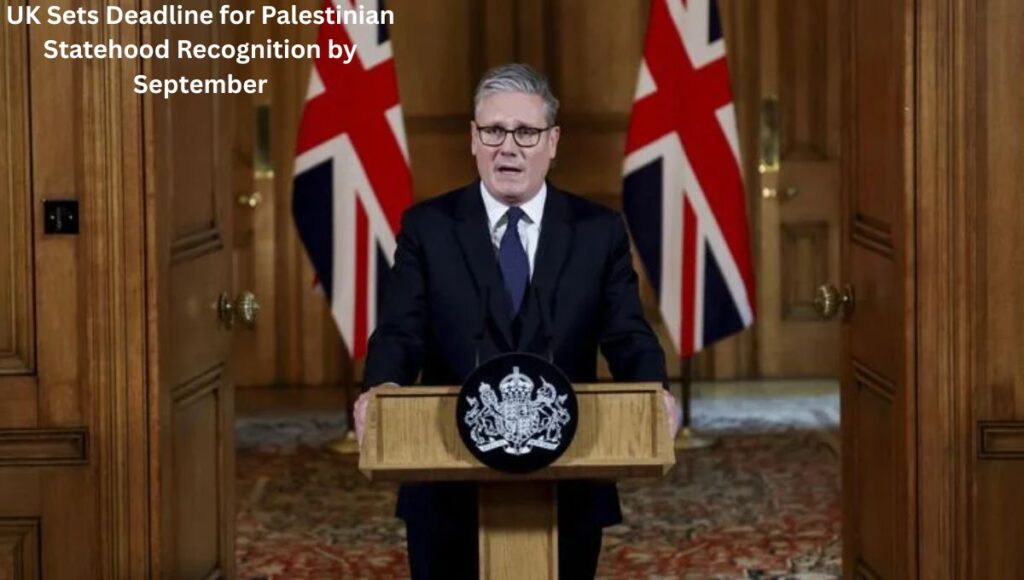
UK Sets Deadline for Palestinian Statehood Recognition by September
Starmer’s Bold Announcement: A Shift in British Policy
At an emergency cabinet meeting this week, Starmer declared:
“The UK will recognise the State of Palestine by the United Nations General Assembly in September, unless the Israeli government takes substantive steps to end the appalling situation in Gaza, agree to a ceasefire, and commit to a long-term sustainable peace.”
This move breaks decades of UK policy, where successive governments said recognition would only come “when the time is right.” For Starmer’s government, that time is now unless Israel changes course.
Conditions for Postponement: Israel’s Required Commitments
Starmer left a narrow diplomatic window open, providing Israel meets several conditions before the September UN General Assembly:
- A formal ceasefire in Gaza
- Full restoration of UN humanitarian aid operations
- A commitment to avoid annexation in the West Bank
- Genuine participation in a renewed two-state peace process
Simultaneously, Hamas is being urged to release all Israeli hostages, disarm, and accept political exclusion from Gaza’s future governance.
Why Now? The Gaza Starvation Crisis and Mounting Global Pressure
Starmer cited the “starvation of children in Gaza” and the spiraling humanitarian situation as the final impetus for the UK’s policy change.
According to the Integrated Food Security Phase Classification (IPC), famine conditions are spreading across Gaza, with over 147 confirmed hunger-related deaths including 88 children.
The IPC report warns:
“Famine thresholds have been reached for food consumption in most of Gaza.”
The UN World Food Programme confirms it still lacks adequate access to deliver essential supplies, accusing Israel of obstructing entry points despite its claim of allowing 5,000 aid trucks over the past two months.
UK Airdrops Aid as Civilian Death Toll Mounts
In a symbolic move coinciding with Starmer’s statement, UK military aircraft airdropped emergency food aid into northern Gaza.
The gesture followed growing public outcry in Britain over images of emaciated children and destroyed hospitals. Between April and July, over 20,000 cases of acute malnutrition were reported.
Meanwhile, overnight Israeli airstrikes on Nuseirat refugee camp reportedly killed 30 civilians, including 14 women and 12 children.
Along Gaza’s Salahudeen Road, at least 13 Palestinians were killed while waiting for aid trucks.
Israel Reacts: Netanyahu Calls UK Move a “Reward for Terrorism”
The Israeli government responded with fury. Prime Minister Benjamin Netanyahu said:
“Starmer’s decision rewards Hamas’s monstrous terrorism and punishes its victims. A jihadist state on Israel’s border TODAY will threaten Britain TOMORROW.”
Israel’s Foreign Ministry accused the UK of undermining the peace process and legitimising Hamas, despite Starmer’s insistence that Hamas must play no role in future Palestinian governance.
Foreign Minister Gideon Saar rejected accusations of a starvation policy, calling them “lies” and defending Israel’s military operations.
France Aligns with UK: Growing Diplomatic Bloc for Palestine Recognition
France quickly backed the UK’s move. President Emmanuel Macron announced that France would also recognise Palestine at the upcoming UNGA if similar conditions are not met.
French Foreign Minister Jean-Noel Barrot welcomed the UK’s decision, calling it part of a “growing international momentum” for Palestinian statehood.
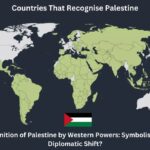
This growing European bloc including Spain, Norway, and Ireland, who recognised Palestine last year could signal increasing diplomatic isolation for Israel.
United States: Trump Slams UK and France’s Stance
Former U.S. President Donald Trump, who returned to office in January 2025, had mixed reactions.
After meeting Starmer in Scotland, Trump claimed the UK leader “did not bring up recognition” during their talks. Later, he clarified:
“They’re essentially saying the same thing… That’s okay, but doesn’t mean I have to agree.”
Trump strongly opposes recognition, warning it would reward Hamas and threaten Israel’s security. Nevertheless, he pledged to set up “food centres” in Gaza to alleviate hunger.
The Biden administration had not made a formal response at the time of writing.
David Lammy at the UN: “The Hand of History on Our Shoulders”
In a stirring address to the United Nations, UK Foreign Secretary David Lammy reaffirmed the UK’s stance:
“There is no contradiction between support for Israel’s security and support for Palestinian statehood.”
Lammy cited the Balfour Declaration of 1917, noting that while it promised a home for the Jewish people, it also vowed to protect the civil rights of Palestinians a promise he said Britain failed to uphold.
He called the recognition of Palestine a moral imperative and an overdue correction of historical injustice.
Scotland Wants Sanctions, Not Just Recognition
Scotland’s First Minister John Swinney cautiously welcomed Starmer’s move but criticized the conditional approach.
He urged the UK government to go further by imposing sanctions on Israel if the violence continues.
“Recognition must not be conditional it must be backed by accountability,” said Swinney.
This response reflects growing divisions within the UK’s political establishment over how to address the Israel-Gaza conflict.
Hamas and the PA: Silent and Vocal Reactions
While Hamas has yet to comment on Starmer’s declaration, Palestinian President Mahmoud Abbas praised the UK’s move:
“This is a bold step toward justice, accountability, and Palestinian self-determination.”
Hussein Al Sheikh, Vice President of the Palestinian Authority, said the UK’s decision reflects international law and the long-held dream of Palestinian statehood.
UN-Led Peace Roadmap Backed by France and Saudi Arabia
A UN-backed conference in New York, co-chaired by France and Saudi Arabia, recently unveiled a seven-page roadmap for restarting the two-state peace process. Key elements include:
- Condemnation of Hamas by Arab states
- Formal commitment to end hostilities
- Humanitarian rebuilding plans
- Recognition of Palestinian sovereignty
Starmer’s UK government appears to be aligning with this growing international consensus on a two-state solution.
Countdown to September: Will Israel Act or Resist?
As the clock ticks down to the September 2025 UN General Assembly, Israel faces a stark choice: engage in diplomacy or face further international diplomatic isolation.
If Israel fails to meet the UK’s conditions, Britain will join other European nations in recognising Palestine, providing long-awaited symbolic and political backing to Palestinian claims for sovereignty.
Whether this leads to genuine peace negotiations or further entrenched positions remains to be seen.
Conclusion: A Defining Moment in UK Foreign Policy
The UK’s conditional recognition of Palestinian statehood represents a major recalibration of British diplomacy and an urgent appeal for action in the face of a worsening humanitarian tragedy.By linking Palestinian statehood to a Gaza ceasefire, West Bank non-annexation, and a revived two-state peace process, Starmer’s government has made a clear, time-bound stand.
It’s a powerful political message and potentially a pivotal moment in one of the world’s most protracted conflicts. As the UN General Assembly approaches, the world watches closely. For Palestinians enduring famine and displacement, and for Israelis living under the shadow of war, this decision could shape the next chapter of Middle East history.
Also Read: UK to recognise Palestinian state unless Israel meets conditions
Also Read: Canada to Recognize Palestinian State at UN: Global Support Grows Amid Gaza Crisis