Targeting Russia’s top buyers US Sanctions Bombshell: India Faces 500% Tariff Over Russian Oil. The US Senate is fast-tracking a bipartisan bill that could dramatically reshape the global energy and trade landscape. The proposed “Sanctioning Russia Act of 2025,” led by Senators Richard Blumenthal and Lindsey Graham, would impose crippling 500% tariffs on countries that continue purchasing Russian oil, gas, or uranium most notably targeting India and China.
The bill, which enjoys support from over 80 senators, aims to strangle Russia’s war chest by penalizing its largest energy customers. “This sanctions hammer will force Putin’s funders to choose,” Blumenthal declared in Rome, with St. Peter’s Basilica in the background.
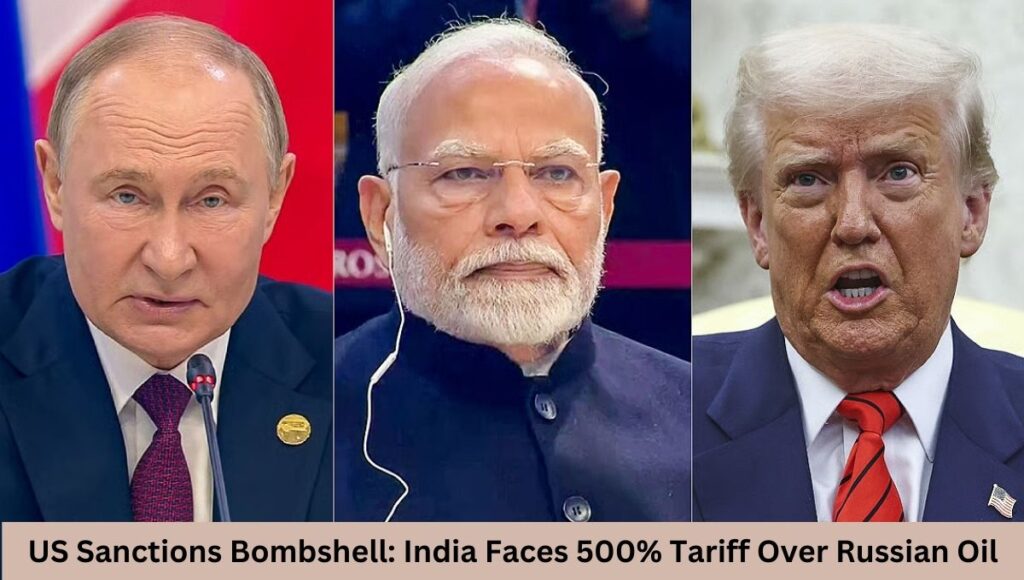
US Sanctions Bombshell: India Faces 500% Tariff Over Russian Oil
Trump Weighs In: Waivers and Power Struggles
Former President Donald Trump has thrown a twist into the legislative storm. While he’s signaled support for the bill’s goals, Trump insists on sweeping authority to waive its provisions.
“It’s totally my option,” he said during a cabinet meeting, emphasizing his desire to avoid what his team calls congressional “micromanagement.”
Trump wants the power to grant unlimited waivers without congressional oversight allowing him to spare allies like India or Turkey if strategic diplomacy calls for it.
The White House is lobbying for changes to ensure the president isn’t locked into automatic sanctions that could harm negotiations.
The Heart of the Bill: 500% Tariffs
At the center of the sanctions proposal is a punitive 500% tariff on imports into the US from countries that continue buying Russian energy.
The aim? To make support for Russia’s energy sector so costly that countries are forced to choose between cheap oil and access to American markets.
This approach marks a radical shift in US sanctions policy targeting not just Russian firms, but third-party nations indirectly funding Moscow’s war effort.
India in the Crosshairs
India, one of the biggest beneficiaries of discounted Russian oil since the Ukraine war began, is in a tight spot. Russian crude accounted for nearly 35% of India’s total oil imports in 2024.
External Affairs Minister S. Jaishankar acknowledged that the Indian embassy in Washington had reached out to Senator Graham to express concerns.
“We’ll cross that bridge when we come to it,” Jaishankar said, signaling cautious optimism that diplomacy might still prevail.
India’s Oil Minister Hardeep Singh Puri went further, defending India’s purchases as a stabilizing factor for global oil prices.
“India actually did the world a favour,” he said in Vienna, citing that removing 9 million barrels per day from the global market would have triggered prices exceeding $130 a barrel.
Blumenthal and Graham: A Rare Bipartisan Alliance
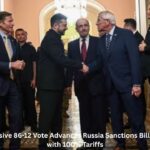
Senators Blumenthal (D) and Graham (R) have emerged as the unlikely face of this aggressive foreign policy move. Meeting Ukrainian President Volodymyr Zelenskyy in Rome this week, they stressed urgency.
Graham declared, “If you are buying energy from Russia and not helping Ukraine, your goods will face a 500% tariff coming into the United States.” The duo positioned the bill as a moral and economic imperative to cut off Putin’s funding.
Global Blowback and Diplomatic Risk
Critics warn the bill could spark global trade chaos. Imposing massive tariffs on countries like India, China, Turkey, and others risks pushing them closer to Russia or China in defiance of US pressure. Countries may retaliate, trigger inflation, or shift alliances.
American industries could also suffer. Electronics, textiles, and pharmaceutical sectors many reliant on imports from nations now at risk may face price hikes. Consumers might feel the pinch just as inflation had begun to cool.
EU’s Complementary Strategy: €2.3 Billion Aid to Ukraine
While Washington pressures energy buyers, the European Union is focusing on rebuilding Ukraine. At the same Rome summit, EU Commission President Ursula von der Leyen announced a €2.3 billion package for Ukraine’s recovery.
It includes €1.8B in loan guarantees, €580M in direct grants, and a €500M fund to attract private investment.
Von der Leyen called it “solidarity in action,” positioning the EU as a constructive partner in Ukraine’s post-war future. Meanwhile, the US is deploying financial sticks more than carrots.
Trump’s Strategic Calculations
Trump’s hesitation isn’t just about power it’s also about flexibility. The former president envisions ending the Ukraine war through diplomacy, and automatic sanctions limit his bargaining power.
By controlling the waiver process, Trump could offer tailored incentives to nations like India to shift gradually from Russian oil.
In short, Trump wants the sanctions bill as a presidential tool not a legislative leash.
Trade Talks with India Hang in the Balance
Ironically, the sanctions debate comes as Washington and New Delhi negotiate a trade agreement expected to pave the way for a broader bilateral deal. Analysts fear that the sanctions could derail these talks or sour US-India relations.
Prerna Bountra of the Ananta Aspen Centre noted, “If this passes, US trade negotiators can’t simply will it away. The bill may have 84 Senate cosponsors but only 33 in the House. It’s not a done deal yet but India faces an uphill climb.”
Will the Bill Pass?
Despite bipartisan support in the Senate, the bill faces hurdles in the House and within Trump’s own administration.
Changes to the waiver provisions are likely necessary for Trump’s full endorsement. For now, the legislation remains in flux, with global eyes on Capitol Hill.
A senior Trump official told Politico the bill is a “non-starter” unless revised to remove Congressional veto power over waivers. “The administration is not going to be micromanaged,” the official said bluntly.
The Big Picture: Geopolitics, Not Just Oil
The Sanctioning Russia Act of 2025 signals a deeper shift in US foreign policy. It reflects growing frustration with indirect support for Russia via trade and a willingness to use economic might as a blunt instrument. But the bill also risks overreach.
Forcing countries like India and China to choose sides could alienate key partners and disrupt a fragile global economy already burdened by inflation and instability.
What Happens Next?
With the bill set to be debated in coming weeks, its outcome could reshape US diplomacy, global oil flows, and the very foundation of international trade norms. India has made it clear: its energy purchases are rooted in national interest and global market stability.
Whether US lawmakers accept that argument or double down on punitive tariffs will shape US-India relations for years to come. In the meantime, both allies and adversaries are watching closely as America recalibrates its approach to sanctions, sovereignty, and the war in Ukraine.
Also Read: Trump’s 50-Day Ultimatum to Putin: Ceasefire or Face 100% Tariffs, Sanctions
Also Read: Trump Backs Senate Bill Proposing 500% Tariffs on India, China for Russian Oil Imports