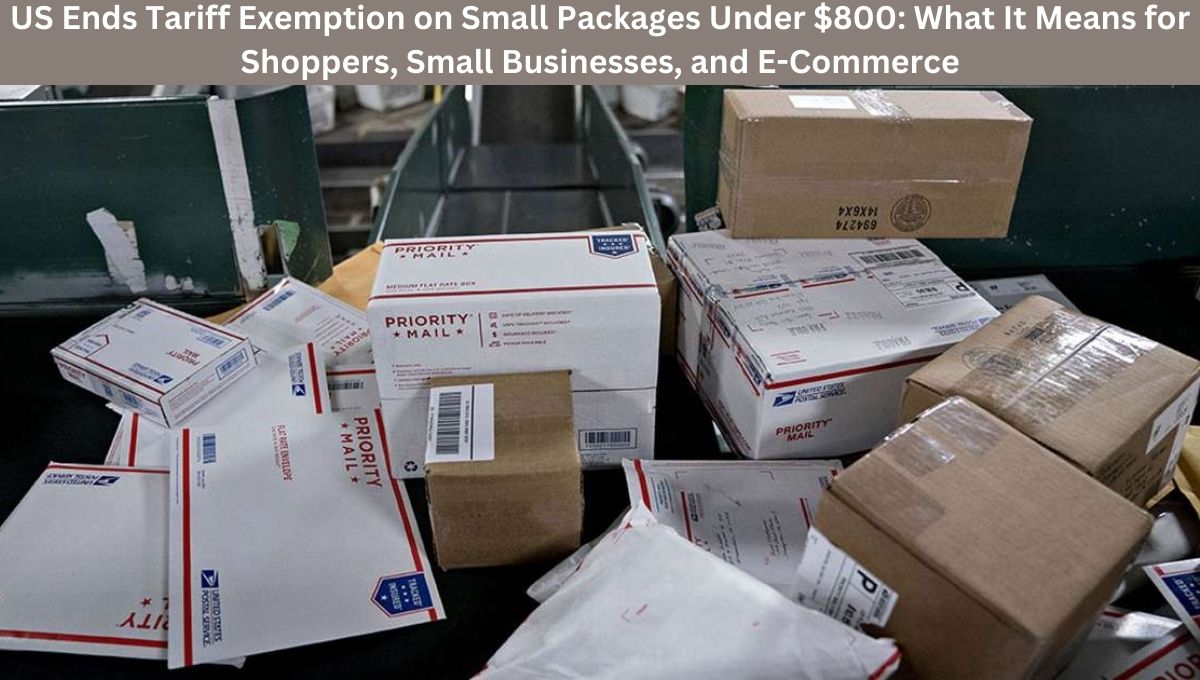
Calling it a step toward fair trade, US Ends Tariff Exemption on Small Packages Under $800: What It Means for Shoppers, Small Businesses, and E-Commerce. For nearly a century, Americans enjoyed the benefits of a little-known trade loophole known as the “de minimis rule” a policy that allowed low-value imported goods to enter the United States duty-free. As of 2015, that threshold applied to all packages valued at $800 or less.
This policy fueled the rise of e-commerce giants like Shein, Temu, and AliExpress, allowed countless small international businesses to sell directly to US consumers, and gave American shoppers unprecedented access to cheap goods at their doorstep. But as of this week, that era has come to an end.
The Trump administration has officially ended the tariff exemption on small parcels valued under $800, citing concerns over tariff evasion, narcotics smuggling, and unfair competition for US businesses. The decision has triggered shockwaves across global postal systems, small businesses, and international trade networks. While US officials argue that the move closes a dangerous loophole and boosts customs revenue, businesses and consumers warn of higher costs, shipping delays, and widespread confusion.
US Ends Tariff Exemption on Small Packages Under $800: What It Means for Shoppers, Small Businesses, and E-Commerce
What Is the De Minimis Rule and Why Was It Important?
The de minimis rule dates back to 1938, when Congress first allowed packages valued at $5 or less to enter duty-free. Over the decades, the threshold gradually increased.
In 2015, it was raised from $200 to $800 under bipartisan legislation designed to promote e-commerce and reduce administrative burdens.
This rule created a powerful direct-to-consumer global trade model, particularly benefitting:
- Small businesses overseas, who could sell goods directly to US buyers without customs paperwork.
- US consumers, who could buy cheaper products online without paying duties or fees.
- Large e-commerce platforms, particularly Chinese fast-fashion retailers like Shein and Temu, who built their US growth strategies around the exemption.
According to US Customs and Border Protection (CBP), shipments under the de minimis threshold skyrocketed from 139 million in 2015 to 1.36 billion in 2024 averaging 4 million parcels a day.
This surge reshaped the American retail landscape. But it also raised red flags in Washington.
Why Did the Trump Administration End the Tariff Exemption?
The Trump administration justified the move on two main grounds:
1. Stopping Tariff Evasion and Drug Smuggling
Officials argue that the de minimis exemption became a loophole exploited by smugglers. Packages were used to:
- Bypass tariffs by splitting bulk shipments into small parcels.
- Conceal narcotics such as fentanyl and its precursor chemicals.
- Flood the US with counterfeit and unsafe goods.
Peter Navarro, Trump’s trade adviser, said:
“Foreign post offices need to get their act together when it comes to monitoring and policing the use of international mail for smuggling and tariff evasion purposes.”
2. Boosting Revenue and Protecting US Manufacturing
The White House estimates that ending the exemption could raise $10 billion annually in customs revenue. For US manufacturers especially in textiles and apparel this is being hailed as a “historic win”.
The National Coalition of Textile Organizations praised the move, saying it would protect American jobs and close a loophole that allowed foreign competitors to undercut prices with duty-free imports, sometimes produced with forced labor.
What Are the New Rules for Imported Packages?
The exemption has been replaced with two options for tariffs:
- Flat Fee System (for six months only):
- $80 for parcels from countries with tariffs below 16% (e.g., UK, EU).
- $160 for parcels from countries with tariffs between 16% and 25% (e.g., Vietnam, Indonesia).
- $200 for parcels from countries with tariffs above 25% (e.g., China, India, Brazil, Canada).
- Normal Tariff Rates (after transition):
- Once the six-month period ends, all small packages will be subject to regular tariffs of 10% to 50%, depending on the country of origin.
Exemptions remain for some personal items and gifts, but nearly all commercial imports will now be taxed.
How Are Global Postal Services Reacting?
The sudden change has thrown global shipping networks into chaos.
- Over 25 countries, including France, Germany, Japan, Australia, Mexico, and India, temporarily suspended shipments to the US, citing uncertainty about tariff collection.
- Royal Mail (UK) paused service, then introduced new tariff-compliant services for its customers.
- DHL suspended standard parcel shipments from Germany, warning of delays as postal agencies adjust.
- UPS and FedEx, however, said they were prepared for the changes and did not anticipate backlogs.
The Universal Postal Union reported that 25 member countries’ postal operators suspended outbound services to the US in August, highlighting the global scale of disruption.
The Impact on Small Businesses
1. Overseas Sellers Losing Access to US Customers
Many small international businesses relied on the US exemption to reach American buyers affordably.
- Liz Nieburg, who runs SocksFox in the UK, said she stopped shipping to US buyers while Royal Mail adjusted. US customers account for 20% of her sales.
- Sarah Louise Jour, a ceramics seller in Bangkok, said US customers make up 90% of her business. She is now forced to use more expensive couriers.
2. US Small Businesses Facing Cost Pressures
Some US businesses also benefitted from the exemption when importing goods.
- Ken Huening of California-based CoverSeal (outdoor protective covers) said he had to end free shipping because of tariffs on products from China and Mexico.
- Haley Massicotte, who runs Canadian cleaning products brand Oak & Willow, said customers are confused about why prices are rising:
“We are going to do everything in our power to not raise prices. But our margins are too tight to absorb this.”
3. Winners: Local Retailers
Some American retailers believe the change levels the playing field.
- Steve Raderstorf, co-owner of Scrub Identity in Indianapolis, said he can now better compete with Shein and Amazon’s third-party sellers.
“When it goes to China, it never stays in the United States. When people shop local, that money comes back into the community.”
Impact on Shoppers: Higher Prices and Delays
For US consumers, the immediate consequences are clear:
- Higher Prices: With tariffs ranging from 10% to 50%, the days of ultra-cheap Shein dresses or $5 gadgets from AliExpress may be over.
- Shipping Delays: Customs clearance now applies to all packages, which could slow delivery times, especially during the holiday season.
- Fewer Options: Some small foreign sellers have already stopped serving US customers, limiting choices in niche markets like handmade crafts or boutique fashion.
Cornell University professor Li Chen warned:
“On the consumer side, there will be potential delays, because now all the parcels have to clear customs. The impact on small businesses will be much greater, as larger firms can absorb shocks.”
Also Read: How US Shoppers Will Be Hit as De Minimis Tariff Exemption Ends in 2025
A Headache for E-Commerce Giants
Platforms like Shein, Temu, and AliExpress built their US expansion around the de minimis rule. Without it:
- They may need to raise prices or absorb tariffs.
- Some may shift focus to other markets, reducing reliance on US buyers.
- Their competitive advantage over US retailers could shrink.
US customs data already shows shipments from China and Hong Kong dropped from 4 million a day to 1 million after their exemptions ended earlier in 2025.
The Bigger Trade Picture
The end of de minimis is part of Trump’s broader tariff-heavy trade agenda.
- Tariffs on Chinese goods were raised during his first term, sparking a trade war.
- The new move applies tariffs universally, not just to China.
- Officials claim this will reduce the trade deficit and encourage reshoring of manufacturing.
Critics, however, say:
- It risks hurting consumers through higher prices.
- It could trigger retaliation from trade partners.
- It might not lead to meaningful manufacturing revival in the US.
Looking Ahead: Who Wins and Who Loses?
Winners:
- US textile and apparel manufacturers.
- Local retailers who compete with low-cost online sellers.
- The US Treasury, which expects billions in added customs revenue.
Losers:
- International small businesses reliant on US customers.
- Global postal services struggling to adapt.
- Consumers who will face higher prices and fewer ultra-cheap options.
- E-commerce giants like Shein and Temu, who must rethink their US strategy.
Conclusion
The end of the de minimis rule marks a historic shift in US trade policy. For decades, the exemption fueled the rise of global e-commerce, cheap cross-border shopping, and business opportunities for small sellers.
But as of now, every package no matter how small is subject to tariffs.
The Trump administration frames it as a win for US manufacturing and a blow against smugglers. Yet, the true cost may be borne by small businesses and everyday consumers who enjoyed access to affordable global goods.
As the global shipping system adjusts and businesses react, one thing is certain: the age of duty-free “cheap goods” shipped straight to American doorsteps is over.
Also Read: US Ends Tariff Exemption For Small Packages, Sparks Warnings Of Consumer Price Hikes
Related Posts:
- How US Shoppers Will Be Hit as De Minimis Tariff…
- 5 Major Takeaways from the US Supreme Court's…

- 7 Heartbreaking Facts About Venezuela's Earthquake Disaster

- 7 Powerful Measures: Trump Sanctions Russian Oil…

- In 8 Moves, EU Targets China-Linked Refineries and…

- 11 Explosive Revelations From Ted Cruz’s Leaked…