

Accusing Washington for its blame game, China Slams U.S. at UN for Hypocrisy Over Trade with Russia. In a fiery session of the United Nations Security Council (UNSC), China’s Deputy Permanent Representative to the UN, Geng Shuang, condemned the United States for its double standards on trade with Russia amid the ongoing war in Ukraine.
Geng argued that while Washington continues to import goods and maintain business ties with Moscow, it criticizes countries like China and India for doing the same. This stark rebuke comes in the wake of U.S. accusations that China is the “most important supplier” aiding Russia’s war effort claims that Beijing strongly denies.
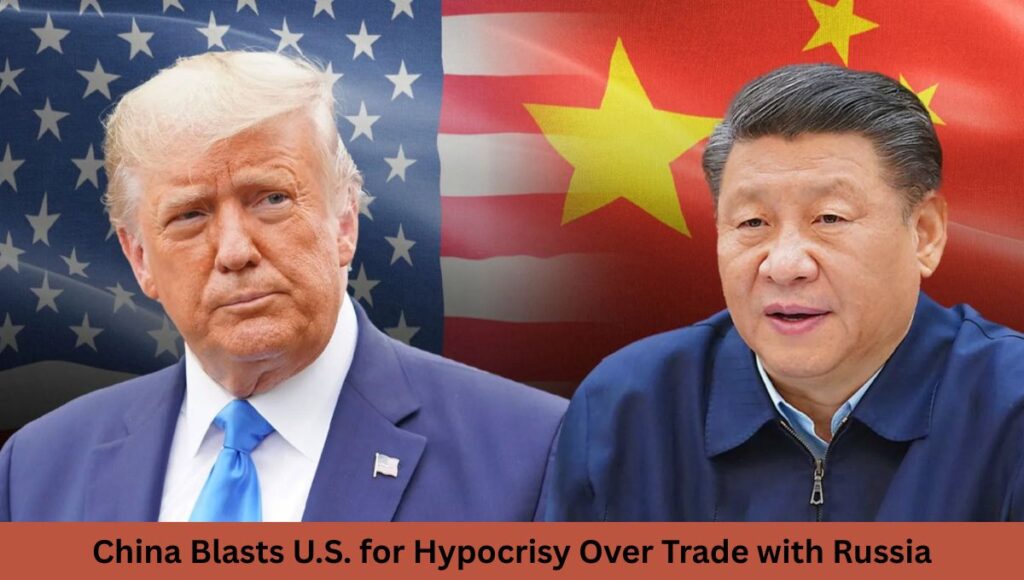
China Blasts U.S. for Hypocrisy Over Trade with Russia
“Setting Fires While Forbidding Others to Light Lamps”
Geng Shuang’s response, which quickly made headlines globally, featured a now-viral metaphor:
“The U.S. continues to engage in trade with Russia to this day. Why should it be acceptable for the U.S. to do so, but not for others? Isn’t this only allowing oneself to set fires while forbidding others from lighting lamps?”
The remark encapsulated China’s frustration with Washington’s pressure campaign, as the Biden and Trump administrations have both called on nations like China, India, and even Brazil to cut off oil and trade ties with Moscow.
U.S. Warns China Over Russian Oil Purchases
Tensions have been escalating further due to U.S. threats of punitive tariffs on Chinese firms buying sanctioned Russian oil. U.S. Treasury Secretary Scott Bessent reportedly warned Beijing that continued purchases could invite harsh economic measures, citing pending legislation in Congress.
However, Chinese officials pushed back, declaring that China will protect its “energy sovereignty” and maintain legitimate trade under international law.
China has repeatedly maintained that UN sanctions do not prohibit trade with Russia and that Beijing remains committed to neutrality in the Ukraine conflict.
China Refutes Allegations of Supplying Arms to Russia
Geng Shuang forcefully denied any claims that China was supplying lethal aid to Russia.
“China is not the creator of the Ukraine crisis, nor is it a party to the conflict. We have never provided lethal weapons to any party involved in the conflict,” Geng said.
China emphasized that it strictly controls the export of dual-use items, including drones, and adheres to all applicable export control regimes.
This position aligns with China’s broader message: it has maintained normal trade with both Russia and Ukraine and has not violated any international laws or obligations.
China Urges U.S. to Stop the Blame Game
Throughout his remarks, Geng accused the United States of playing a “blame game” to shift responsibility away from itself.
He pointed out that while the U.S. demands that China take a constructive role in resolving the Ukraine conflict, it simultaneously attacks, smears, and pressures Beijing in global forums.
“The U.S. cannot, on the one hand, ask China to help end the war, while on the other hand continue to smear and sanction us,” Geng stated.
He added that the international community must focus on peace negotiations, not further escalation or division.
Geng Highlights Growing Dangers in Ukraine
In his broader statement, Geng expressed concern over the escalation of warfare in Ukraine, pointing to the introduction of new high-tech weaponry, including combat robots.
“We are seeing Ukraine becoming a testing ground for new weapons. Warfare itself is undergoing dangerous changes.”
He criticized the reckless supply of arms to the battlefield by Western countries, warning that it would only intensify the conflict, lead to greater human suffering, and increase the risk of proliferation across the region.
“Weapons May Win Wars, But Not Peace”
Geng Shuang urged all parties, especially the U.S., to consider the human cost of war and prioritize diplomacy.
“Weapons may win wars, but they cannot bring lasting peace,” he said, highlighting the urgency of de-escalation and renewed dialogue.
He emphasized that China continues to support negotiations between Ukraine and Russia, referencing recent talks that led to prisoner exchanges and humanitarian coordination.
A Call for Balance and International Legitimacy
In one of the most pointed parts of his speech, Geng said that China’s legitimate trade with Russia and Ukraine should not be targeted.
“China’s legitimate and lawful rights and interests must not be infringed upon.”
He underscored that no UN Security Council resolution prohibits trade with Russia and warned that applying unilateral sanctions or coercion undermines the authority of the UN and violates the norms of international law.
Global Reactions: India Watches Closely
India, which has also been under U.S. scrutiny for purchasing discounted Russian oil, is closely monitoring the developments.
Similar to China, India has maintained a neutral stance on the Ukraine war and insists that its purchases do not breach any international sanctions.
New Delhi has also voiced concerns over Western double standards, particularly when it comes to energy security and economic autonomy.
China’s Message: End the War, Don’t Escalate
In conclusion, China reiterated its commitment to peace, urging the international community to avoid fueling the conflict further.
Geng called on the U.S. and other major powers to stop fanning flames and instead invest in a political resolution.
“It is the U.S. that repeatedly engages in smearing, slandering, and attacking other countries in the UN Security Council chamber.
Does the U.S. not recognize how different its behavior is from that of other Council members?”
Final Thoughts
As the Ukraine conflict drags on, the diplomatic battlefield is becoming just as contentious as the military one. With Beijing openly challenging Washington’s moral authority on sanctions and trade, the global balance of power is being tested, not just in Ukraine but in the halls of the United Nations.
China’s sharp criticism, highlighted by Geng Shuang’s “fire vs lamp” analogy, underscores the growing divide between Western nations and rising global powers who are pushing back against what they see as selective enforcement of international norms. Whether or not the U.S. heeds this criticism remains to be seen but the message from Beijing is clear: End the war, stop the hypocrisy, and let diplomacy lead.
Also Read: With 1971 war ammo, Indian Army fires back at US over Russian oil hypocrisy
Also Read: EU Criticizes India Over Russian Oil While Quietly Trading with Moscow
Related Posts:
- In 8 Moves, EU Targets China-Linked Refineries and…

- EU Criticizes India Over Russian Oil While Quietly…
- UN Security Council Blocks China-Russia Resolution…
- UNSC Meeting on Pahalgam Terror Attack: Pakistan…
- U.S.–China Trade War 2025: 500% Tariff Threat Sparks…
- 9 Explosive Claims as Venezuela Slams US ‘Extortion’ at UN
