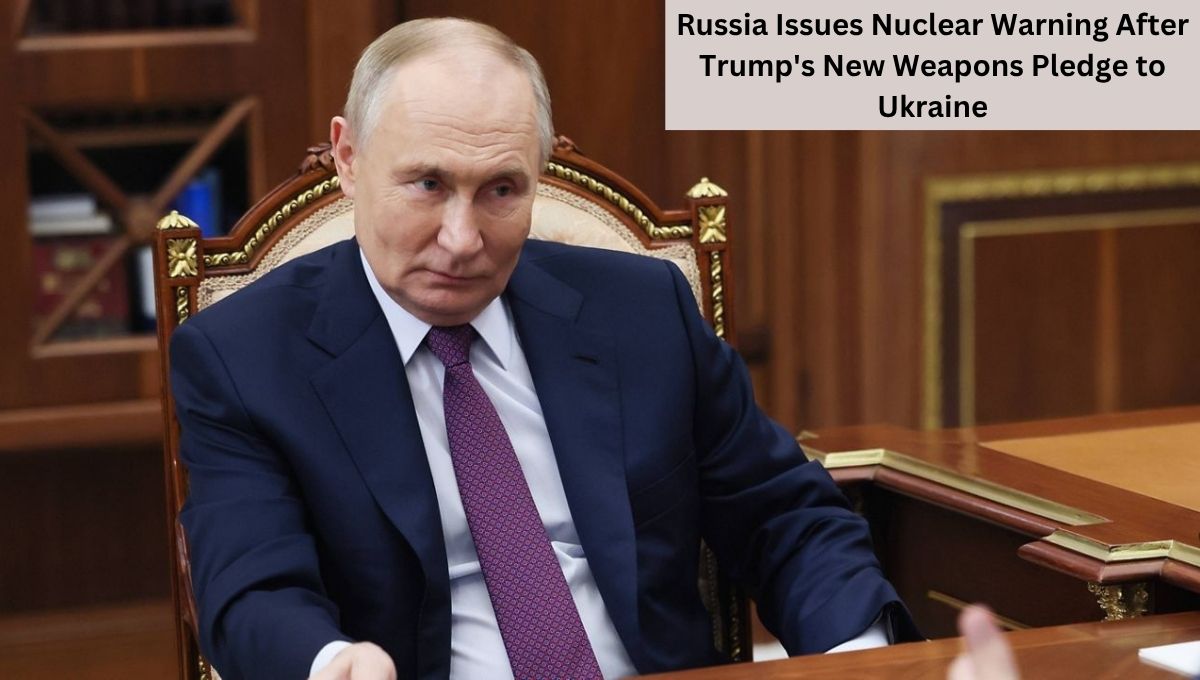
Intensifying global tensions, Russia Issues Nuclear Warning After Trump’s New Weapons Pledge to Ukraine. The geopolitical landscape of the Russia-Ukraine conflict took a sharp turn this week as Russia issued a stern nuclear warning in response to President Donald Trump’s announcement of advanced U.S. and NATO weapons deliveries to Ukraine. The Kremlin responded swiftly, emphasizing that Russia’s nuclear doctrine remains in full effect, escalating global fears of potential nuclear confrontation.
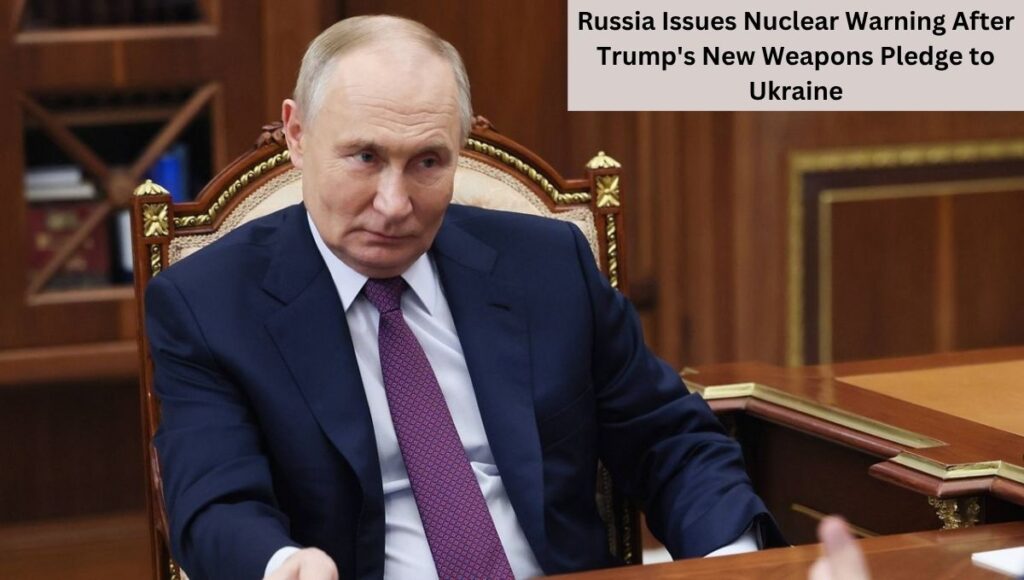
Russia Issues Nuclear Warning After Trump’s New Weapons Pledge to Ukraine
Trump Unveils Major Weapons Support for Ukraine
On July 14, President Donald Trump declared a major shift in the U.S. stance on Ukraine, announcing a massive arms deal that includes cutting-edge Patriot missile defense systems, long-range missiles, and other high-end equipment.
Trump, speaking from the Oval Office, stressed that both the United States and its NATO allies would ramp up support for Kyiv to counter continued Russian aggression.
“We’re going to make top-of-the-line weapons, and they’ll be sent to NATO,” said Trump, emphasizing the need to protect Ukraine and encourage peace through strength.
NATO Secretary-General Mark Rutte confirmed that the package includes missiles, ammunition, and crucial air defense systems, most notably the Patriot missile defense systems, which are already en route to Ukraine.
These are vital to protect Ukrainian cities from Russia’s increasing missile and drone attacks.
Russia Reacts: Nuclear Doctrine “Remains in Effect”
Just two days later, Kremlin spokesperson Dmitry Peskov responded via Russian state media, saying:
“Russia’s nuclear doctrine remains in effect, and thus, all its provisions continue to apply.”
This statement, coming after Trump’s weapons pledge, is viewed by analysts as a direct warning to NATO and a stark reminder of the nuclear dimension of the ongoing war.
According to the updated Russian nuclear doctrine, the Kremlin reserves the right to use nuclear weapons in response to “aggression” involving non-nuclear states that are supported by nuclear powers a clause many interpret as directly referencing Ukraine’s Western backing.
The 50-Day Ultimatum and Sanctions Threat
In a bold move, Trump gave Russia a 50-day deadline to agree to a peace deal, or face severe U.S. sanctions. The threatened measures include:
- 100% tariffs on Russian imports
- Secondary sanctions on nations and companies that trade with Russia
- Isolation of Russia from the global economy
Trump’s move marks his toughest stance on Moscow to date, surprising both allies and critics. He warned that if Russia refuses to negotiate, the financial cost will be devastating.
Kremlin: “Language of Blackmail and Ultimatums”
The response from Russian officials has been sharp and defiant. Maria Zakharova, spokesperson for Russia’s Foreign Ministry, condemned the U.S. strategy, accusing the West of fueling the war.
“The language of ultimatums, blackmail, and threats is unacceptable to us,” said Zakharova. “Such actions encourage Kyiv to abandon peace and continue the slaughter.”
She reiterated that Russia will take all necessary steps to protect its sovereignty and strategic interests, implying readiness for escalation if provoked further.
Trump and Putin: Ceasefire Hopes and Frustrations
Despite the escalating rhetoric, there are still talks of a possible Trump-Putin meeting, although no date has been confirmed. Peskov mentioned that such a meeting “could be arranged very quickly.”
Trump, who has previously claimed he could end the war in Ukraine within 24 hours, admitted frustration in dealing with Russian President Vladimir Putin.
“My conversations with him are very pleasant, and then the missiles go off at night,” Trump told reporters.
Meanwhile, the White House has denied reports that Trump encouraged Ukrainian President Volodymyr Zelenskyy to strike Moscow or St. Petersburg with long-range weapons, although The Financial Times reported such discussions took place in a July 4 call.
Ukraine’s Response: Strengthening Defense and Local Production
Ukrainian President Volodymyr Zelenskyy responded by reaffirming Ukraine’s determination to strengthen its defense capabilities. On Wednesday, he stated:
“We are thoroughly analyzing all contracts, agreements, and investment projects for our defense sector. There must be more Ukrainian-made weapons.”
Zelenskyy also echoed NATO’s calls for increased air defense systems and international support, especially as Russia has intensified aerial attacks in recent weeks.
In the past 48 hours alone, 400 drones and one ballistic missile were launched against multiple Ukrainian cities.
Russia’s Military Push and Territorial Claims
According to Russia’s Defense Ministry, its forces have captured the settlement of Novokhatske in Ukraine’s Donetsk region, signaling continued territorial ambitions.
Despite sustaining heavy losses, Russia now controls nearly one-fifth of Ukraine, and Western intelligence suggests Putin is unwilling to back down.
The Kremlin insists that peace negotiations are still possible but demands that Ukraine accept Russia’s control over four annexed regions, a condition Kyiv and its Western allies reject as unacceptable.
Nuclear Escalation Concerns: Preemptive Strikes Mentioned
Former Russian President Dmitry Medvedev added fuel to the fire by stating that Russia could launch preemptive strikes if it perceives the West escalating the war.
“We need to act accordingly. To respond in full. And if necessary, launch preemptive strikes,” Medvedev warned in an interview with TASS.
He called the conflict a full-scale war in all but name, citing missile launches, satellite surveillance, and the militarization of Europe as signs of open hostility.
Global Reactions: U.S. State Department Urges Calm
In a statement to Newsweek, a U.S. State Department spokesperson responded to Peskov’s nuclear rhetoric:
“This rhetoric does not improve regional security. We’ve seen these kinds of reckless and unhelpful statements before.”
The department reiterated that President Trump wants to avoid escalation and encourages all parties to return to diplomatic dialogue.
Conclusion: Escalation or Peace?
As the Russia-Ukraine war enters its third year, the latest developments mark a pivotal moment. President Trump’s decision to arm Ukraine with advanced U.S. weaponry, combined with a 50-day peace ultimatum, has triggered renewed nuclear warnings from Moscow.
While both sides speak of diplomacy, their actions suggest hardening positions. With Patriot missiles arriving in Ukraine, sanctions looming, and nuclear warnings echoing, the coming weeks could be decisive. Whether this results in heightened conflict or a return to negotiation tables, remains to be seen but one thing is clear: the world is watching.
Also Read: Kim Jong Un Vows Rapid Nuclear Expansion Amid US-South Korea Military Drills
Also Read: Trump Issues Warning to Medvedev—Russia Responds With Nuclear Threats