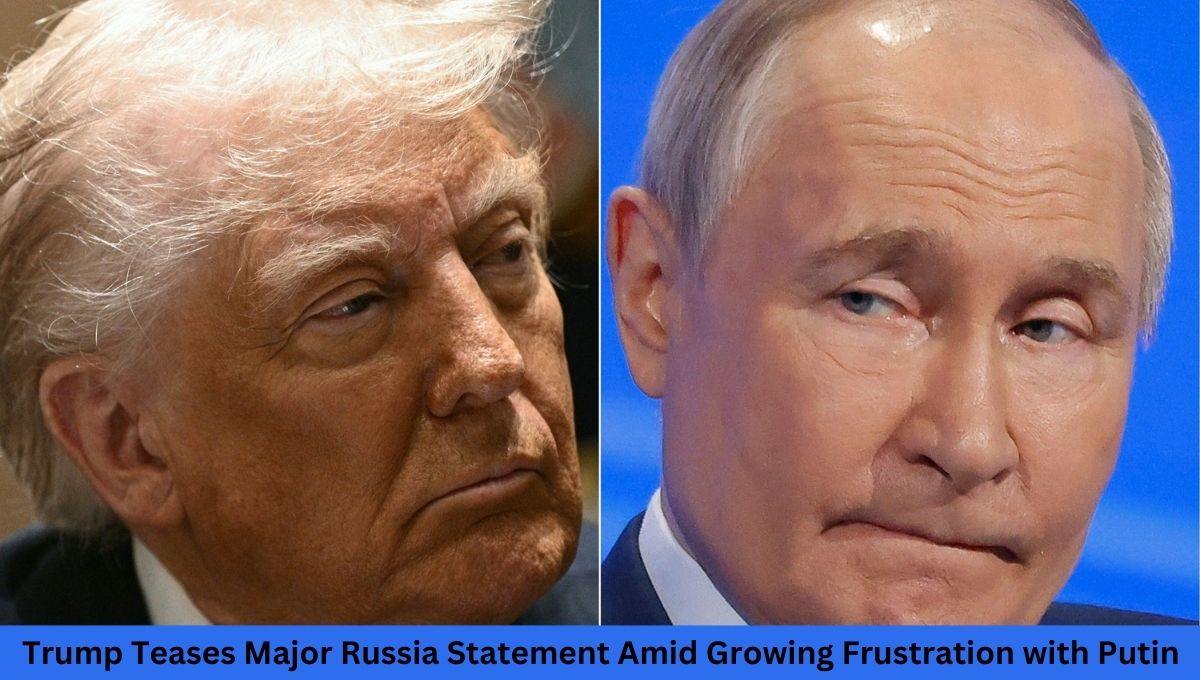
In a dramatic shift in tone, Trump Teases Major Russia Statement Amid Growing Frustration with Putin. U.S. President Donald Trump has expressed his frustration with Russian President Vladimir Putin over the ongoing war in Ukraine, signaling the possibility of a strategic pivot in American foreign policy. In a recent interview with NBC News, Trump hinted at a forthcoming “major statement” on Russia, expected Monday, sparking intense speculation in Washington and abroad.
Trump, once widely known for his admiration of Putin, appears to be recalibrating his stance as ceasefire efforts continue to stall and diplomatic tensions escalate. With a new NATO weapons deal, a major sanctions bill in Congress, and a potential shift in U.S.-Russia relations, the geopolitical landscape could soon change.
Trump Teases Major Russia Statement Amid Growing Frustration with Putin
Trump’s Disappointment with Putin: A Turning Point?
During the Thursday interview, President Trump said he is “disappointed” in Russia’s failure to advance meaningful peace talks with Ukraine, marking a departure from his previous rhetoric that often emphasized Putin’s strengths and potential as a negotiating partner.
“He’s very nice all the time, but it turns out to be meaningless,” Trump said about Putin, highlighting a growing sense of disillusionment.
This new rhetoric suggests Trump is not only frustrated by the lack of progress but may also feel personally rebuffed after years of defending Putin and attempting backchannel negotiations.
Sources close to the administration say Trump had privately offered generous ceasefire terms, including the recognition of Russia’s territorial gains and assurances against Ukrainian NATO membership terms that Putin has not accepted.
A “Major Statement” on Monday: What Might It Contain?
President Trump’s hint at a “major statement on Russia” expected Monday has triggered widespread speculation.
While the content remains under wraps, analysts believe it could cover:
- Details of the NATO-funded weapons deal
- Trump’s support for a new bipartisan Russia sanctions bill
- A renewed ceasefire proposal or diplomatic roadmap
- Warnings to Russian allies, including India and China, over energy trade
- A symbolic rebuke of Putin’s conduct in Ukraine
While Trump has been known for theatrical declarations, this announcement may carry real weight amid intensified conflict and growing bipartisan pressure to act.
NATO-Funded Weapons Deal: A Strategic Shift
In the same NBC interview, Trump outlined a new NATO-centered strategy for supplying arms to Ukraine.
Rather than direct U.S. funding, Trump said the weapons would be sold to NATO, which would fully cover the costs, before being transferred to Ukraine.
“We’re sending weapons to NATO, and NATO is paying for those weapons, 100 percent,” Trump explained.
The weapons, including Patriot missile systems, will enable Ukraine to better defend against Russia’s increasingly brutal drone and missile attacks, especially in cities like Kharkiv and Kyiv.
This arrangement allows Trump to support Ukraine militarily while sidestepping domestic political backlash from fiscal conservatives and “America First” supporters who oppose additional foreign aid.
Republican Backlash: Conservative Base Divided
Trump’s evolving approach to Ukraine is stirring division within his MAGA base. Prominent conservative voices and social media influencers have expressed discontent with Trump’s decision to resume weapons deliveries even if indirectly.
“I did not vote for this,” wrote Derrick Evans, a January 6 participant who was later pardoned by Trump.
“Who in the hell is telling Trump that we need to send more weapons to Ukraine?” posted right-wing duo Keith and Kevin Hodge on X.
Despite the backlash, Trump may be attempting to balance domestic political pressures with international responsibilities, especially with NATO allies watching closely.
Rubio-Lavrov Meetings: A Diplomatic Opportunity
The announcement also comes just days after a rare face-to-face meeting between Secretary of State Marco Rubio and Russian Foreign Minister Sergey Lavrov at the ASEAN summit in Kuala Lumpur.
The two met twice in as many days, with Thursday’s meeting lasting 50 minutes. Rubio told reporters afterward that Russia had presented a “new and different approach” to the Ukraine conflict, though he declined to give specifics.
“It’s not a new approach. It’s a new idea or a new concept that I’ll take back to the president to discuss,” Rubio said.
According to a Russian Foreign Ministry statement, the talks were “substantive and frank,” and both sides “reaffirmed mutual commitment to searching for peaceful solutions.”
Is a Policy Shift Underway or Just Political Theater?
While Trump’s rhetoric toward Putin has hardened, some experts remain skeptical that his underlying strategy has fundamentally changed.
“Western media is full of commentary on what it calls Trump‘s ‘changing stance’ on Putin. But as yet, there is no reason to think that anything has changed at all,” said Keir Giles, senior fellow at Chatham House.
Trump has previously lashed out at Putin, only to walk back his statements days later. The pattern of zigzag diplomacy has left both allies and adversaries uncertain of Trump’s true intentions.
Still, the combination of public frustration, strategic arms deals, and new sanctions legislation suggests that pressure is mounting for real change.
The Sanctions Angle: Trump Hints at Approval
Trump also confirmed that he is considering a bipartisan sanctions bill led by Senator Lindsey Graham, which targets key sectors of the Russian economy and places tariffs on countries that continue trading oil, gas, and uranium with Moscow.
“They’re going to pass a very major and very biting sanctions bill, but it’s up to the president as to whether or not he wants to exercise it,” Trump told NBC.
If approved, it would be a notable departure from Trump’s historically soft stance on sanctions. Since 2022, over 21,000 sanctions have been placed on Russian individuals and institutions, yet the Kremlin has weathered the storm better than expected.
Ukraine President Volodymyr Zelenskyy has called for tougher measures, saying: “Sanctions must be strengthened. Everything that will put pressure on Russia and stop it must be implemented as quickly as possible.”
Will Trump Target Russian Oil Trade Partners Like India and China?
One controversial aspect of the new bill is its provision to penalize countries that buy Russian energy, which could impact major global powers:
- India, which sourced 35% of its crude oil from Russia in 2024
- China, which bought 19% of its oil imports from Russia
- Turkey, which sourced 58% of refined petroleum from Russian suppliers in 2023
Even some European nations continue to import Russian uranium, undermining calls for a united Western energy embargo.
In March, Trump threatened “secondary tariffs” on Russian oil trade partners but did not follow through. If the sanctions bill passes, he may have little choice but to act.
Is the U.S. Preparing to Walk Away?
Earlier this year, Rubio made headlines by suggesting the U.S. might “move on” from the Ukraine conflict if diplomacy fails.
“It’s not our war. We have other priorities to focus on,” Rubio said during a press conference in Paris.
Trump echoed the sentiment without fully endorsing it: “I don’t want to say that, but we want to see it end.”
Such remarks reflect growing frustration within the Trump administration over the lack of progress and the spiraling costs of involvement.
Still, the recent arms deal and renewed talks suggest the White House isn’t ready to abandon diplomacy yet.
Next Round of U.S.-Russia Talks on the Horizon?
Russian Deputy Foreign Minister Sergei Ryabkov confirmed that a new round of bilateral talks could take place before the end of summer.
“I think that the current U.S. administration acts in a zigzag manner… but the positive trend in relations has not faded,” Ryabkov said.
According to Russian news agency TASS, the Rubio-Lavrov meeting was “frank” and focused squarely on Ukraine. Both sides have remained tight-lipped about the exact proposals on the table.
What’s Next: All Eyes on Monday
As Trump prepares for his Monday announcement, several outcomes are possible:
- Stronger sanctions against Moscow
- Details of the NATO arms pipeline
- A formal pivot in U.S. policy on Ukraine
- Renewed calls for direct U.S.-Russia negotiations
- Potential tariffs or penalties on Russia’s trading partners
Whatever the announcement includes, it is sure to shape the direction of U.S. foreign policy and redefine Trump’s legacy on the world stage.
Conclusion: Is This the End of Trump’s Patience with Putin?
President Trump’s recent comments reflect a notable hardening of tone toward Putin and Russia. From a new NATO weapons plan to potential economic sanctions and a looming “major statement,” signs point toward a more assertive U.S. stance though history cautions against premature conclusions.
Whether Trump’s frustration leads to tangible policy changes or fades into rhetoric remains to be seen. But for now, the Trump-Putin relationship appears to be entering uncharted waters, with global stakes hanging in the balance.
Also Read: Ukraine and Russia Conduct Largest Prisoner Swap of the War Amid Hopes for Peace
Also Read: ‘You’ll be seeing things happen’: President Trump teases ‘major statement’ on Russia