

In a significant moment during the ongoing war Ukraine and Russia Conduct Largest Prisoner Swap of the War Amid Hopes for Peace. In a historic move both nations have launched the largest prisoner swap of the conflict to date. On Friday, May 23, 2025, Ukraine and Russia each released 390 detainees comprising 270 soldiers and 120 civilians as part of a broader 1,000-for-1,000 prisoner exchange deal. The agreement was reached during last week’s direct peace talks in Istanbul, marking the first major diplomatic breakthrough in years.
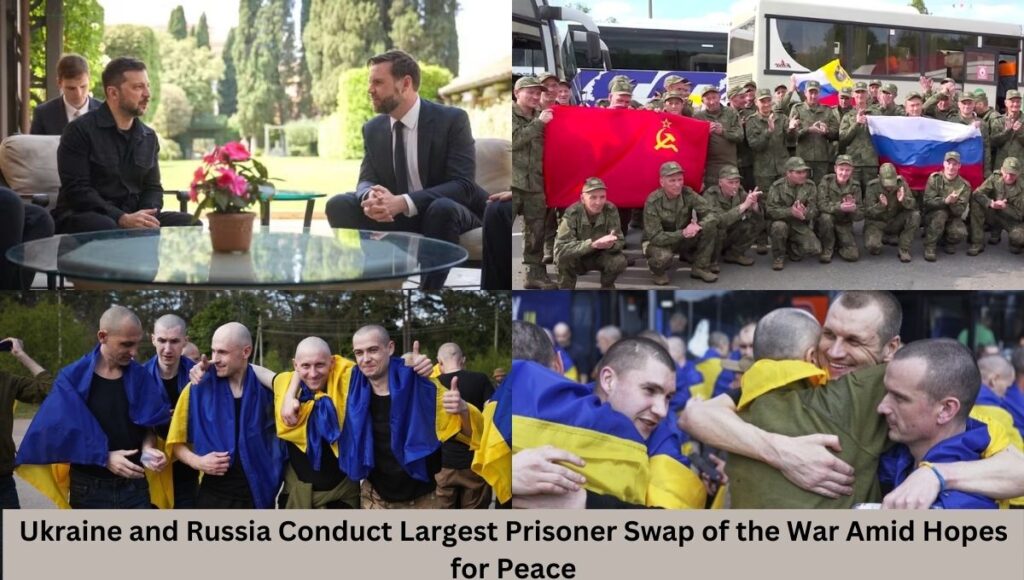
Ukraine and Russia Conduct Largest Prisoner Swap of the War Amid Hopes for Peace
A Historic Russia-Ukraine Prisoner Swap Begins
Ukrainian President Volodymyr Zelensky confirmed the development on Telegram, stating, “Today – 390 people. On Saturday and Sunday, we expect the exchange to continue.
It is very important to return everyone who remains in captivity.” The exchange has been seen as a tentative step toward peace, even as the war continues to rage across eastern and southern Ukraine.
Russia’s top negotiator, Vladimir Medinsky said, further the two sides also would “present their vision of a possible future ceasefire.”
Trump Applauds Exchange, Teases Bigger Breakthrough
Former U.S. President Donald Trump weighed in on the Russia-Ukraine prisoner swap via his platform, Truth Social.
He announced the operation mid-execution, writing, “A major prisoner swap was just completed between Russia and Ukraine. It will go into effect shortly. Congratulations to both sides on this negotiation. This could lead to something big???” Trump’s statement followed a recent phone call with Russian President Vladimir Putin.
The move drew mixed reactions, with some seeing it as a hopeful sign of diplomatic involvement and others warning against premature celebration.
Behind the Istanbul Talks: A Diplomatic Opening?
The prisoner swap was the main outcome of the May 16 peace talks in Istanbul, which were the first direct negotiations between Ukraine and Russia in over three years.
The agreement includes the phased release of 1,000 prisoners from each side, with further exchanges expected through the weekend.
Turkish Foreign Minister Hakan Fidan praised the agreement, calling it a “confidence-building measure” with the potential to open the door to broader negotiations.
Despite the swap, there was no ceasefire agreement reached in Istanbul. Still, both sides agreed to continue discussions, although no future venue or date has been confirmed.
Emotional Returns: Human Stories Behind the Numbers
In Chernihiv, Ukraine, buses carrying freed captives arrived to tearful reunions and crowds waving flags.
Among the returnees was soldier Oleksandr Tarasov, who had been held for nearly two years after being captured on the Kherson front. “I just want to speak to my loved ones,” he said.
Another freed soldier, Anton Kobylnyk, was seen breaking into tears as he spoke to his girlfriend by phone. “What you have done, waiting for me for these 37 months, is a very great feat,” he said.
Ukrainian authorities reported that among the 390 people returned on Friday, three were women and the rest men, with most wearing Ukrainian flag-colored bracelets and military fatigues.
Russia’s Perspective: Return to Belarus First
The Russian Ministry of Defense confirmed that its 390 freed prisoners 270 military personnel and 120 civilians were first transported to Belarus for medical and psychological evaluations before returning to Russia.
However, controversy has emerged over the nature of the “civilians” returned to Russia.
Ukraine claims that many were saboteurs or collaborators, not innocent bystanders, and insists that thousands of Ukrainian civilians remain abducted in occupied territories.
Ceasefire Unlikely: Russia Rejects 30-Day Proposal
Despite this humanitarian milestone, a Ukraine ceasefire proposal a 30-day pause in fighting was rejected by Moscow. Instead, Russia submitted a list of strict conditions:
- Full withdrawal of Ukrainian forces from annexed regions
- Additional territorial concessions
- A stop to Ukrainian military mobilization
- A ban on joining Western military alliances
Kyiv labeled these terms as unacceptable and equivalent to surrender, with Zelensky warning that they would leave Ukraine vulnerable to further aggression.
Frontline Fighting Intensifies
Even as prisoners returned home, fighting along the 1,000-kilometer front showed no signs of slowing. Russia claimed to have taken control of Rakivka, a village in the Kharkiv region.
Meanwhile, Russian missile strikes on the port city of Odesa killed one person and injured eight others.
Ukraine’s air force said 175 Shahed drones and one ballistic missile were launched by Russia since Thursday. Conversely, Russian sources claimed to have shot down 788 Ukrainian drones between May 20 and May 23.
These continued hostilities underline the fragile and volatile situation, despite the temporary humanitarian progress.
Ongoing Diplomatic Tensions and Future Talks
While the Istanbul meeting yielded the largest Russia-Ukraine prisoner swap, the bigger picture remains grim. Kremlin spokesperson Dmitry Peskov admitted that no new venue or date has been confirmed for further talks.
Russian Foreign Minister Sergey Lavrov said Moscow will issue new conditions for peace after the full prisoner exchange concludes.
However, Ukrainian officials are already pushing back, saying Russia is using the talks to stall while issuing new and unacceptable demands.
Human Toll Remains Devastating
The war, now in its fourth year, continues to devastate both countries. Independent estimates suggest hundreds of thousands of soldiers have been killed or wounded, with tens of thousands of Ukrainian civilians dead due to shelling, airstrikes, and sieges.
Families still wait anxiously for word of missing relatives. “It’s extremely hard to go to sleep every night not knowing what happened to him,” said Svitlana Kuskova, holding a sign with her missing husband’s photo in Chernihiv.
Conclusion: A Small Glimmer of Humanity
While the Russia-Ukraine prisoner swap does not represent a political breakthrough, it is a rare and meaningful act of cooperation in an otherwise brutal and deadlocked conflict.
With nearly 2,000 prisoners set for release, the swap has given families a moment of relief and hope. Whether this humanitarian progress can be translated into sustained peace negotiations is uncertain.
But for now, as more detainees return home and families reunite, this moment stands as a symbol of resilience and shared humanity amid devastation.
Also Read: Russia Intensifies Drone and Missile Attacks on Kyiv Amid Largest Prisoner Swap
Related Posts:
- 7 Powerful Measures: Trump Sanctions Russian Oil…

- 3 Explosive Conditions Iran Sets to End War with US…

- In 8 Moves, EU Targets China-Linked Refineries and…

- Trump’s 20-Point Gaza Peace Plan Gains Urgent Global…

- 5 Major Takeaways from the US Supreme Court's…

- Afghanistan–Pakistan War 2025: Inside the 48-Hour Ceasefire
