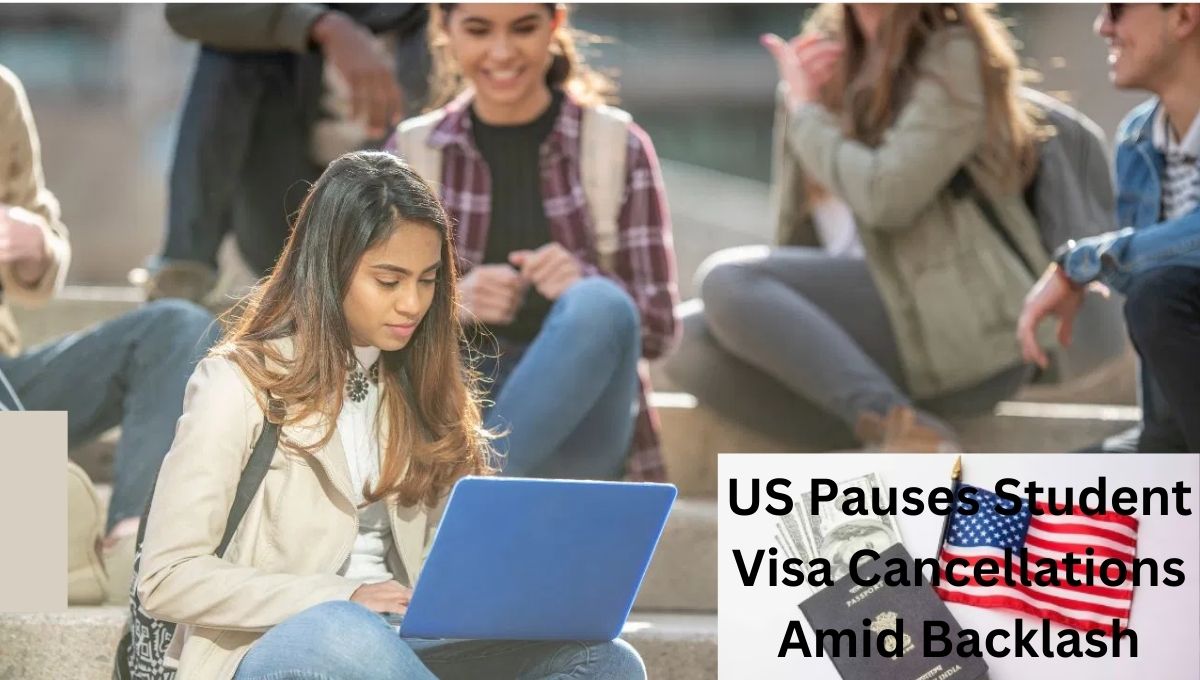
In a dramatic turn of events, US Pauses Student Visa Cancellations Amid Backlash. The United States government, paused the cancellation offering a temporary reprieve to thousands of students caught in immigration limbo. The move follows weeks of legal challenges, student protests, and growing pressure from universities across the country.
Assistant US Attorney Joseph F. Carilli Jr., on Friday, informed a Washington D.C. court that temporarily the Immigration and Customs Enforcement (ICE) will halt the revocation of student visas.
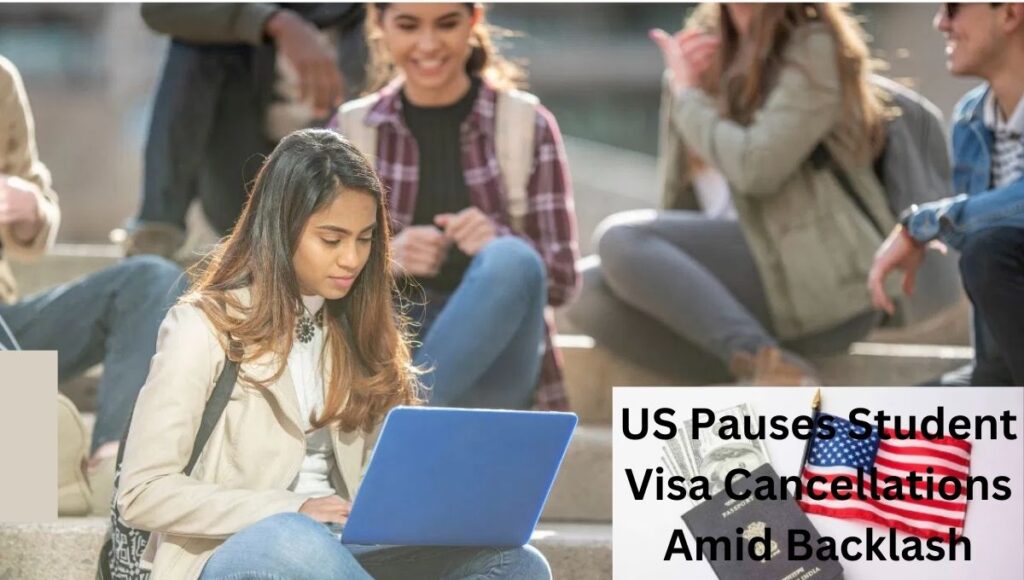
US Pauses Student Visa Cancellations Amid Backlash: What International Students Need to Know
A Sudden Pause on Visa Cancellations
Until the development of a new review system, the SEVIS (Student and Exchange Visitor Information System) status for affected students will remain active or be reactivated if it was previously terminated. This announcement was made as ICE faced mounting criticism for mass terminations of student records. According to media reports, over 1,500 individuals were impacted and up to 4,700 according to legal organizations. Before being told their visa status was revoked, many students had no warning, forcing some to self-deport while others faced detention.
Political and Campus Backlash
Widespread pro-Palestinian protests on U.S. university campuses, sparked by Israel’s invasion of Gaza following the Hamas attack on October 7, 2023 coincided with the wave of visa cancellations. Although, many cancellations stemmed from minor legal infractions, such as dismissed traffic violations, federal authorities alleged that some students participated in activities supporting terrorist organizations.
The Trump administration’s broader crackdown has also targeted universities it accuses of not doing enough to safeguard Jewish students. Activists undermining U.S. foreign policy were warned by the Secretary of State Marco Rubio that they could face immigration consequences.
Indian Students Hit Hardest
A significant share of the fallout was borne by Indian students. A 50% of the 300+ cancellations involved Indian nationals as reviewed by U.S. lawyers’ association. No official government breakdown has been released, but for a group that makes up a substantial portion of America’s international student population, the trend is alarming.
Many of the Indian students, particularly those engaged in post-graduate Optional Practical Training (OPT) programs, suddenly found themselves deleted from SEVIS, leaving them vulnerable to deportation for minor legal entanglements or dismissed charges.
Universities Rally to Support International Students
Facing a potential $44 billion blow to the U.S. economy, the amount international students contributed last year, universities have rallied behind their foreign students. Institutions like George Mason University, the University of California system, and Duke University have offered legal guidance, advising students to stay enrolled and seek legal counsel.
Some universities, for the fear they wouldn’t be allowed reentry, even advised students not to leave the country during the summer break. Over 200 students, were allowed by legal appeals to temporarily halt their deportations, and faculty members have gone to court questioning the constitutionality of ICE’s actions.
Emphasizing the importance of global talent, President of MIT, Sally Kornbluth, stated, “We would be gravely diminished without the students and scholars who join us from other nations.”
Students Caught in Fear and Uncertainty
Fear remains high among international students, despite the recent pause. Stories have emerged of some students choosing to leave voluntarily rather than risk detention and students turning away from uniformed officers out of fear of arrest.
In Georgia, one Indian computer science undergraduate, who asked to remain anonymous, over a dismissed DUI charge had his SEVIS status revoked. The fear persists, although his college is allowing him to continue his studies. He admitted, “If I see anyone in a uniform, I turn around.”
Another case involves, Momadou Taal, a Cornell University student, who led campus protests, after being asked to surrender to immigration officials, opted to leave the U.S. He plans to complete his studies remotely from the U.K.
Legal Wins and Ongoing Battles
Judges across at least 23 states, citing concerns about due process violations, issued emergency orders blocking the Trump administration’s mass cancellations. On behalf of affected students, over 100 lawsuits have been filed, highlighting a chaotic and, at times, opaque decision-making process.
Just hours before ICE officials were set to testify under oath, the reversal came, suggesting the administration sought to avoid further legal scrutiny.
For students entangled in national security concerns, the future remains murky. In high-profile cases, such as that of Rümeysa Öztürk, doctoral student, of Tufts University, and Mahmoud Khalil, an activist of Columbia University, indicate that the government may continue targeting individuals it deems national security risks, separate from the broader reversal.
ICE’s Expanding Control Over Campuses
Trump administration’s move, critics argue, fits a broader pattern of increasing ICE’s direct control over university campuses. Traditionally, universities managed SEVIS status updates, but ICE’s aggressive role marks a shift in power.
Digital surveillance and the politicization of campus activism, particularly pro-Palestinian movements, have drawn comparisons to the post-9/11 monitoring of Muslim students.
Students with minor infractions can breathe a sigh of relief for now, but the legal and political fight over student visas in America appears far from over.
Also Read: U.S. Halts New Student Visa Interviews Amid Plan for Expanded Social Media Vetting
Also Read: US govt halts student visa cancellations – huge respite for hundreds of Indian students
Related Posts:
- Harvard’s SEVP Certification Revoked: What This…

- 5 Major Takeaways from the US Supreme Court's…

- 7 Alarming Impacts of Trump’s Plan to Expand the US…

- Paul Kapur: Confirmed as US Assistant Secretary 2025

- 7 Heartbreaking Facts About Venezuela's Earthquake Disaster
- 9 Devastating Impacts of America’s Historic Winter…