Indian-American Paul Kapur: Confirmed as US Assistant Secretary 2025 for South and Central Asian Affairs. The United States Senate on Tuesday confirmed S. Paul Kapur, an Indian-American academic, as the next Assistant Secretary of State for South and Central Asian Affairs.
In this key diplomatic position, Kapur will be America’s principal official handling relations with India, Pakistan, Afghanistan, Bangladesh, and other countries in the region. Born in New Delhi to an Indian father and an American mother, Kapur brings a unique perspective to this strategic role, combining his South Asian heritage with decades of scholarly expertise in security studies and regional geopolitics.
“Appearing before you, I can’t avoid the feeling of having come full circle. I was born in New Delhi… never imagining that my career would someday return me to the place where I was born,” Kapur said, reflecting on his confirmation.
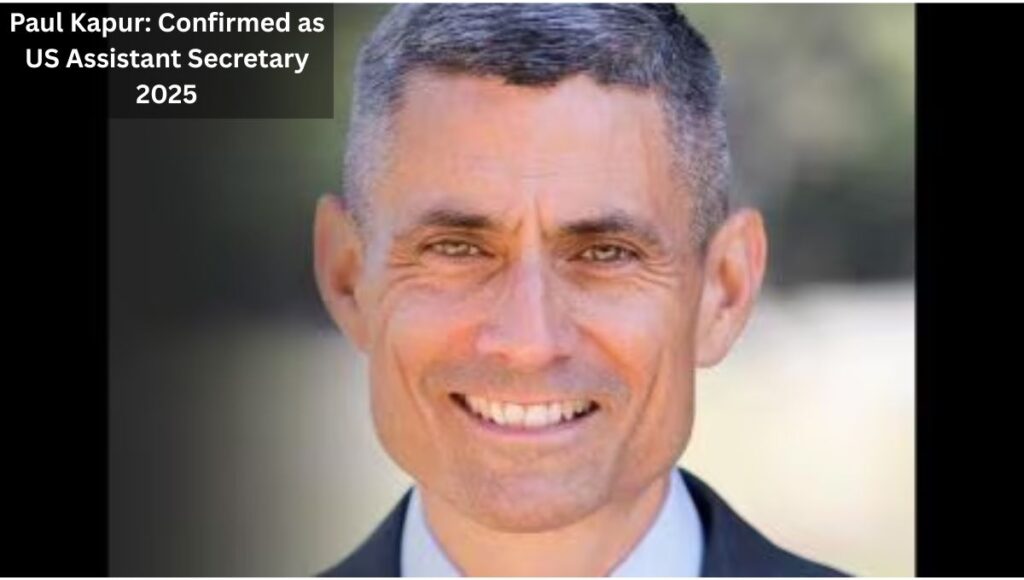
Paul Kapur: Confirmed as US Assistant Secretary 2025
Early Life and Education
Kapur was raised in the United States after moving from New Delhi as a child. His bicultural upbringing gave him a broad perspective on global politics and the complexities of South Asian affairs.
He earned his bachelor’s degree from Amherst College and subsequently completed a PhD in Political Science at the University of Chicago in 1999. His academic background laid the foundation for a career that bridges scholarship and policy-making.
Academic Career and Expertise
Before entering government service, Kapur was a professor at the US Naval Postgraduate School and a visiting fellow at Stanford University’s Hoover Institution. He has also taught at the US Naval War College, contributing to the education of future military and diplomatic leaders.
Kapur specializes in:
- South Asian security
- US-India relations
- Pakistan’s foreign policy and strategy
- Nuclear deterrence and regional conflict
He is widely recognized as an authority on how Pakistan has historically used militant groups as a tool of state strategy.
“Pakistan did not adopt its militant strategy during the Zia era; it has been a deliberate, long-running policy as old as the Pakistani state,” Kapur wrote in his 2017 book, Jihad as Grand Strategy.
Key Publications
Kapur’s research has influenced policymakers and academics alike. His notable works include:
- Jihad as Grand Strategy: Islamist Militancy, National Security, and the Pakistani State (2017)
- Dangerous Deterrent: Nuclear Weapons Proliferation and Conflict in South Asia (2007)
- India, Pakistan, and the Bomb: Debating Nuclear Stability in South Asia (2010)
- The Challenges of Nuclear Security: US and Indian Perspectives (2024, co-edited)
In Jihad as Grand Strategy, Kapur argues that Islamist militancy is used deliberately by Pakistan as a central pillar of its foreign policy, including in Kashmir and Afghanistan. His research has highlighted the limits of US-Pakistan partnership and emphasized the importance of a strong US-India relationship.
Views on Pakistan and Security in South Asia
Kapur has been critical of Pakistan’s approach to militancy, noting that Islamabad has historically used terrorist groups to challenge India and influence Afghanistan. He has described militant organizations as “primary offensive tools” for Pakistan in conflicts like the 1947 and 1965 wars, as well as the Kashmir insurgency.
While acknowledging Pakistan’s role in negotiating the US withdrawal from Afghanistan, Kapur has also emphasized:
“Despite apparent Pakistani crackdowns on terrorist organizations, including Lashkar-e-Taiba, senior leaders remained at large in Pakistan.”
He has opposed expanding US security ties with Pakistan, including a $450 million sustainment package for Pakistan’s F-16 fighter jets in 2022, arguing that such moves could damage US-India relations.
Advocacy for Strong US-India Partnership
Kapur has consistently argued for closer cooperation between the United States and India, highlighting the strategic benefits of collaboration in security, trade, and technology.
“The United States–India strategic partnership has a natural, seemingly inevitable quality about it. Ensuring a free and open Indo-Pacific region, balancing China’s rising power, and enhancing prosperity through trade create strong incentives,” Kapur wrote.
His appointment signals a US policy tilt towards strengthening ties with India while maintaining a cautious approach to Pakistan.
Career in Policy and Diplomacy
Before his latest appointment, Kapur served on the State Department’s Policy Planning Staff during the Trump administration, focusing on:
- Indo-Pacific strategy
- US-India relations
- Regional security planning
His combination of academic expertise and practical policy experience makes him well-suited for navigating the complexities of South and Central Asian diplomacy.
“His research often underscores Pakistan’s use of jihadist groups as deliberate state policy, reflecting his nuanced approach to regional security,” notes observers of US foreign policy.
Confirmation by the US Senate
Kapur was among 107 nominees approved by the US Senate. His confirmation comes amid the ongoing US government shutdown, demonstrating the priority given to strategic appointments in South and Central Asia.
As Assistant Secretary, Kapur will oversee America’s diplomatic engagement in a region of growing strategic importance, including India, Pakistan, Bangladesh, and Afghanistan. He will also play a role in shaping policies on nuclear deterrence, counterterrorism, and regional stability.
Bridging Scholarship and Diplomacy
Kapur’s career exemplifies the intersection of research and policy. He has actively participated in Track 1.5 dialogues, connecting government and non-government actors to improve diplomacy between the US and South Asian nations.
His approach combines evidence-based analysis with actionable policy recommendations, offering insights into:
- Terrorism and militant strategy in South Asia
- Nuclear proliferation and deterrence
- Bilateral and multilateral diplomacy in the Indo-Pacific
Personal Journey
Kapur’s personal story adds a unique dimension to his professional expertise. Born in New Delhi, he grew up in the United States with strong ties to India. His bicultural upbringing gave him a global perspective, enriching his understanding of South Asian geopolitics.
“I grew up as a thoroughly American kid, never imagining that my career would someday return me to the place where I was born,” he reflected during his confirmation hearing.
Strategic Challenges Ahead
As the US navigates a complex geopolitical landscape in South Asia, Kapur’s appointment comes at a critical juncture. Key challenges include:
- Managing US-India relations amid trade and defense negotiations
- Addressing Pakistan’s role in regional instability
- Supporting Afghanistan’s security and humanitarian concerns
- Strengthening regional cooperation in counterterrorism and nuclear security
Kapur’s academic research and policy experience position him to provide thoughtful guidance on these issues.
Expert Perspectives
Observers note that Kapur’s scholarship has shaped US understanding of South Asian security. His analysis of Pakistan’s militant strategy, coupled with advocacy for stronger US-India ties, is expected to influence policy decisions under the Trump administration.
“Kapur’s appointment reflects a focus on practical, research-driven solutions to complex security challenges in the region,” said a former State Department official.
Legacy and Influence
Kapur’s work demonstrates how academic insight can inform real-world diplomacy. His books and policy recommendations have contributed to shaping:
- US South Asian strategy
- Counterterrorism frameworks
- Nuclear security policies
- Bilateral US-India cooperation
By combining scholarship with hands-on diplomacy, Kapur exemplifies the role of knowledge in global policymaking.
What’s Next for US-South Asia Relations?
With Kapur at the helm, the US is likely to pursue:
- Enhanced strategic engagement with India
- Measured and cautious engagement with Pakistan
- Focus on Indo-Pacific stability
- Collaboration on counterterrorism and nuclear security
His appointment underscores Washington’s commitment to evidence-based policy and regional security in a rapidly changing geopolitical environment.
Conclusion
S. Paul Kapur’s confirmation as US Assistant Secretary of State for South and Central Asia represents a convergence of scholarship, diplomacy, and strategic vision. From New Delhi to Chicago, from academic research to the corridors of the State Department, Kapur’s journey is a testament to the power of knowledge, expertise, and cross-cultural insight.
His deep understanding of South Asian security, nuclear strategy, and regional geopolitics will guide America’s engagement with India, Pakistan, Afghanistan, and other nations, shaping the US role in one of the world’s most strategically critical regions.
“The United States and India share a host of common interests, from a free and open Indo-Pacific to economic growth and technological cooperation,” Kapur said, reflecting his forward-looking approach to diplomacy. With Kapur’s appointment, Washington signals a new phase of engagement in South and Central Asia, balancing strategic interests, regional stability, and long-term partnerships.
Also Read: Kash Patel Faces Senate Showdown Amid FBI Turmoil and Charlie Kirk Assassination Probe
Also Read: What being Trump’s man in South Asia means for Pakistan-critic Paul Kapur
Related Posts:
- 5 Key Shifts in Bangladesh–Pakistan Relations as…

- Afghanistan–Pakistan War 2025: Inside the 48-Hour Ceasefire

- 5 Major Takeaways from the US Supreme Court's…

- 3 Afghan Cricketers Killed in Pakistan Airstrikes:…

- 7 Heartbreaking Facts About Venezuela's Earthquake Disaster

- Pakistan’s Ishaq Dar in Dhaka: Bangladesh Visit…