

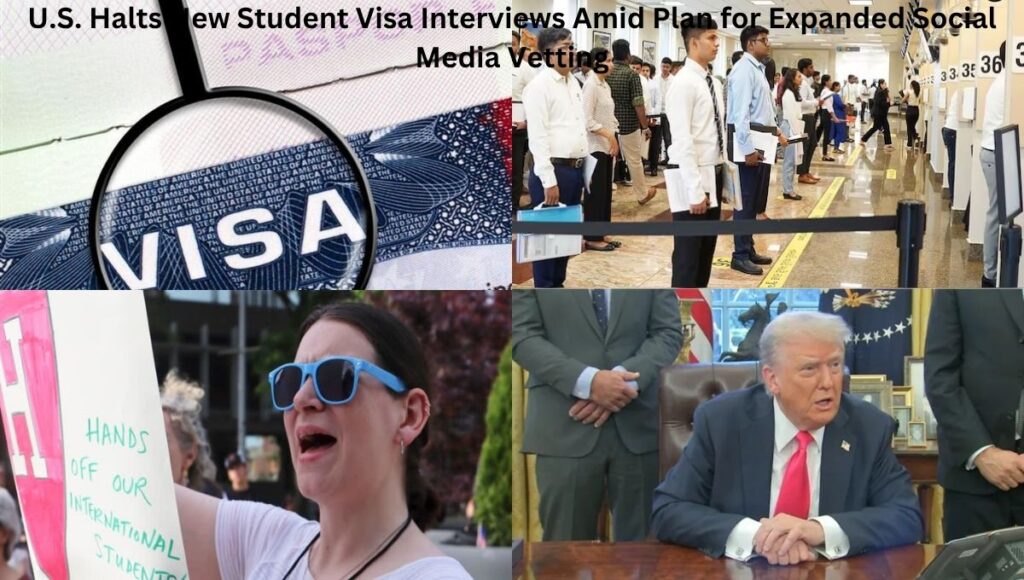
In a dramatic shift U.S. Halts New Student Visa Interviews Amid Plan for Expanded Social Media Vetting. Thousands of international students are affected as the U.S. State Department has paused the scheduling of new student visa interviews worldwide.
The move, made official via a diplomatic cable signed by Secretary of State Marco Rubio, comes as the Trump administration pushes for tougher immigration policies and expanded social media vetting for all student visa applicants. The suspension, confirmed by multiple sources including Politico, Bloomberg, and The Associated Press, targets F, M, and J visa categories covering academic, vocational, and exchange programs.
U.S. Halts New Student Visa Interviews Amid Plan for Expanded Social Media Vetting
Why the U.S. Suspended New Student Visa Appointments
According to the internal directive, the pause is “effective immediately” and will last “until further guidance is issued.” The main reason cited is the upcoming expansion of social media screening requirements for international students, which aims to identify “ideological threats” and “national security risks.”
At a press briefing, State Department spokesperson Tammy Bruce stated, “Whether you’re a student or a tourist, we’re going to be looking at you.”
Bruce emphasized the administration’s commitment to more comprehensive screening as part of broader immigration enforcement.
Existing Interviews Will Proceed
The State Department has clarified that only new student visa appointments are affected. Applicants who already have interviews scheduled will not be impacted and may proceed under existing guidelines.
However, no new appointment slots will be released at U.S. embassies and consulates worldwide until updated instructions are issued regarding the social media vetting protocol.
Harvard University in the Crosshairs
This announcement follows a controversial move last week, where the Trump administration revoked Harvard University’s authorization to enroll international students under the Student and Exchange Visitor Program (SEVP).
A federal judge temporarily blocked the action, but it underscored the escalating tension between the White House and elite U.S. academic institutions.
Trump has accused some top universities, including Harvard, of enabling antisemitic activism and biased admissions practices, particularly in response to pro-Palestinian protests.
“The administration appears to be targeting institutions that it deems politically non-compliant,” said an education policy analyst at Tufts University.
Concerns Over Social Media Vetting
Perhaps the most controversial element of this new policy is the intensified social media screening. While past visa procedures already included some checks, the new guidelines would make social media review mandatory for all student visa applicants.
Critics warn this could infringe on freedom of expression and create ideological profiling. Students who have posted pro-Palestine messages or displayed Palestinian flags online are already facing increased scrutiny, raising alarms from civil rights organizations.
“Screening students for their political beliefs is a dangerous step toward authoritarianism,” said a representative from the American Civil Liberties Union (ACLU).
The State Department has refused to elaborate on the tools and criteria for vetting social media, citing national security concerns.
Indian and Global Students at Risk
India, one of the largest sources of international students to U.S. institutions, is expected to be significantly affected. The U.S. Embassy in Delhi recently issued a warning:
“If you drop out, skip classes, or leave your program without informing your school, your student visa may be revoked, and you may lose eligibility for future U.S. visas.”
This comes on the heels of multiple visa revocations and deportations of students over minor infractions or perceived political activity.
Many Indian students preparing for summer or fall intake now find themselves in limbo, unsure of when or if they’ll be able to obtain the necessary visas.
Financial and Academic Fallout for U.S. Universities
U.S. colleges and universities heavily depend on international student enrollment both for cultural diversity and financial sustainability. Foreign students often pay full tuition rates, helping to offset reductions in public funding and research grants.
A prolonged pause in student visa processing could lead to declining enrollment numbers, reduced revenue, and strained international partnerships.
“This could drive talented students to pursue education in Canada, the UK, or Australia,” said an admissions consultant from New York University. Universities are also voicing concerns over the legal ambiguity of these measures, especially with no clear timeline for resuming interviews.
Constitutional and Diplomatic Implications
The Trump administration’s use of social media vetting and visa revocations to target individuals for their political views has raised serious constitutional questions. Multiple lawsuits have been filed, citing violations of the First Amendment and academic freedom.
One such case involves a Tufts University student from Turkey who was detained for six weeks after co-authoring an op-ed critical of Israel’s war in Gaza.
Meanwhile, the diplomatic fallout is growing. U.S. allies, including India and several European nations, have voiced concerns through diplomatic channels, seeking clarification on the vetting standards and timeline for reinstating visa processing.
The Road Ahead: Waiting for New Guidelines
As of now, the global pause on new student visa appointments remains in effect. Consular posts are being instructed to prioritize services for U.S. citizens, immigrant visas, and fraud prevention, while awaiting new guidance.
Secretary Marco Rubio’s memo did not offer a specific timeline but hinted that updates will arrive in the “coming days.”
For students, universities, and foreign governments, uncertainty prevails.
Conclusion: An Uncertain Future for Global Education in the U.S.
The student visa suspension, coupled with expanded social media vetting, marks a pivotal moment in U.S. immigration policy. While the Trump administration insists it is necessary for national security, critics warn it is eroding America’s image as a beacon for international education.
As legal battles continue and diplomatic tensions rise, students around the world are left waiting, their academic futures hanging in the balance.
Also Read: US Pauses Student Visa Cancellations Amid Backlash: What International Students Need to Know
Also Read: Why the Trump Administration Is Pausing New Student Visa Interviews at Embassies Across the World
Related Posts:
- 5 Major Takeaways from the US Supreme Court's…
- 7 Shocking Facts About Trump’s $1 Million Gold Card…

- US Pauses Visa Interviews, Indian Students Face…

- 7 Alarming Shifts: Trump’s New H-1B ‘Censorship’…

- 7 Heartbreaking Facts About Venezuela's Earthquake Disaster
- Harvard’s SEVP Certification Revoked: What This…
