7 Shocking Facts About Trump’s $1 Million Gold Card Visa Program — America’s new fast-track residency scheme. The United States has formally entered the global “golden visa” market with the launch of President Donald Trump’s highly publicized Trump Gold Card, a million-dollar immigration scheme designed to fast-track permanent residency for foreign nationals who can afford steep financial requirements.
The rollout of this premium visa—positioned as “somewhat like a Green Card but much better”—marks one of the most dramatic shifts in U.S. immigration policy in decades. Trump’s announcement instantly triggered waves across business circles, immigration law firms, global wealth advisory networks, and political commentators.
Marketed as an economic win that could bring “many billions of dollars” into the U.S. Treasury, the Gold Card effectively allows individuals and corporations to purchase accelerated U.S. residency through a mixture of processing fees and substantial “gift contributions.”
With an official government website—trumpcard.gov—now live and accepting applications, many wealthy individuals, multinational corporations, and immigration consultants are attempting to decode what the new program offers, how its requirements differ from traditional pathways, and what its implications are for broader U.S. immigration policy.
This article unpacks the full structure of the Gold Card program, the associated costs, eligibility rules, corporate sponsorship benefits, the upcoming $5 million Trump Platinum Card, the political tensions surrounding the scheme, and step-by-step instructions on how applicants can navigate the system.
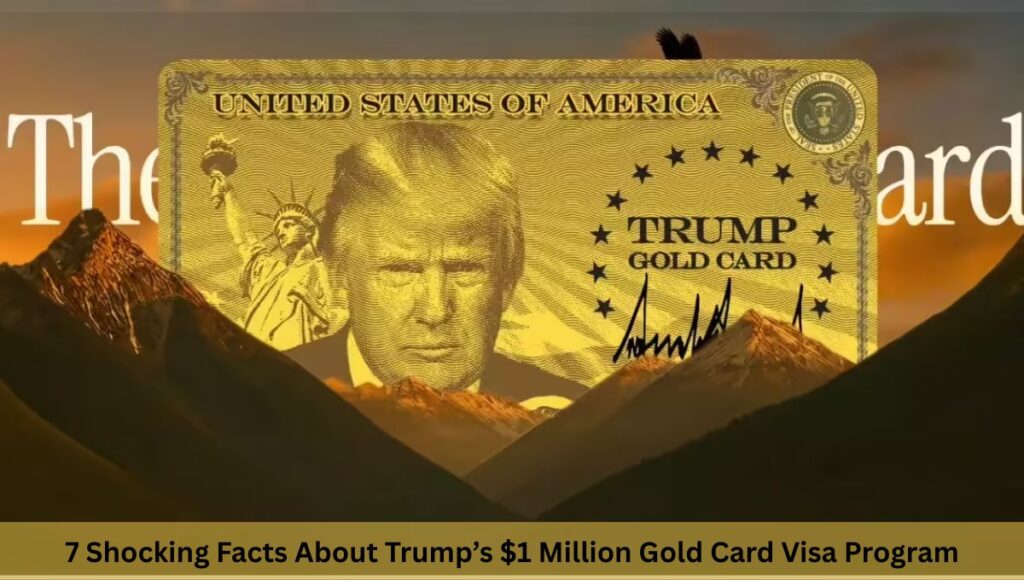
7 Shocking Facts About Trump’s $1 Million Gold Card Visa Program
What the Trump Gold Card Offers — A New Premium Residency Pathway
The Trump Gold Card has been framed as a fast-track residency program for high-net-worth individuals willing to make major financial contributions to the U.S. government. At its core, the visa combines traditional employment-based immigration categories (EB-1 and EB-2) with an additional, unprecedented pay-to-expedite mechanism.
Core Benefits of the Trump Gold Card
According to reports from Reuters, The Guardian, The Independent, and statements from U.S. officials, the Gold Card provides:
- Fast-track approval for lawful permanent residency
- Eligibility through EB-1 or EB-2 visa categories after vetting
- Ability to bring spouse and unmarried children under 21
- A simplified application system via a central government portal
- Priority processing compared to standard backlogged visa pathways
Trump has marketed the product as “basically a Green Card, but much better,” promoting it as a tool that can fix America’s inability to retain high-skilled foreign graduates, researchers, and corporate talent.
What Applicants Must Pay
To receive a Gold Card, individuals must cover:
- $15,000 non-refundable processing fee to DHS
- Background checks (applicants and family members)
- A $1 million “gift contribution” after DHS approval
- Additional small State Department fees depending on nationality and visa availability
The program uses the word “gift” rather than investment, an approach that differentiates it from other nations’ investment visa systems which usually require investment in real estate, funds, or job-creating enterprises.
Why the U.S. Created a Golden Visa Now
Trump’s administration has justified the Gold Card on two major grounds:
- Economic benefits: Large inflows of money to the Treasury during a period of budget pressure.
- Talent retention: A solution for companies that lose skilled foreign workers due to visa caps, expirations, or backlogs.
Commerce Secretary Howard Lutnick suggested more than 10,000 people pre-registered, stating the program could bring “billions of dollars” into federal accounts.
Corporate Gold Card: Companies Can Pay $2 Million to Fast-Track Talent
A major and highly controversial portion of the policy is the Trump Corporate Gold Card, a corporate-tier version that allows companies to effectively purchase fast-track permanent residency for employees.
Corporate Costs and Requirements
Corporations sponsoring foreign workers must pay:
- $15,000 processing fee per employee
- $2 million gift to the U.S. government per employee
- 1% annual maintenance fee (equivalent to $20,000 per year)
- 5% transfer fee when assigning the visa to another employee, which includes new background checks
Unlike the individual Gold Card, the corporate version is transferable, making it a reusable residency slot purchased by the company. This mechanism is unique and has no direct equivalent in other countries’ investment visa programs.
Why Companies Pushed for This System
Trump claimed Apple CEO Tim Cook was among the strongest advocates for a fast-track recruitment solution, emphasizing that U.S. companies struggle to retain high-value international graduates who are forced to return home due to visa constraints.
The administration argues the Gold Card:
- Helps retain graduates from elite U.S. institutions
- Addresses long-standing H-1B, OPT, and Green Card backlog issues
- Allows companies to permanently keep talent without waiting for random lotteries
Critics argue this system creates a market where wealthy firms can circumvent the usual rules, widening inequality within the immigration system.
Trump Platinum Card: The Upcoming $5 Million Super Visa
In addition to the Gold Card, the Trump administration has announced the development of a superior tier—the Trump Platinum Card, which will cost:
- $5 million one-time “gift contribution”
- $15,000 processing fee
Key Platinum Card Benefits
According to The Guardian and The Independent, the Platinum Card will provide a unique advantage:
- Stay in the U.S. up to 270 days per year without being taxed on foreign income
This tax exemption is one of the most financially attractive features ever offered by a U.S. residency-type program, targeting ultra-high-net-worth individuals seeking partial residence without full tax liability.
High Demand and Delayed Launch
While the Platinum Card is listed as “coming soon” on the official portal, some administration officials claim prototypes have been previewed privately to investors.
The White House has not given a launch date, but immigration analysts expect high demand given similar international programs:
- New Zealand’s new visa requires around $3 million
- Cyprus previously offered citizenship for €2 million
- Malta and Portugal operate competitive residency-by-investment schemes
The U.S. entering this market could dramatically shift global investor movement.
A Visa With Trump’s Face on It: Branding and Political Messaging
Numerous media outlets, including HuffPost and the New York Post, noted that the Gold Card features:
- A stern portrait of Donald Trump
- The Statue of Liberty
- A bald eagle
- The U.S. flag
- The presidential seal
- Trump’s signature and designation as 45th and 47th President
This unusual branding decision has sparked debate over whether government-issued immigration documents should include presidential imagery. Critics say it politicizes a federal process. Supporters argue it promotes a strong American brand and has marketing value for foreign elites.
How the Gold Card Fits Into Trump’s Broader Immigration Agenda
The Gold Card rollout coincides with intensified immigration crackdowns, including:
- Rapid deportations
- Major reductions in legal immigration pathways
- Pressure on universities to cut international student enrollment
- Legal status removal from hundreds of thousands of immigrants
Critics Call It Hypocritical
Opponents, including advocacy groups and editorial boards, argue the Gold Card contradicts Trump’s messaging by:
- Harshly restricting poor migrants
- Offering special access to wealthy elites
- Allowing millionaires to bypass backlogs faced by refugees, workers, and families
Several analysts have labeled it “immigration for sale.”
Trump’s Defense
Trump insists there is no contradiction. His defense:
- Applicants are “very successful people”
- They “will spend a lot of money to come in”
- They contribute more than those who “walk across the borders”
For Trump, the Gold Card aligns with merit-based immigration framed around wealth, skills, and economic impact.
Not an Automatic Green Card or Citizenship — Important Fine Print
Despite Trump’s posts claiming a “direct path to citizenship,” the Gold Card itself does not instantly grant citizenship or even unconditional permanent residency.
Applicants Must Qualify Under EB-1 or EB-2
The Independent clarified that Gold Card recipients must still meet criteria under:
- EB-1: Extraordinary ability, top researchers, executives
- EB-2: Advanced degrees, exceptional ability
This key requirement means not all wealthy applicants automatically qualify.
No Automatic Citizenship
To obtain citizenship:
- Applicants must hold permanent residency for five years
- Remain physically present in the U.S. for required periods
- Pass English and civics tests
- Maintain clean records
The Gold Card accelerates residency, not naturalization.
Payment Structures
Important clarification:
- The $1 million fee is only due after approval
- Applicants pay the processing fee first
- DHS completes vetting
- Only then is the gift contribution collected
This helps filter unserious or ineligible applicants.
Step-by-Step: How to Apply for the Trump Gold Card
The U.S. government has centralized the application process on trumpcard.gov, which features a simple, government-style interface.
Step 1: Choose the Card Type
Applicants choose:
- Trump Gold Card (Individual)
- Trump Corporate Gold Card
- Trump Platinum Card (waitlist only at present)
Step 2: Complete the Personal Information Form
Applicants must submit:
- Full legal name
- Phone number
- Email address
- Gender
- Place of birth
- Country of citizenship
- Current physical address
- Number of dependents (spouse + children under 21)
Each family member requires their own $15,000 processing fee and later their own $1 million gift.
Step 3: Create a myUSCIS Account
As part of centralized verification, the system redirects applicants to create or link a myUSCIS.gov account.
Step 4: Pay the Processing Fee
A payment portal displays:
- $15,000 processing fee
- $375 administrative and card surcharge
- Credit card surcharge of 2.5% for card users
Total: $15,375
Step 5: DHS Vetting and Background Checks
The vetting process includes:
- Security screenings
- Criminal record checks
- Inter-agency verification
- Family member screening
- Financial source-of-funds review
Step 6: Approval and Final Payment
After vetting:
- Applicants pay $1 million (individual) or $2 million (corporate)
- Payment may be made through bank transfer or cryptocurrency
- Funds from parents or loans are permitted
Once funds clear, USCIS issues lawful permanent residency.
Application Timeline and Processing Speeds
The program advertises residency “in record time.” According to internal guidance:
- Processing may take weeks, not years
- Some nationalities may still face visa number delays
- Corporate cases may move even faster due to internal prioritization
Compared to traditional backlogs—especially for Indian, Chinese, and Mexican applicants—the Gold Card slashes multi-year waiting times.
How the Gold Card Compares to Other Countries’ Golden Visa Programs
Globally, residency-by-investment programs are not new. Portugal, Greece, Cyprus, Malta, and New Zealand offer similar models.
Key Comparisons
| Country | Investment Required | Benefits |
| USA Gold Card | $1 million gift | Direct permanent residency after EB-1/EB-2 qualification |
| USA Platinum Card | $5 million gift | 270 days in U.S., no tax on foreign income |
| New Zealand | ~$3 million | Residency with job creation or investment |
| Portugal | €280k–€500k | Residency, eventual citizenship |
| Greece | €250k | Residency with no stay requirement |
| Malta | €600k–€750k | Citizenship after 1–3 years |
The U.S. system is the only major program that:
- Uses a “gift” model rather than investment
- Links contributions to federal revenue
- Requires meeting EB-1/EB-2 merit criteria
This hybrid structure makes it both more exclusive and more expensive than most European options.
Political Backlash and Ethical Debate
Reactions to the Gold Card have been polarized.
Criticism From Immigration Advocates
Major criticisms include:
- “Two-tiered immigration” favoring the rich
- Allowing wealthy applicants to leapfrog long waiting lists
- Contradictory messaging amid mass deportation efforts
- Concerns over what the government will do with billions in revenue
- Worries about political branding on residency documents
Some experts fear the program may institutionalize a fee structure for federal immigration benefits, creating precedent.
Supporters Argue It’s Pragmatic and Profitable
Supporters claim:
- The program attracts global talent
- Reduces reliance on H-1B and other exploited visa systems
- Generates revenue without raising taxes
- Helps U.S. companies retain foreign graduates
- Competes effectively with other golden visa countries
Some business leaders have celebrated the system as a “lifeline” for recruitment.
Economic Impact — Billions in Revenue Expected
Trump and his advisors believe the program could produce:
- Hundreds of billions in aggregate contributions
- Major liquidity inflows to federal accounts
- Economic stimulation via high-net-worth migration
Commerce Secretary Lutnick mentioned 1,000 Gold Cards sold generating $5 billion in a single day—a figure that dramatically exceeds any U.S. immigration program in history. However, independent economists caution that demand may fluctuate depending on global economic conditions, tax implications, and political shifts.
Final Outlook — How the Gold Card Will Reshape U.S. Immigration
The Trump Gold Card represents a seismic transformation in American immigration policy. By merging merit-based visa categories with investor-driven financial pathways, the U.S. has entered the global competition for wealthy applicants, corporate talent, and high-value migrants.
Key consequences likely to unfold over the next several years include:
- Greater movement of global wealth toward the U.S.
- Heavy use of the Corporate Gold Card by major technology firms
- Increased political debate about immigration equity
- International scrutiny of the Platinum Card’s tax benefits
- Potential replication of the model by future administrations
Despite the controversies, the Gold Card has already become the most talked-about immigration program in the world—reshaping the narrative around who gets to become American, and how.
Also Read: 7 Critical Facts About Trump’s New US Visa Rule Targeting Immigrants with Chronic Illnesses
Related Posts:
- 7 Powerful Truths: UAE Golden Visa vs Saudi Premium…

- Donald Trump’s 24-Karat Gold White House Makeover:…

- Bahrain’s Golden Residency: Why More Indians Are…

- 9 Explosive Revelations Behind Trump’s ‘Trump-Class’…

- Trump Administration Targets H-1B Visa and Green…

- Trump Card Visa Launches: $5 Million 'Gold Card'…