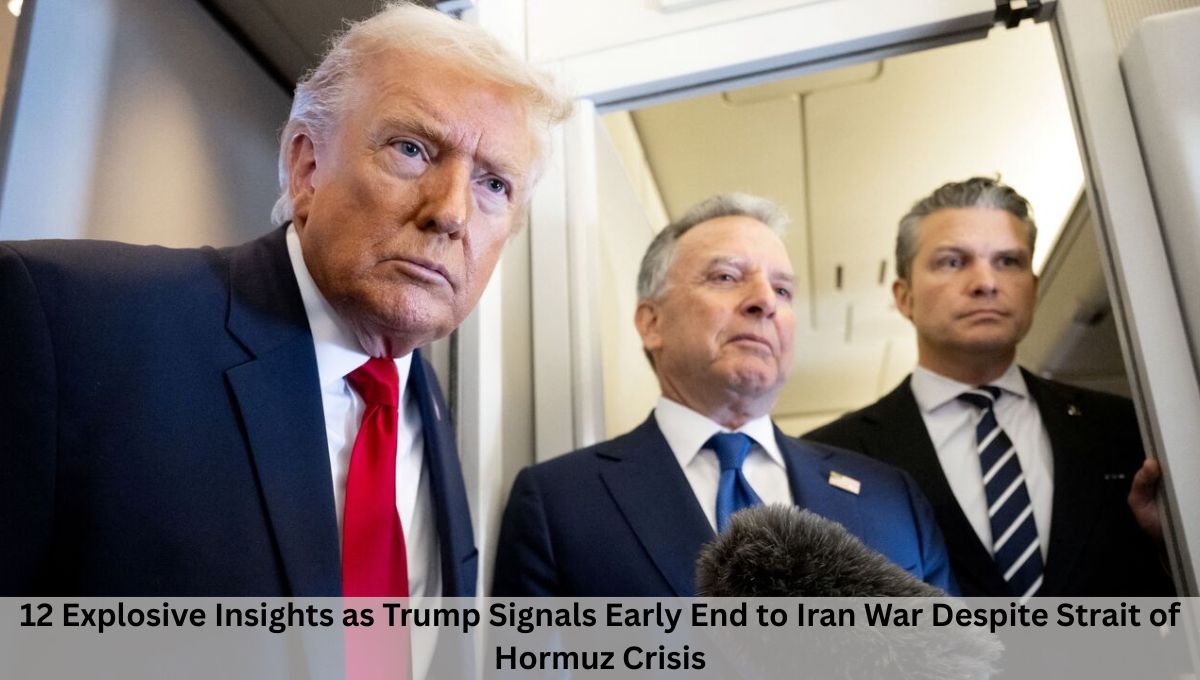
12 Explosive Insights as Trump Signals Early End to Iran War Despite Strait of Hormuz Crisis — A shocking shift. In a dramatic and potentially game-changing development, US President Donald Trump has reportedly indicated that he is willing to end the ongoing military campaign against Iran—even if the strategically vital Strait of Hormuz remains largely closed.
Thank you for reading this post, don't forget to subscribe!The revelation, first reported by The Wall Street Journal citing senior administration officials, signals a major shift in Washington’s war strategy.
While there is no official confirmation yet, the implications of such a move are profound—not just for the Middle East, but for global energy markets, geopolitics, and economic stability.
The reported shift comes as the conflict enters its second month, with rising casualties, escalating regional tensions, and increasing pressure from global powers to find a diplomatic solution.
This article breaks down the key developments, strategic calculations, and global consequences behind Trump’s apparent pivot.
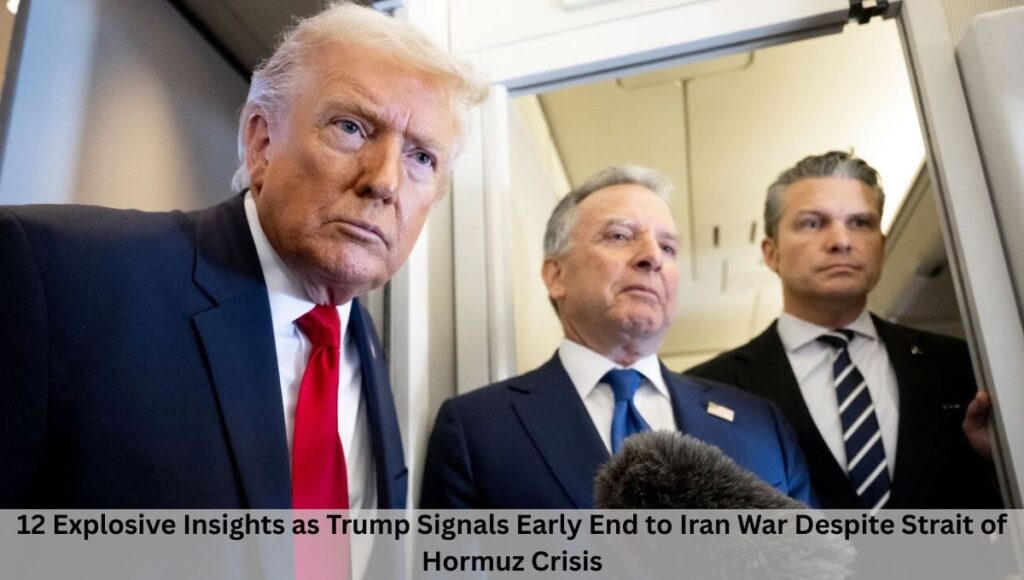
12 Explosive Insights as Trump Signals Early End to Iran War Despite Strait of Hormuz Crisis
1. A Major Strategic Shift in US War Policy
At the heart of the report is a striking change in priorities.
Initially, reopening the Strait of Hormuz—a critical global oil chokepoint—was seen as a central objective of the US military campaign.
However, Trump and his advisers have reportedly reassessed the situation.
New Priority Framework:
- Degrade Iran’s naval capabilities
- Destroy missile stockpiles
- Achieve rapid military objectives
- Avoid prolonged conflict
Reopening Hormuz, once considered essential, is now reportedly being deferred.
This marks a fundamental shift from a territorial and economic objective to a limited military objective strategy.
2. Why the Strait of Hormuz Matters So Much
The Strait of Hormuz is one of the most critical waterways in the world.
Key Facts:
- Connects the Persian Gulf to the Arabian Sea
- Handles roughly 20–25% of global oil supply
- Serves as a lifeline for energy-importing nations
For countries like India, dependence is even higher, with nearly 80% of energy imports passing through the route.
Since the conflict began, shipping traffic has been severely disrupted, with hundreds of vessels halted or diverted.
3. Why Trump May Be Backing Off Hormuz
According to reports, the decision comes down to time, cost, and risk.
Key Considerations:
1. Time Constraints
Trump reportedly set a 4–6 week timeline for the war. A full-scale operation to reopen Hormuz would extend beyond that window.
2. Military Complexity
Reopening the strait would require:
- Naval dominance
- Mine-clearing operations
- Protection of commercial shipping
- Potential ground operations
3. Escalation Risk
Such an operation could:
- Trigger wider regional war
- Involve multiple Gulf nations
- Lead to direct confrontation with Iranian forces
In short, the cost-benefit equation may no longer justify the objective.
4. The New Strategy: “Win Fast, Exit Faster”
The emerging strategy appears to focus on achieving core military goals quickly and exiting before the conflict spirals further.
Core Objectives:
- Neutralize Iran’s navy
- Reduce missile attack capabilities
- Weaken strategic infrastructure
Once these goals are achieved, the US would:
- Wind down military operations
- Shift pressure to diplomacy
- Involve allies in handling unresolved issues
This reflects a limited war doctrine, prioritizing speed over total victory.
5. Diplomatic Pressure as the Next Phase
After military operations, the US plans to intensify diplomatic pressure on Iran.
Key Elements:
- Push for reopening trade routes
- Engage intermediaries like regional powers
- Use sanctions and economic leverage
If Iran refuses, Washington may ask:
- European allies
- Gulf nations
to take the lead in reopening Hormuz.
6. Contradictions in Trump’s Messaging
Trump’s approach has not been entirely consistent.
Recent Statements Include:
- Threatening to “obliterate” Iran’s energy infrastructure
- Suggesting negotiations with a “more reasonable regime”
- Indicating willingness to end the war early
This dual messaging reflects a carrot-and-stick strategy, combining military pressure with diplomatic outreach.
7. Iran’s Position: Strategic Resistance
Iran has not reopened the Strait of Hormuz unconditionally and continues to:
- Restrict shipping
- Launch retaliatory strikes
- Maintain pressure on global energy flows
At the same time, there are signs that Iran may be allowing limited passage to certain countries—possibly as a negotiation tactic.
8. Global Oil Markets React
The impact on global oil markets has been immediate and significant.
Market Trends:
- Oil prices surged sharply
- Brent crude crossed $110 per barrel
- Volatility increased across energy markets
The closure of Hormuz has:
- Reduced supply
- Increased transportation risks
- Triggered panic buying
Energy markets remain highly sensitive to any developments in the conflict.
9. Economic Fallout Across the World
The consequences extend far beyond oil prices.
Affected Areas:
1. Inflation
Rising energy costs are driving inflation globally.
2. Supply Chains
Disruptions in shipping affect:
- Fertilizers
- Chemicals
- Industrial inputs
3. Emerging Markets
Countries heavily dependent on imports are facing:
- Currency pressure
- Economic instability
10. Military Build-Up Continues Despite Exit Signals
Interestingly, even as Trump signals a possible exit, the US continues to:
- Deploy troops
- Strengthen naval presence
- Expand operational readiness
This suggests that:
- The US wants leverage in negotiations
- Military options remain open
11. Uncertainty Over Iran’s Leadership
Another complicating factor is the unclear leadership structure within Iran.
Key Issues:
- Multiple senior leaders reportedly eliminated
- New leadership figures emerging
- Communication challenges with negotiators
US officials themselves are unsure:
- Who holds decision-making authority
- Whether negotiators can commit to agreements
This makes diplomacy far more complex.
12. Is the War Really Near Its End?
While Trump appears willing to end the war, several obstacles remain:
Challenges Ahead:
- Continued Iranian resistance
- Ongoing regional attacks
- Lack of trust between parties
- Unresolved nuclear concerns
Even if the US steps back, other actors—particularly Israel—may continue military operations.
The Strait of Hormuz Crisis Explained
The Strait of Hormuz is often described as the world’s most important energy chokepoint.
Why It’s Critical:
- Narrow passage: about 33 km wide at its narrowest
- Handles massive daily oil shipments
- Essential for global energy security
Any disruption here has immediate global consequences.
Could the US Reopen Hormuz Later?
According to reports, Trump is not ruling out reopening the strait—but not now.
Possible Future Scenarios:
- Multinational coalition effort
- Diplomatic agreement with Iran
- Limited military intervention
For now, the priority appears to be ending the war quickly.
Role of Allies and Regional Powers
Countries like:
- Saudi Arabia
- UAE
- Turkey
- Pakistan
are playing key roles in:
- Mediation efforts
- Diplomatic communication
- Regional stability
The US may increasingly rely on these nations to manage the aftermath.
Energy Politics and Domestic Pressure
Domestic factors may also be influencing Trump’s decision.
Key Pressures:
- Rising fuel prices
- Inflation concerns
- Political implications
Ending the war quickly could help:
- Stabilize markets
- Reduce economic strain
Possible Deal on the Horizon?
Trump has hinted that:
- Iran may be open to a deal
- Negotiations are progressing
However:
- Iran has denied formal talks
- Trust remains low
Any agreement is likely to be:
- Complex
- Gradual
- Conditional
Conclusion: A Turning Point with Global Consequences
The reported shift in US strategy marks a critical turning point in the Iran conflict.
By signaling willingness to end the war—even without reopening the Strait of Hormuz—Donald Trump may be prioritizing speed and political outcomes over strategic completeness.
However, this approach carries significant risks:
- A prolonged Hormuz blockade
- Continued regional instability
- Unresolved nuclear tensions
The coming weeks will determine whether this strategy leads to:
- A fragile peace
- Or a new phase of conflict
For now, the world watches closely as one of the most consequential geopolitical crises in recent years unfolds.
Also Read: 12 Explosive Claims as Donald Trump Says Iran War Could End Soon but Vows to “Finish the Job”
Also Read: Oil prices remain steady as Trump signals possible end to US-Iran war. What’s near-term outlook?
Related Posts:
- 12 Explosive Claims as Donald Trump Says Iran War…
- 11 Explosive Warnings as Trump Vows to ‘Knock the…

- 10 Explosive Signals Trump Says Iran War Could End…
- 10 Explosive Signals: Trump Rates Iran War “15/10”…
- 9 Explosive Revelations as Trump Declares His Health…

- 10 Powerful Revelations from the Trump–Putin Call on…