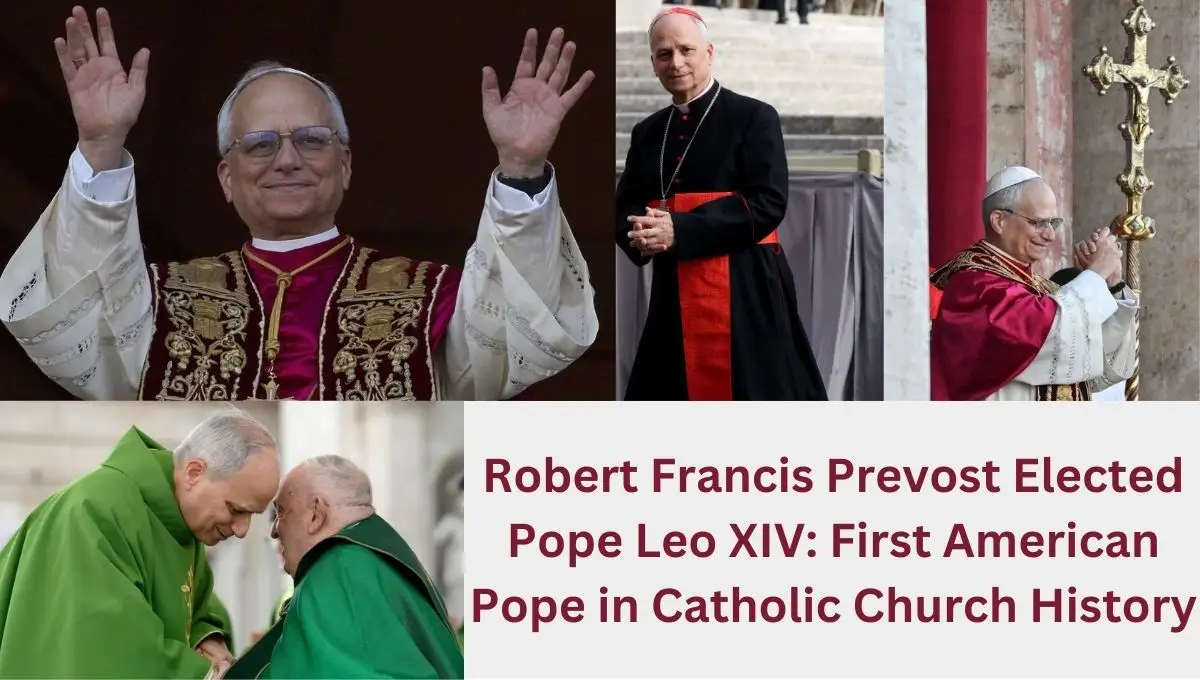
A transformative moment for the Catholic Church as Robert Francis Prevost Elected Pope Leo XIV: First American Pope in Catholic Church History. The Chicago-born cardinal brings global experience, reformist vision, and pastoral compassion to the papacy.
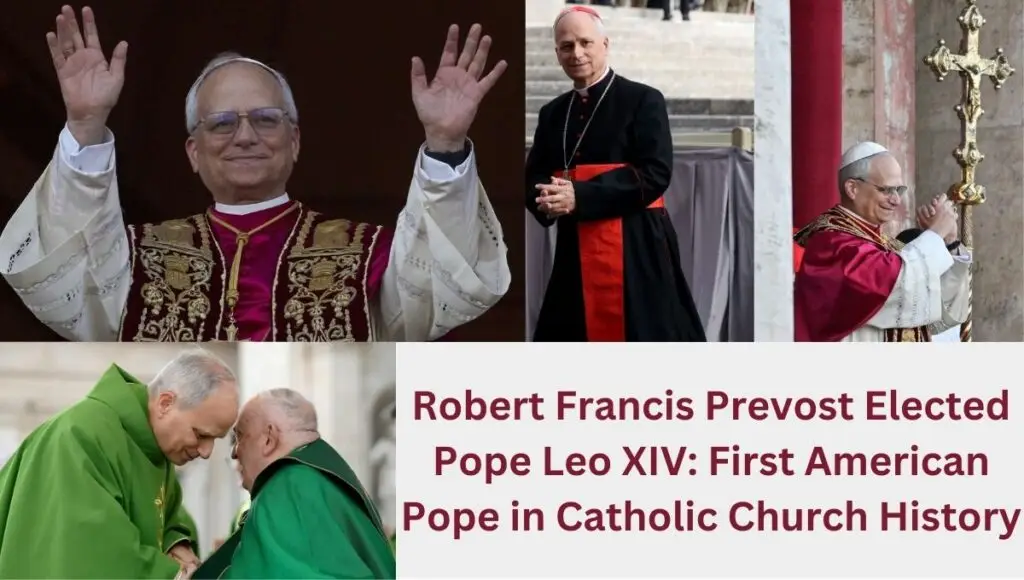
Robert Francis Prevost Elected Pope Leo XIV: First American Pope in Catholic Church History
Historic Election: Robert Francis Prevost Becomes Pope Leo XIV
In a defining moment for the Roman Catholic Church, Cardinal Robert Francis Prevost has been elected as the 267th pope, taking the name Pope Leo XIV.
At age 69, the Chicago-born cardinal becomes the first American pope in history, a milestone that reflects the Church’s evolving global identity and the continued legacy of reform initiated by Pope Francis.
White smoke billowed from the Sistine Chapel on Thursday evening after the third round of voting, signaling the swift and unified decision of the conclave. French Cardinal Dominique Mamberti delivered the official announcement from the balcony of St. Peter’s Basilica, declaring, “Habemus Papam!”—“We have a pope!”
In his first public words as pontiff, Pope Leo XIV addressed the crowd in St. Peter’s Square with a message of peace: “Peace be with all you.”
A Life Shaped by Mission and Service
Born on September 14, 1955, in Chicago, Pope Leo XIV is of French and Italian descent. A member of the Order of Saint Augustine, he has long been recognized for his pastoral work and missionary service.
He spent over a decade in Peru, where he eventually became Bishop of Chiclayo, gaining both Peruvian citizenship and deep cultural insight into the Latin American Church.
Prior to his election, Pope Leo XIV served as Prefect of the Dicastery for Bishops and President of the Pontifical Commission for Latin America. These roles positioned him at the heart of Vatican governance, making him a key figure in global Church leadership.
His dual citizenship and fluency in Spanish and Italian reflect his global perspective—qualities that are expected to influence his leadership as he navigates a complex and diverse Church.
Rapid Conclave Signals Unity and Momentum
The 2025 papal conclave was the largest and most diverse in Church history, with 133 cardinal electors from 70 countries. Over 80% of these cardinals were appointed by the late Pope Francis, underscoring the enduring influence of his progressive vision.
The swift election concluded in just three voting rounds over two days indicates widespread support for Pope Leo XIV.
Vatican observers noted the speed of the decision as a sign of strong unity among the cardinals and a shared desire to continue the reformist course charted by Pope Francis.
Honoring Francis, But Setting His Own Papal Tone
While Pope Leo XIV paid tribute to Pope Francis’ mission of a “bridge-building Church”, he also signaled subtle changes in tone and style.
His appearance in traditional papal garments contrasted with his predecessor’s more austere presentation, suggesting a return to certain liturgical customs even as his priorities remain entered on service and dialogue.
In his inaugural address, Pope Leo XIV emphasized charity, unity, and openness, saying: “We have to seek together to be a missionary Church… to show our charity to others and be in dialogue with love.”
A Reform-Minded yet Moderate Leader
Pope Leo XIV is widely seen as a centrist, someone who balances progressive social values with moderate positions on doctrinal issues.
He has voiced support for increased roles for women in Church leadership, called for action on climate change, and shown deep concern for poverty and social justice.
His decision to adopt the name Leo is widely interpreted as a tribute to Pope Leo XIII, known for championing the rights of workers and advocating for social reforms further cementing the new pope’s identity as both a reformer and traditionalist in harmony.
Challenges Ahead: Jubilee Year, Church Unity, and Reform
As Pope Leo XIV begins his pontificate, he inherits a Church at a crossroads. The year 2025 marks the Catholic Church’s Jubilee Year, a time of spiritual renewal and global pilgrimage.
At the same time, the Church continues to confront pressing issues: clerical abuse scandals, declining attendance in the West, and polarization over moral and social teachings.
Pope Leo’s previous experience overseeing bishop appointments and Church affairs in Latin America equips him well to lead in this moment of challenge and opportunity.
His commitment to reform, inclusion, and pastoral outreach is expected to guide the Church through this pivotal era.
A Global Welcome and Hope for the Future
The election of the first American pope has prompted an outpouring of congratulations from global and national leaders. Peruvian President Dina Boluarte praised his decades of service in Latin America, while former U.S. President Donald Trump called it a “Great Honor for our Country.”
Vice President JD Vance described it as a “joyous moment” for the American faithful.
Catholics across the United States and Latin America are celebrating this milestone, viewing Pope Leo XIV as a symbol of both continuity and renewal a leader capable of guiding the Church through the 21st century with compassion, humility, and strength.
Also Read: From Chicago to the Vatican: How Pope Leo XIV’s Quiet Strength is Reshaping the Catholic Church
Also Read: Pope Leo XIV Delivers First Sunday Blessing: Calls For ‘Just And Lasting Peace’ In Ukraine