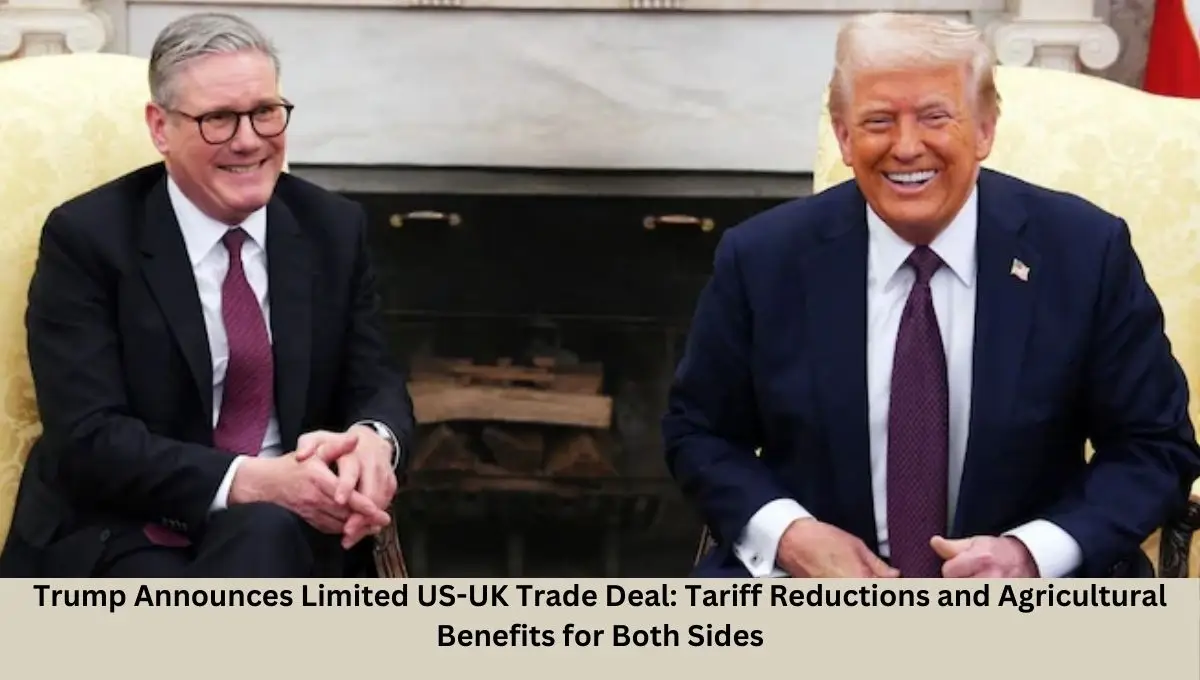
US-UK trade deal marks a new era of cooperation as Trump Announces Limited US-UK Trade Deal: Tariff Reductions and Agricultural Benefits for Both Sides. In a significant move for US-UK relations, President Donald Trump has unveiled a limited trade deal with the United Kingdom, which will see reductions in tariffs on British steel, aluminum, and automobiles. This agreement comes after months of tension caused by Trump’s trade war strategies and aims to open new market access for US agricultural products, particularly beef and ethanol. The deal also highlights the shifting dynamics of international trade as the US seeks to recalibrate its global economic relationships.
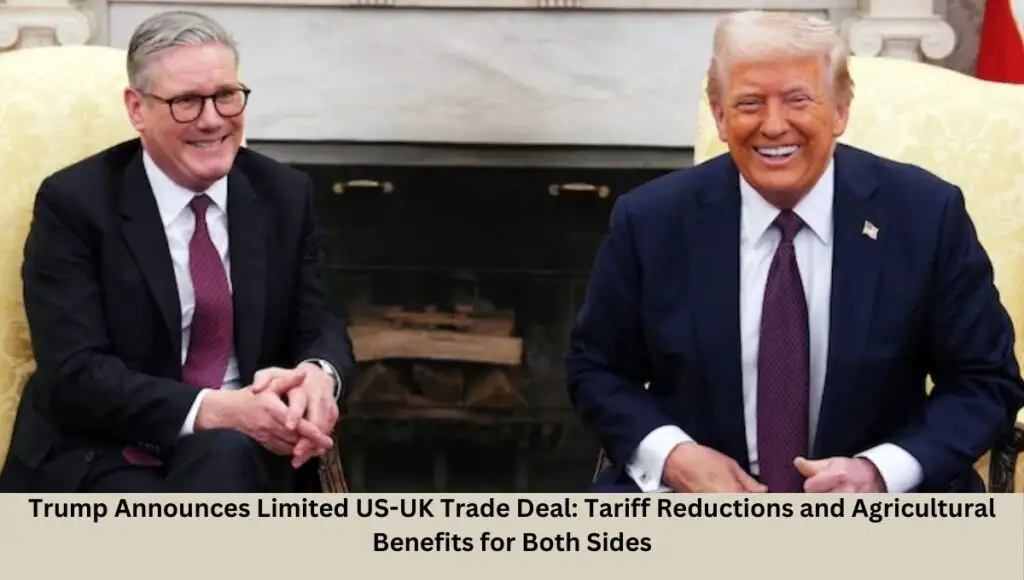
Trump Announces Limited US-UK Trade Deal: Tariff Reductions and Agricultural Benefits for Both Sides
Reductions in Tariffs: A Boost for UK Exporters
One of the most notable aspects of the new trade deal is the reduction in tariffs on key British exports to the US. The tariffs on British automobiles will drop from 27.5% to just 10% on a quota of 100,000 vehicles.
This reduction comes as a relief to UK car manufacturers, including luxury brands like Rolls-Royce and Bentley, which have seen their export prospects limited by high tariffs.
Moreover, US tariffs on steel and aluminum imports from the UK will be eliminated entirely, providing a significant boost to the British steel industry, which has been struggling under the weight of these tariffs.
Commerce Secretary Howard Lutnick emphasized that these changes would open new opportunities for UK companies, especially in the aerospace sector, with British-made plane parts now eligible for duty-free access to the US.
Expanding Agricultural Access: A Win for US Farmers
In exchange for these tariff reductions, the UK has agreed to increased imports of US agricultural products. The deal includes a provision for a tariff-free quota of 13,000 metric tons of US beef, which is expected to significantly boost American exports.
However, UK farmers will benefit from the protection of stringent food safety standards, meaning that hormone-treated US beef will still not be allowed.
Additionally, the UK will remove tariffs on US ethanol, a key ingredient used in beer production. This change is particularly beneficial for American farmers and manufacturers, who have been seeking greater access to European agricultural markets.
As US Agriculture Secretary Brooke Rollins put it, the deal will “exponentially increase” US beef exports to Britain.
What’s Still on the Table? Further Negotiations Expected
While the deal includes significant tariff reductions and agricultural provisions, both sides have made it clear that this is just the beginning of a broader trade agenda. Discussions on pharmaceuticals, which are a major part of the UK economy, remain ongoing.
Additionally, the deal leaves in place a baseline 10% tariff on many UK goods, which some critics argue is a missed opportunity for deeper trade integration between the two nations.
Despite this, the agreement represents a clear shift toward greater cooperation between the US and the UK post-Brexit. British Prime Minister Keir Starmer heralded the deal as a “historic” step, especially considering the long-standing relationship between the two countries.
However, he acknowledged that there is still much work to be done before a comprehensive agreement can be finalized.
Impact on the UK Economy: Job Protection and Market Access
The impact of this trade deal on the UK economy is mixed. While UK steelmakers and car manufacturers have expressed relief at the tariff reductions, some economists argue that the immediate economic benefits will be limited.
The agreement will provide new export opportunities, but the broader economic impact may take time to materialize.
Moreover, the UK government has been under pressure to find new trade partners after Brexit, and this deal with the US is seen as a critical part of its post-Brexit strategy.
The deal promises to protect jobs in key industries, including steel and automotive manufacturing, and create new opportunities for British exporters in the US market.
Criticism of the Deal: Limited Concessions and the Long Road Ahead
While the deal has been praised by some, it has also faced criticism for offering limited concessions on both sides. Critics argue that the 10% tariffs on most UK goods will remain in place, limiting the potential for broader trade integration.
Some experts also believe that Trump’s focus on reducing trade deficits may have overshadowed other important economic considerations.
Economists have pointed out that while the deal may offer political victories for both Trump and Starmer, the economic impact could be more limited than advertised. For instance, US car manufacturers have expressed concerns that the tariff reductions on UK-made cars could make it more difficult for American manufacturers to compete, especially in the luxury car market.
US-China Trade War Looms: Potential Global Consequences
While the US-UK trade deal marks a significant step forward, Trump’s larger trade strategy is still very much in flux. The US-China trade war continues to dominate global trade discussions, with both countries imposing steep tariffs on each other’s goods.
As Trump seeks to negotiate with China, experts warn that the ongoing trade tensions could have far-reaching economic consequences, both for the US and for its global trading partners.
With the US and China set to hold talks in Switzerland soon, the outcome of these negotiations could determine the future of global trade relations.
Meanwhile, the UK’s new deal with the US may serve as a model for future trade agreements, but it is clear that much work remains to be done before a truly comprehensive global trade framework can be established.
Conclusion: A Step in the Right Direction, But More Work Ahead
In conclusion, the US-UK trade deal announced by President Trump represents a significant step forward in US-UK relations. The tariff reductions on steel, aluminum, and automobiles will provide relief to key industries, while the increased access for US agricultural products marks a win for American farmers.
However, the deal leaves many important issues unresolved, and further negotiations are expected in the coming months.
As both sides continue to work out the final details, it remains to be seen how this limited agreement will shape the future of US trade policy.
For now, the deal offers a glimmer of hope that the US can begin to rebuild its global trade relationships, even as it faces challenges with other major trading partners like China.
Related Posts:
- 11 Explosive Revelations From Ted Cruz’s Leaked…

- 5 Powerful Highlights as Trump Lands Second Nobel…

- Can the EU and NATO Impose Tariffs on India and…

- Trump Targets Sri Lanka, BRICS with Sweeping Tariffs
- 7 Key Takeaways from Trump’s New Latin America Trade…
- 7 Crucial Insights Into Trump and Xi’s High-Stakes…