
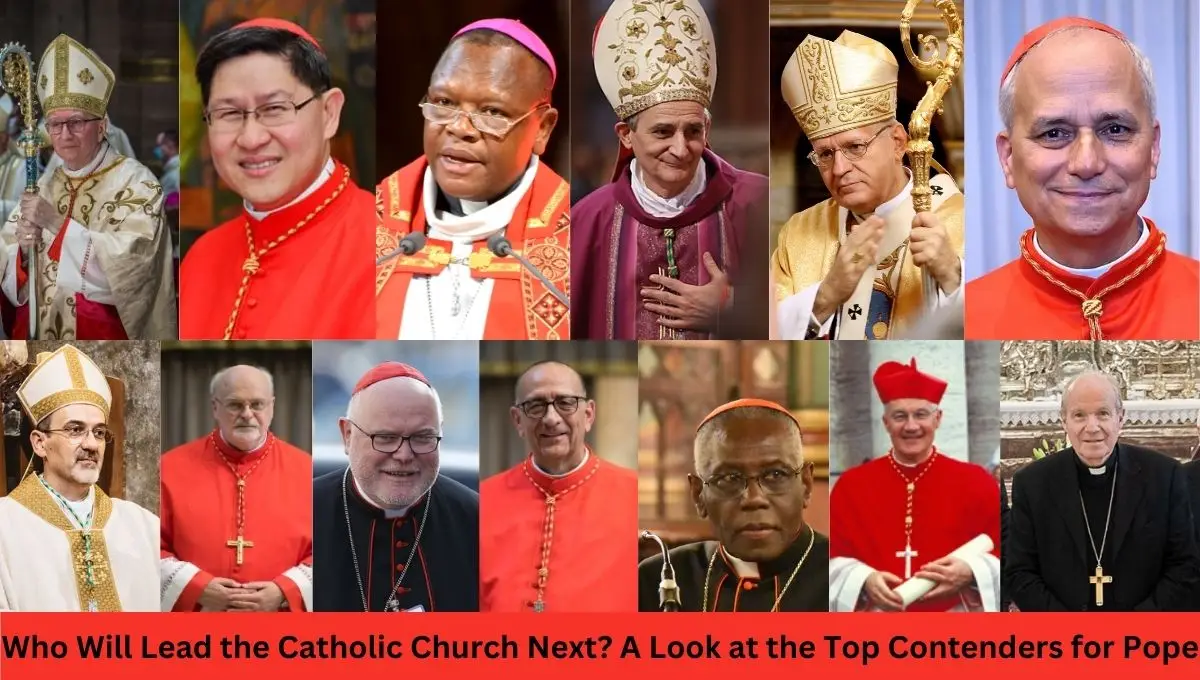
The world eagerly waits to find out as to Who Will Lead the Catholic Church Next? A Look at the Top Contenders for Pope. As the world awaits the opening of the papal conclave on May 7, attention turns not only to who the next pope might be, but what kind of man he must be. The task of choosing a successor to Pope Francis is both spiritual and deeply human, calling for discernment, wisdom, and humility from the 120 cardinals entering the Sistine Chapel.
Who Will Lead the Catholic Church Next? A Look at the Top Contenders for Pope
What Makes a Good Pope?
Far from being a CEO or politician, the pope is first and foremost the Servant of the Servants of God, a shepherd tasked with teaching the truth, governing with justice, and sanctifying the faithful. These are the munera (duties) of a bishop elevated to global significance in the Bishop of Rome.
Qualities emphasized by saints and theologians across the centuries include:
- Humility and Holiness
- Orthodox Faith and Doctrinal Clarity
- Pastoral Zeal and Compassionate Leadership
- Prayerfulness over Politics
- Strength in Character and Faith under Pressure
Saint Bernard of Clairvaux, whose work On Consideration influenced generations of popes, warned against excessive activity and pride. He called for a pontiff who surrounded himself with holy advisors and governed with justice tempered by mercy.
Cardinal Joseph Ratzinger, later Pope Benedict XVI, offered a realistic view: the Holy Spirit doesn’t handpick a pope, but He ensures the Church is not abandoned to total failure.
The successor to Pope Francis must not only be a spiritual leader to 1.4 billion Catholics but also a diplomat, reformer, and moral voice in an increasingly fractured world.
Though there are no official candidates, several cardinals have emerged as “papabile” those considered to have the qualities necessary to become pope. The upcoming conclave is steeped in tradition and secrecy, but this time, the stakes are higher than ever: the Church faces deep divides over doctrine, scandal recovery, and its role in a shifting geopolitical landscape.
Here’s a look at some of the most discussed contenders.
Cardinal Pietro Parolin (Italy)
Role: Vatican Secretary of State
Age: 70
Ideological Alignment: Diplomatic moderate
Notable For: Global diplomacy, cautious leadership
A seasoned Vatican diplomat often referred to as the Church’s “prime minister,” Parolin brings formidable geopolitical experience. He helped broker the Vatican’s deals with China and played a key role in the 2014 U.S.-Cuba thaw. If elected, he would be the first Italian pope since John Paul I in 1978.
However, Parolin lacks pastoral experience and has been linked though not charged to controversial financial dealings. His election would signal a return to Vatican-centered governance, potentially stabilizing, but less visionary.
Cardinal Luis Antonio Tagle (Philippines)
Role: Pro-Prefect, Dicastery for Evangelization
Age: 67
Ideological Alignment: Francis-style pastoral reformer
Notable For: Charisma, communication skills, Asian representation
Tagle’s blend of humility, charisma, and cross-cultural appeal makes him a serious contender. As the Church expands in Asia, Tagle’s background and Chinese heritage could mark a historic shift.
Yet questions remain about his leadership, especially after a 2022 Vatican audit cited mismanagement at Caritas Internationalis during his tenure. Still, his media fluency and pastoral warmth make him a modern communicator-pontiff in waiting.
Cardinal Fridolin Ambongo Besungu (Congo)
Role: Archbishop of Kinshasa
Age: 65
Ideological Alignment: Conservative on doctrine, progressive on justice
Notable For: Moral courage, pan-African leadership
A leading voice from the Global South, Ambongo has stood up to corruption in Congo and foreign exploitation of African resources. He’s admired for promoting interfaith tolerance and social justice. However, his staunch opposition to blessings for same-sex couples echoing widespread sentiment among African bishops places him at odds with recent Vatican shifts. A powerful voice for the developing world, his papacy would elevate African Catholicism to the world stage.
Cardinal Matteo Zuppi (Italy)
Role: President of the Italian Bishops Conference
Age: 69
Ideological Alignment: Progressive Francis-aligned
Notable For: Peace diplomacy, LGBTQ+ outreach
A “street priest” with strong ties to the Sant’Egidio Community, Zuppi has built a reputation as a compassionate, savvy leader. He has led peace missions for Ukraine and advocated pastoral sensitivity for LGBTQ+ Catholics.
His youthful energy, however, may work against him if the cardinals prefer a shorter papacy. Zuppi’s combination of experience, diplomacy, and moral clarity makes him a favorite among those wanting continuity with Francis’ vision.
Cardinal Péter Erdő (Hungary)
Role: Archbishop of Esztergom-Budapest
Age: 72
Ideological Alignment: Traditional conservative
Notable For: Intellectual rigor, doctrinal orthodoxy
A theological heavyweight and polyglot, Erdő appeals to cardinals seeking a doctrinally firm and cerebral pope. He’s been cautious in Hungary’s political climate, avoiding direct confrontation while maintaining a traditionalist line on family and sexuality.
Erdő’s quiet strength and continental experience lend him gravitas, but his reserved stance on issues like migration could signal a retreat from the Francis-era global outreach.
Cardinal Robert Prevost (USA/Peru)
Strengths: Francis’ trusted appointee; head of the Dicastery for Bishops
Weaknesses: American nationality remains a potential obstacle
Ideological Alignment: Francis-aligned reformer
An American by birth and Peruvian by citizenship, Cardinal Robert Prevost, 69, holds one of the most powerful jobs in the Vatican: vetting bishops around the world. A quiet but influential figure, Prevost has helped shape a more pastoral and globally diverse Church.
His dual nationality might help ease concerns about electing a U.S. pope a prospect historically avoided due to fears of American geopolitical dominance.
Cardinal Pierbattista Pizzaballa (Italy)
Strengths: Bridge-builder in the Middle East; deeply respected in the Holy Land
Weaknesses: Younger age could mean a longer pontificate, which some cardinals may hesitate over
Ideological Alignment: Pastoral conservative with diplomatic pragmatism
The 60-year-old Latin Patriarch of Jerusalem is fluent in Hebrew, a Franciscan friar, and known for courageous gestures — including offering himself in exchange for Israeli hostages after the October 2023 Hamas attack. A return to an Italian papacy might appeal to traditionalists, but Pizzaballa’s regional experience gives him global relevance.
Cardinal Anders Arborelius (Sweden)
Strengths: First-ever Swedish cardinal; admired by Pope Francis
Weaknesses: Small diocese and personal reluctance
Ideological Alignment: Moderate conservative with a welcoming tone
Cardinal Arborelius, 75, converted from Lutheranism and has long embodied ecumenical and moral clarity in a secularized Sweden. Known for his humility, he’s already asked to step back from cardinal duties but Francis once praised him as a fearless dialogue-builder. If elected, he would be the first Scandinavian pope.
Cardinal Reinhard Marx (Germany)
Strengths: Prominent voice for reform; key Francis adviser
Weaknesses: Tainted by past abuse handling; controversial within the Church
Ideological Alignment: Progressive reformist
Marx, 71, has pushed for synodal reforms and greater accountability on clergy abuse. His 2021 resignation offer rejected by Francis underscored his recognition of the Church’s moral crisis. Though German and progressive, Marx remains a seasoned Vatican insider.
Cardinal Juan José Omella (Spain)
Strengths: Deep commitment to social justice; close to Francis
Weaknesses: Age (79); controversial abuse responses
Ideological Alignment: Francis-style social gospel advocate
The Spanish archbishop and missionary spent years fighting hunger and economic inequality. Yet his tenure as head of the Spanish bishops’ conference during a turbulent abuse reckoning may weigh against him. Still, Francis has shown great confidence in him.
Cardinal Robert Sarah (Guinea)
Strengths: Symbol of traditionalism; widely respected by conservatives
Weaknesses: Fallout with Francis; perceived as divisive
Ideological Alignment: Traditionalist conservative
Long considered a leading candidate for the first African pope, Sarah, 79, lost momentum after a public clash over priestly celibacy. His rigid orthodoxy and strained relationship with Francis may cost him broad support — but he remains a conservative icon.
Cardinal Marc Ouellet (Canada)
Strengths: Former Vatican kingmaker; respected globally
Weaknesses: Age (80); sexual misconduct allegations (dismissed)
Ideological Alignment: Moderate conservative with institutional experience
A former head of the powerful bishops’ office, Ouellet, once considered the front-runner in 2013, remains a well-known figure with deep ties to Latin America. Allegations of misconduct which were dropped and his age make his election unlikely, but his legacy looms over the conclave.
Cardinal Christoph Schoenborn (Austria)
Strengths: Theological heavyweight; balanced voice
Weaknesses: Age (80); health concerns
Ideological Alignment: Moderate, Francis-aligned
A respected theologian and editor of the Catechism, Schoenborn embodies a synthesis of Benedict’s intellect and Francis’ pastoral focus. Though progressive on civil unions and women deacons, his age likely disqualifies him from serious consideration but his influence will echo in the votes of others.
Conclusion: Wanted A Holy Man
This conclave is not just about continuity versus change. It’s about how the Church confronts abuse scandals, declining attendance in the West, growing flocks in the Global South, and complex questions about gender, sexuality, and governance. As Pope Francis himself once said, the next pope should be someone “with the same desire for reform, not afraid of the margins.”
Whether the cardinals choose a diplomat, a theologian, a missionary, or a social justice warrior, the hope of the faithful remains the same: that the next Bishop of Rome will love Christ and His Church with a servant’s heart, a prophet’s courage, and a saint’s soul.
More than charisma or ideology, cardinals will look for a pope who is first and foremost holy a man of prayer and vision. But they’ll also consider:
- Geography: Will the Church return to Europe, or embrace a Global South leader?
- Doctrine: Will the next pope affirm Francis’ reforms or reassert traditionalist boundaries?
- Governance: Can he handle the Vatican’s bureaucracy and global crises?
The College of Cardinals must find someone who can balance these demands. Whether the Church pivots or stays the course may depend on just a few votes and the inspiration of the Holy Spirit, as tradition holds.
Also Read: Who will be the next pope? We asked AI chatbots and this is who they predicted will be elected


