Iran’s nuclear brains and what’s Inside Operation Narnia: Why Israel Is Targeting Iranian Nuclear Scientists. In what analysts are calling a turning point in covert warfare, Israel has reportedly assassinated 10 top Iranian nuclear scientists in a synchronized operation code-named Operation Narnia. This daring mission unfolded in tandem with Operation Rising Lion, Israel’s broader military offensive that began on June 13, 2025, targeting Iran’s nuclear and military infrastructure.
The Israeli media outlets Channel 12 and Channel 9 claim the operation was executed with surgical precision using a classified “special weapon”, still under strict censorship. These assassinations mark the most significant blow to Iran’s nuclear brain trust since the killing of Mohsen Fakhrizadeh in 2020.
Inside Operation Narnia: Why Israel Is Targeting Iranian Nuclear Scientists
Dr. Tabatabaei and the Homefront Hit
One of the most high-profile victims was Dr. Isar Tabatabaei, a senior nuclear engineer and alumnus of Sharif University. He and his wife, Mansoura Haji Salem, were killed in their home in Tehran. Iranian media, including Mehr News Agency, confirmed the strike, calling it a “terrorist act.”
Tabatabaei was a key contributor to Iran’s nuclear development, though he maintained a low public profile. His assassination, reportedly via a precision drone strike, reflects a significant shift in how personal and precise this war has become.
What Was Operation Narnia?
Operation Narnia was not a conventional military strike it was a strategically planned decapitation mission. According to Channel 12, nine of Iran’s top ten nuclear scientists were killed simultaneously while sleeping in their beds. The tenth was eliminated hours later.
Israeli intelligence reportedly had these scientists under surveillance since November 2024, using AI-powered surveillance, cyber tools, and human assets. The coordinated timing was designed to prevent anyone from alerting the others, ensuring the maximum operational success.
“These scientists believed their homes were safe zones. They never imagined they would be reached in their bedrooms,” a senior Israeli official told Channel 12.
Who Were the Scientists Killed?
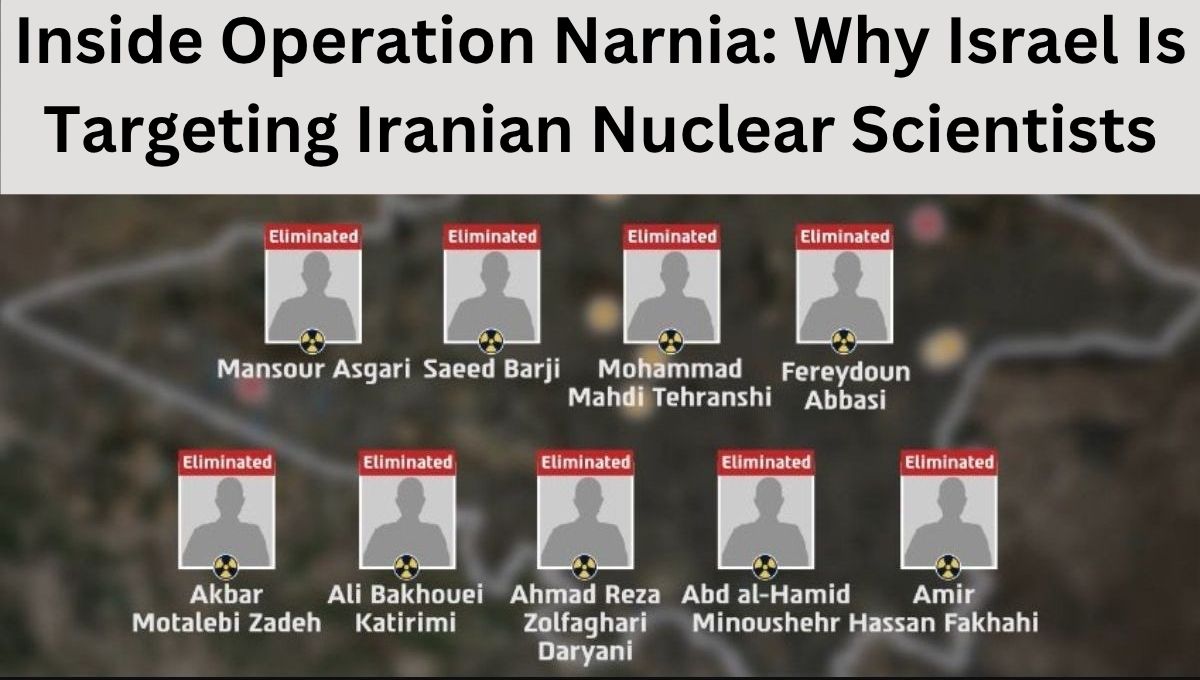
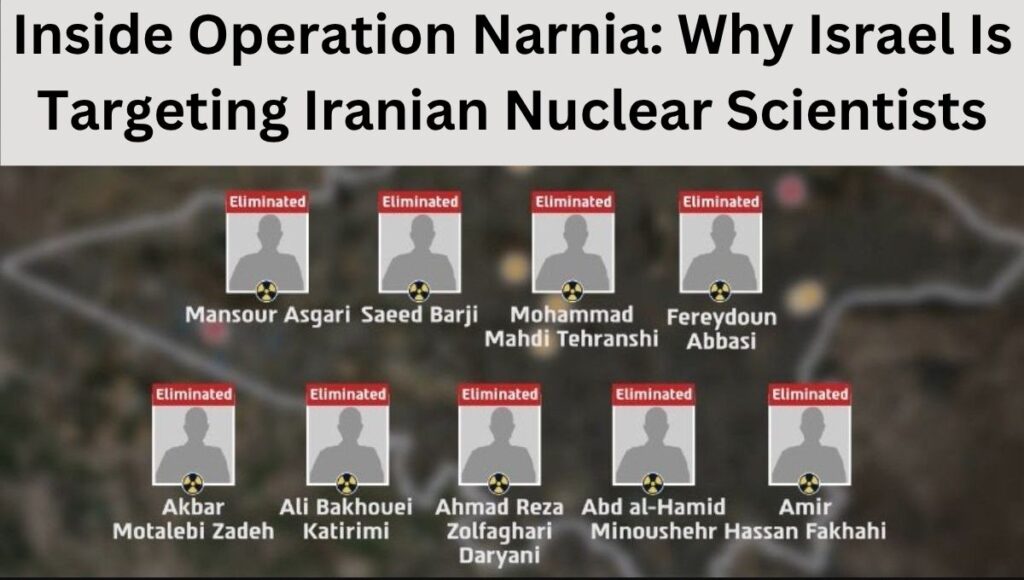
The list of assassinated individuals reads like a who’s who of Iran’s nuclear elite:
- Fereydoun Abbasi – Nuclear engineering expert
- Mohammad Mahdi Tehranchi – Theoretical physicist and university chancellor
- Akbar Matlali Zadeh – Chemical engineering expert
- Saeed Beraji – Materials engineering specialist
- Amir Hassan Faqahi – Physics researcher
- Abd al-Hamid Minushahr – Reactor physics expert
- Mansour Asgari – Nuclear physics expert
- Ahmad Reza Davalparki Daryani – Nuclear engineer
- Ali Bakhayi Kathehremi – Mechanical systems expert
- Isar Tabatabaei – Senior nuclear engineer and project director
Many of these scientists were considered successors to Fakhrizadeh, Iran’s so-called “father of the nuclear program”, who was assassinated in 2020.
The Weapon Behind the Killings
While the Israeli government has not released the specifics, military observers suggest the use of:
- Precision-guided loitering drones
- Rafael Spike missiles
- Man-portable smart missile systems
- AI-powered sniper platforms
The weapons left minimal collateral damage, pointing to ultra-precise technology capable of identifying, locking, and eliminating individuals in urban environments.
Earlier operations have seen remote-controlled sniper rifles, explosive-laden UAVs, and even decoy electronics used to carry out hits in the heart of Tehran.
Why Target Nuclear Scientists?
Israel’s reasoning is both tactical and symbolic. Unlike military equipment, scientific expertise is hard to replace. The logic is clear:
- Kill the program’s intellectual core
- Delay nuclear weapons development
- Raise the cost of restarting projects
- Send a clear deterrent message
Israeli officials argue that this is more effective than striking reactors or facilities, which can be rebuilt.
“The knowledge of these people is irreplaceable,” an Israeli intelligence officer said. “There is a long-term effect here that will last for years.”
How This Fits Into Operation Rising Lion
Operation Narnia ran parallel to Operation Rising Lion, which struck Iranian missile systems, air defenses, and nuclear sites like Natanz and Fordow. Combined, these operations represent Israel’s most aggressive anti-proliferation campaign to date.
Since June 13, over 430 Iranians have been killed, including military officials, IRGC officers, and air defense personnel, according to Iran’s Health Ministry. Iranian missile retaliations have killed 25 Israelis and injured hundreds.
Past Patterns: Israel’s Assassination Playbook
This isn’t Israel’s first use of covert assassinations:
- In 2020, Fakhrizadeh was killed by a robotic sniper rifle
- In 2010, bomb-laden motorcycles took out nuclear scientists
- In 1980, Mossad allegedly bombed homes of foreign engineers aiding Iraq’s nuclear program
- In 2024, Hamas leader Ismail Haniyeh was killed by a smuggled bomb in Tehran
But Operation Narnia marks a new high in scale and sophistication, signaling a shift from reactive strikes to proactive, systemic targeting.
Will It Work? Experts Remain Divided
The strategic impact of these killings is still being assessed. Supporters argue it will delay Iran’s nuclear ambitions by several years, buying time for diplomacy or further deterrence. But critics raise valid concerns:
- Iran has thousands of scientists in its nuclear workforce
- Assassinations could rally nationalist sentiment
- The deaths may turn victims into martyrs
- There are legal and ethical concerns about targeting civilians
Iran’s Silence and Strategic Ambiguity
So far, Iran has confirmed only select deaths, such as Tabatabaei’s, while remaining silent on the full extent. Experts say this is likely a strategic communication choice to prevent panic, maintain morale, and deny Israel the satisfaction of a public reaction.
Nonetheless, the mood in Iran’s scientific and defense communities is tense. Some scientists have reportedly gone into hiding or requested reassignment.
Conclusion: The War for Minds, Not Just Missiles
As the Iran-Israel conflict enters a dangerous new phase, Operation Narnia serves as a stark reminder that modern wars are not only fought on battlefields. They unfold in bedrooms, laboratories, and university halls where minds, not just machines, shape the balance of power.
Israel has signaled that it is not just after Iran’s infrastructure but after the people who can rebuild it. Whether this bold campaign delays Iran’s nuclear ambitions or accelerates the race remains to be seen.
Also Read: Iran Holds Grand State Funeral for Slain Commanders, Scientists Amid Rising Tensions