10 Explosive Developments as Yemen’s Houthis Open New Front in Iran War — A dangerous escalation. The ongoing war involving Iran, the United States, and Israel has entered a dangerous new phase as Yemen’s Houthi rebels officially join the conflict. What began as targeted military strikes has now evolved into a multi-front regional confrontation, with the potential to reshape global geopolitics, disrupt energy supplies, and destabilize already fragile economies.
The Houthis’ decision to launch missile and drone attacks on Israel marks a significant escalation.
It not only broadens the battlefield but also raises the risk of further disruptions in key global shipping routes such as the Red Sea and critical chokepoints like the Bab al-Mandeb Strait.
With thousands already dead, millions displaced, and oil markets rattled, the stakes have never been higher.
10 Explosive Developments as Yemen’s Houthis Open New Front in Iran War
Houthis Enter the War: A Strategic Shift
First Direct Attack on Israel
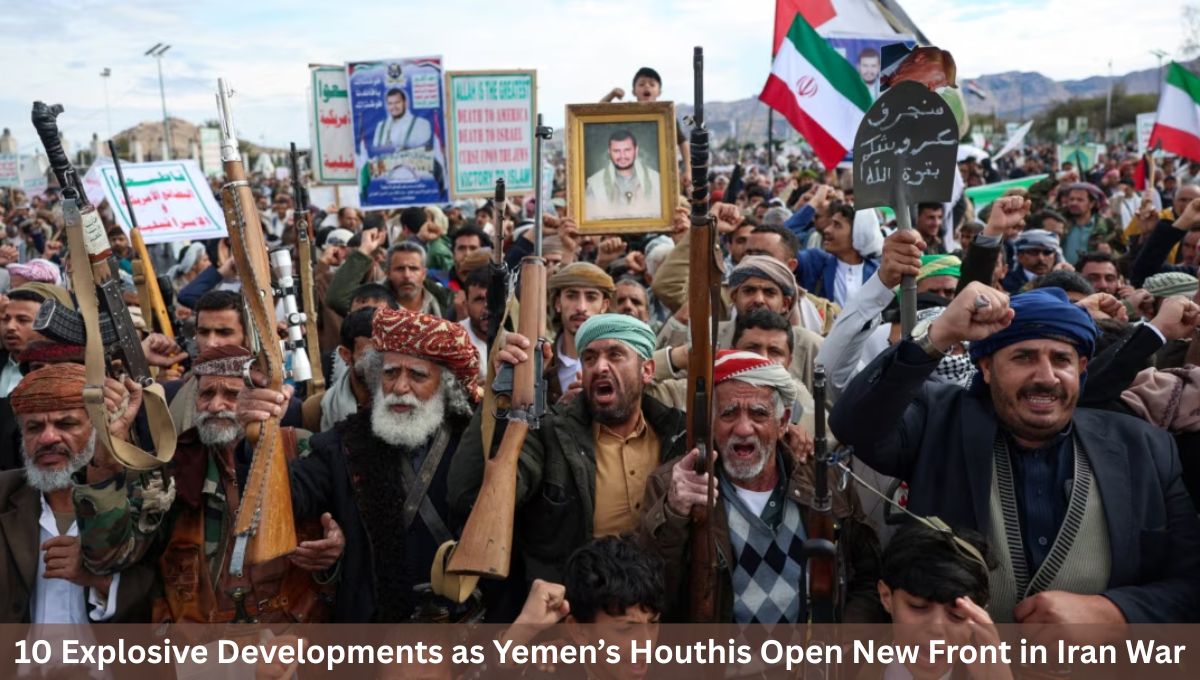
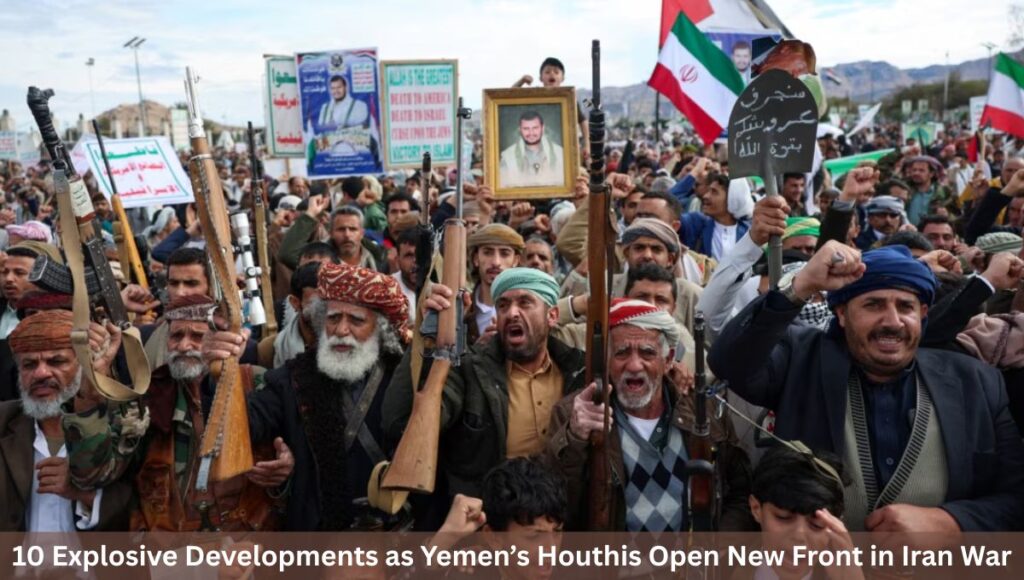
Yemen’s Iran-aligned Houthi movement launched its first direct strikes on Israel since the war began, firing ballistic missiles and deploying drones toward Israeli territory.
Although Israeli defense systems intercepted the attacks, the symbolic and strategic implications are profound.
The Houthis declared that their actions are in support of allied “resistance fronts” across the region, including Iran, Lebanon, Iraq, and Palestinian territories.
This marks a decisive shift from their earlier stance of restraint during the initial phase of the conflict.
Why the Houthis Matter
The Houthis are not just another regional militia. They control large parts of northern Yemen, including the capital Sanaa, and possess advanced missile and drone capabilities.
More importantly, their geographic position gives them leverage over one of the world’s most critical maritime chokepoints—the Bab al-Mandeb Strait.
This narrow passage connects the Red Sea to the Arabian Sea and is essential for global trade, particularly energy shipments.
Global Trade at Risk
The Bab al-Mandeb Threat
Analysts warn that the Houthis could attempt to disrupt or even block the Bab al-Mandeb Strait, replicating their earlier attacks on commercial shipping during previous conflicts.
Such a move would have severe consequences:
- Around 12% of global trade passes through the Red Sea
- A significant portion of oil and LNG shipments rely on this route
- Disruption could force ships to reroute around Africa, increasing costs and delays
The threat becomes even more alarming given that Iran has already tightened control over the Strait of Hormuz.
A Dual Chokepoint Crisis
If both the Strait of Hormuz and Bab al-Mandeb are compromised simultaneously, the world could face an unprecedented supply chain crisis.
This would:
- Drive oil prices sharply higher
- Disrupt global manufacturing
- Increase inflation worldwide
- Strain energy-importing economies, especially in Asia and Europe
Escalation Across the Region
Iran Under Heavy Attack
The conflict began with large-scale strikes by the United States and Israel on Iranian military and nuclear infrastructure.
Since then, Iran has faced sustained bombardment targeting:
- Weapons research facilities
- Energy infrastructure
- Urban areas
Casualty figures continue to rise, with thousands reported dead, including civilians and children.
Infrastructure damage has been widespread, affecting residential areas, universities, and public utilities.
Lebanon Front Intensifies
At the same time, Israel’s operations in southern Lebanon have intensified. The stated goal is to dismantle Hezbollah and create a buffer zone near its northern border.
The conflict in Lebanon has resulted in:
- Over a thousand reported deaths
- Heavy civilian casualties
- Attacks on journalists and healthcare workers
Hezbollah has responded with multiple operations against Israeli forces, adding another layer of complexity to the war.
US Military Buildup Raises Stakes
Troop Deployments Increase
The United States has significantly increased its military presence in the region, deploying thousands of troops, including Marines and airborne divisions.
Advanced naval assets, including amphibious assault ships and strike aircraft, have also been positioned to provide strategic flexibility.
Possibility of Ground Operations
Reports suggest that the Pentagon is preparing for potential ground operations inside Iran.
While no final decision has been announced, such a move would represent a major escalation with unpredictable consequences.
Even without ground troops, the expanding military footprint signals Washington’s readiness to intensify its involvement if necessary.
Mixed Signals on Diplomacy
Talks vs Threats
Despite the escalating conflict, diplomatic efforts continue behind the scenes.
The United States has proposed a multi-point plan aimed at de-escalation, while Iran has presented its own conditions.
However, both sides remain far apart.
Public messaging has been contradictory:
- Optimistic statements about talks
- Simultaneous threats of further attacks
- Continued military escalation
This dual approach has created uncertainty about the true direction of the conflict.
Pakistan’s Mediation Role
Pakistan has emerged as a key intermediary, hosting discussions involving regional powers such as Saudi Arabia, Turkey, and Egypt.
Efforts are focused on:
- Reducing hostilities
- Ensuring safe passage for energy shipments
- Preventing further regional spillover
While these talks offer a glimmer of hope, no concrete breakthrough has been achieved so far.
Energy Markets in Turmoil
Oil Prices Surge
The war has triggered one of the most significant disruptions in global energy markets in recent years.
With the Strait of Hormuz partially closed and fears of Red Sea disruptions rising:
- Oil prices have surged to multi-year highs
- Supply chains have become increasingly unstable
- Energy-importing nations are facing mounting pressure
Alternative Routes Under Pressure
Countries like Saudi Arabia have attempted to reroute oil exports via alternative pipelines and ports.
However, these routes have limited capacity and cannot fully replace traditional maritime pathways.
The result is a fragile system vulnerable to further shocks.
Humanitarian Crisis Deepens
Civilians Bear the Brunt
Across the region, civilians continue to suffer the most.
Reports indicate:
- Thousands killed in Iran and Lebanon
- Massive displacement of populations
- Destruction of homes, hospitals, and schools
Humanitarian organizations warn of a worsening crisis if the conflict continues.
Infrastructure Collapse
Critical infrastructure, including water systems, energy facilities, and communication networks, has been severely damaged.
This not only affects immediate survival but also long-term recovery prospects for affected regions.
Risk of a Wider Regional War
Axis of Resistance Activation
The Houthis’ entry into the war signals a broader mobilization of Iran-aligned groups across the Middle East.
This includes:
- Hezbollah in Lebanon
- Militias in Iraq
- Other regional actors
Such coordination increases the likelihood of a prolonged and widespread conflict.
Multi-Front Warfare
Israel now faces threats from multiple directions:
- Iran (direct attacks)
- Lebanon (Hezbollah)
- Yemen (Houthis)
This multi-front scenario stretches military resources and raises the risk of miscalculation.
What Happens Next?
Possible Scenarios
- Limited Escalation
- Continued strikes without full-scale war
- Ongoing diplomatic efforts
- Regional War Expansion
- More actors join the conflict
- Increased attacks on infrastructure and shipping
- Global Economic Shock
- Severe disruption to oil supply
- Recessionary pressures worldwide
- Diplomatic Breakthrough
- Ceasefire agreement
- Gradual de-escalation
Conclusion: A Critical Turning Point
The entry of Yemen’s Houthis into the Iran war represents a pivotal moment in an already volatile conflict.
By opening a new front, the group has significantly increased the risk of regional escalation and global economic disruption.
With critical trade routes under threat and military tensions rising, the world is watching closely.
Whether this crisis spirals further out of control or moves toward resolution will depend on the decisions made in the coming days and weeks.
For now, one thing is clear:
the conflict is no longer confined to a single battlefield—it has become a global concern with far-reaching consequences.
Also Read: 9 Explosive Revelations Behind Yemen’s Separatist Crisis and al-Zubaidi’s Mysterious Escape
Also Read: Yemen’s Houthis launch missile attack on Israel: What does this mean for Iran war?
Related Posts:
- Yemen War 2025: Israeli Strike Kills Houthi Military…

- 3 Explosive Conditions Iran Sets to End War with US…

- 9 Explosive Claims as Trump Says US Winning Iran War

- 10 Explosive Strikes: Israel Bombs Tehran Oil Depots…

- Saudi-Houthi Clash: 5 Explosive Facts Behind the Red…

- 7 Explosive Signs Russia Is Quietly Backing Iran in…