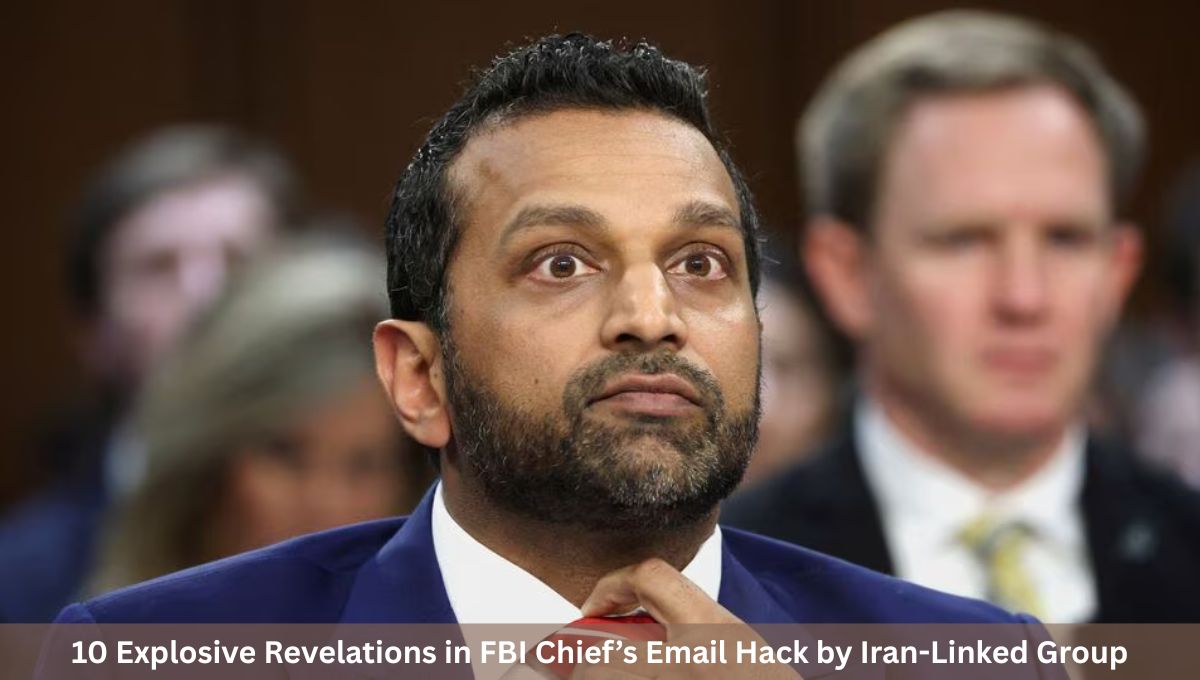
10 Explosive Revelations in FBI Chief’s Email Hack by Iran-Linked Group — A high-profile cyber breach. In a development that has sparked international attention, Iran-linked hackers have claimed responsibility for breaching the personal email account of FBI Director Kash Patel.
The incident, confirmed by US officials, has reignited concerns over cyber warfare, digital vulnerabilities, and geopolitical tensions in an already volatile global environment.
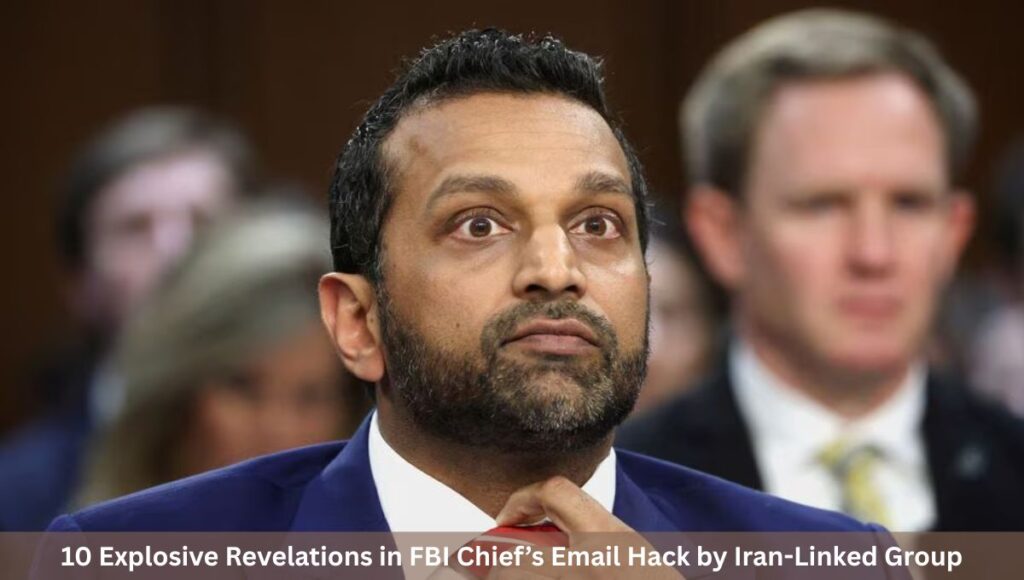
The breach, reportedly carried out by a group calling itself the Handala Hack Team, involved the release of personal photographs, emails, and documents belonging to Patel.
While authorities have moved swiftly to contain the situation, the implications of such an attack extend far beyond one individual.
This article breaks down what happened, what was exposed, who is behind the attack, and why it matters on a global scale.
10 Explosive Revelations in FBI Chief’s Email Hack by Iran-Linked Group
What Happened: FBI Confirms Email Targeting
The Federal Bureau of Investigation acknowledged that “malicious actors” targeted Kash Patel’s personal email account.
According to official statements, the agency has taken “all necessary steps” to mitigate risks.
Importantly, the FBI emphasized that:
- The compromised data is historical in nature
- No classified or government information was involved
- The breach did not affect FBI systems
This distinction is critical. Despite the alarming headlines, officials are framing the incident as a personal data breach rather than a national security failure.
What the Hackers Released
The hackers published a range of materials online, including:
1. Personal Photographs
Images allegedly show Patel:
- Smoking cigars
- Standing beside an antique convertible
- Taking mirror selfies
- Holding a bottle of rum
These visuals appear designed to embarrass rather than expose sensitive intelligence.
2. Emails and Documents
A sample of more than 300 emails was reportedly leaked.
The content includes:
- Personal correspondence
- Travel-related communication
- Business-related discussions
Most of the emails date between 2010 and 2019, well before Patel assumed leadership of the FBI.
3. Resume and Professional Data
Some reports indicate that:
- Patel’s resume was included
- Career-related documents were shared
These details, while not classified, contribute to the broader narrative of personal exposure.
Verification Status: What’s Confirmed and What’s Not
While officials have acknowledged the breach, full verification remains incomplete.
Confirmed
- The email account was targeted
- Some leaked materials appear authentic
- The email address matches previously known data
Unverified
- Full dataset authenticity
- Claims of access to “classified files”
- Extent of data still held by hackers
This uncertainty is typical in cyber incidents, where information warfare and exaggeration often overlap.
Who Is Behind the Attack?
The group claiming responsibility calls itself the Handala Hack Team.
How They Describe Themselves
- Pro-Palestinian hacktivists
- Vigilante cyber actors
What Experts Say
Cybersecurity analysts widely believe:
- The group is linked to Iranian cyber intelligence operations
- It may function as a proxy or front organization
This aligns with a broader pattern of states using deniable cyber units to conduct operations.
A Pattern of Escalation in Cyber Warfare
This incident is not isolated. It fits into a growing trend of cyber activities tied to geopolitical tensions.
Recent Related Claims by the Same Group
- Cyberattack on a major US medical device company
- Alleged data leaks involving defense sector employees
Strategic Intent
Experts suggest these attacks aim to:
- Embarrass high-profile figures
- Undermine public confidence
- Signal capability without triggering full-scale conflict
This is often described as “gray-zone warfare”—actions below the threshold of conventional war.
Why Personal Emails Are Targeted
Targeting personal accounts is a common tactic in cyber espionage.
Reasons
- Weaker security compared to official systems
- Access to informal or sensitive conversations
- Potential for reputational damage
Historical Precedents
Similar incidents have occurred in the past involving:
- Political campaign officials
- Intelligence leaders
- Government advisors
These breaches often rely on phishing, password reuse, or legacy vulnerabilities rather than advanced hacking.
Geopolitical Context: Rising Tensions
The timing of the attack is significant.
Background Factors
- Ongoing tensions between the US, Israel, and Iran
- Military actions and retaliatory threats
- Increased cyber activity from state-linked actors
Possible Motivation
The hackers themselves claimed:
- The attack was retaliation for recent military actions
- It marks the beginning of a new cyber campaign
This suggests the breach is part of a broader strategic response, not just an isolated incident.
FBI and Government Response
Authorities have responded on multiple fronts.
Immediate Actions
- Securing affected accounts
- Assessing potential risks
- Monitoring further leaks
Longer-Term Measures
- Pursuing those responsible
- Strengthening cybersecurity protocols
- Offering rewards for information
Reports indicate that US authorities have even placed a multi-million-dollar bounty on identifying members of the hacking group.
Cybersecurity Expert Analysis
Experts emphasize that the breach is not as severe as it appears.
Key Observations
- Data appears outdated
- No evidence of active system compromise
- Likely sourced from older backups or breaches
One analyst described it as:
“A personal data exposure rather than a systemic failure.”
Impact on Public Perception
Even without classified leaks, the incident has consequences.
Reputational Impact
- Embarrassment for a top official
- Questions about personal cybersecurity practices
Public Trust
- Concerns about leadership vulnerability
- Increased scrutiny of digital security
Media Amplification
The visual nature of the leak (photos, personal details) makes it particularly:
- Shareable
- Sensational
- Impactful in shaping narratives
What Happens Next?
Several scenarios could unfold:
1. Additional Data Releases
Hackers may:
- Release more emails
- Publish additional personal material
2. Retaliatory Cyber Actions
The US could:
- Conduct counter-cyber operations
- Increase pressure on suspected actors
3. Diplomatic Fallout
The incident may:
- Add strain to already tense relations
- Influence global cyber policy discussions
Lessons for Cybersecurity
This case highlights key vulnerabilities relevant worldwide.
For Individuals
- Avoid reusing passwords
- Enable multi-factor authentication
- Monitor old accounts
For Governments
- Secure personal accounts of officials
- Improve threat detection
- Address legacy data exposure
For Organizations
- Recognize the risk of “non-official” channels
- Implement comprehensive security policies
Conclusion: A Warning Signal in the Digital Age
The breach of Kash Patel’s personal email underscores a critical reality:
in today’s interconnected world, even the highest-ranking officials are not immune to cyber threats.
While the FBI has downplayed the severity—emphasizing that no classified information was compromised—the incident serves as a powerful reminder of the evolving nature of modern conflict.
Cyber warfare is no longer confined to critical infrastructure or military systems. It now extends into personal lives, public perception, and psychological operations.
As geopolitical tensions continue to rise, such incidents are likely to become more frequent, more sophisticated, and more impactful.
Also Read: Kash Patel Faces Senate Showdown Amid FBI Turmoil and Charlie Kirk Assassination Probe
Related Posts:
- 7 Explosive Revelations Behind Kash Patel’s FBI…

- Kash Patel Faces Fire Over “Valhalla” Tribute, Rao’s…

- Kash Patel Faces Senate Showdown Amid FBI Turmoil…

- Alexis Wilkins Denies Mossad Spy Claims Amid Kash…
- 7 Heartbreaking Facts About Venezuela's Earthquake Disaster

- 7 Powerful Facts About Ayatollah Ali Khamenei’s…