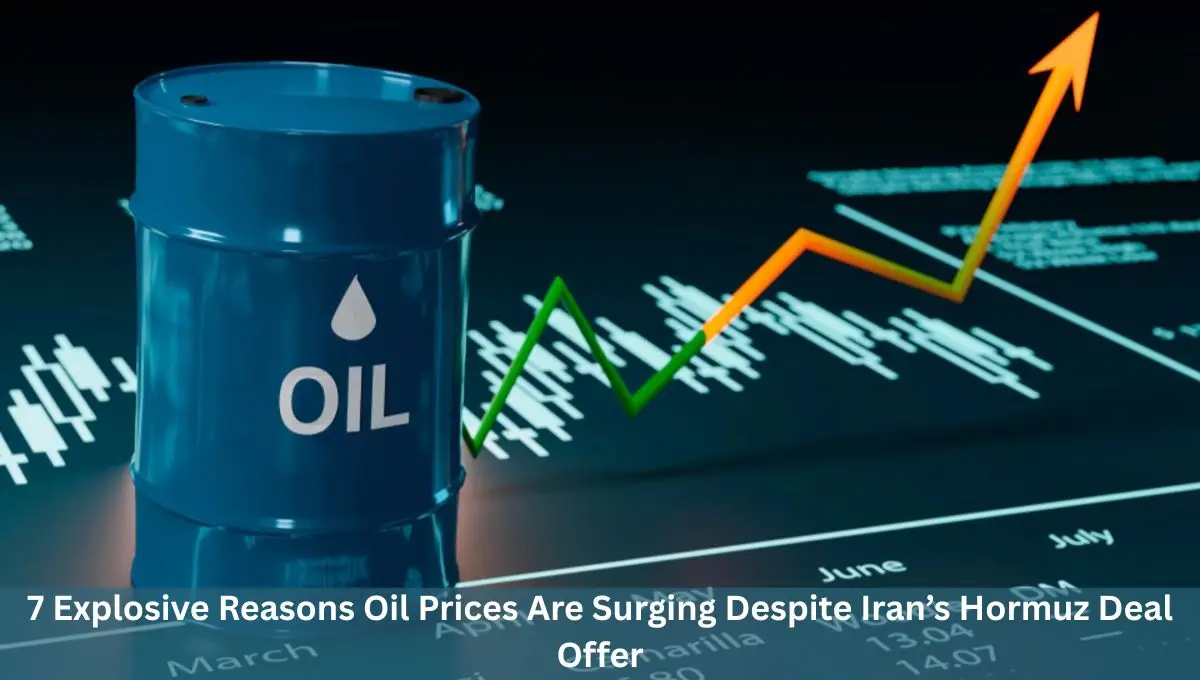
7 Explosive Reasons Oil Prices Are Surging Despite Iran’s Hormuz Deal Offer and volatile global markets. Global oil markets are once again under intense pressure as prices continue to climb—even in the face of a seemingly positive diplomatic development. Iran’s recent proposal to reopen the Strait of Hormuz, one of the world’s most critical energy chokepoints, has failed to calm investor fears.
Instead of easing, Brent crude prices have surged past $109 per barrel, reflecting deep uncertainty about the future of global energy flows.
While Tehran has offered a conditional reopening of the strait, traders remain unconvinced that the crisis is nearing resolution.
At the heart of the issue lies a complex geopolitical standoff involving Iran, the United States, and regional allies—one that continues to disrupt oil supply chains and shake global economic stability.
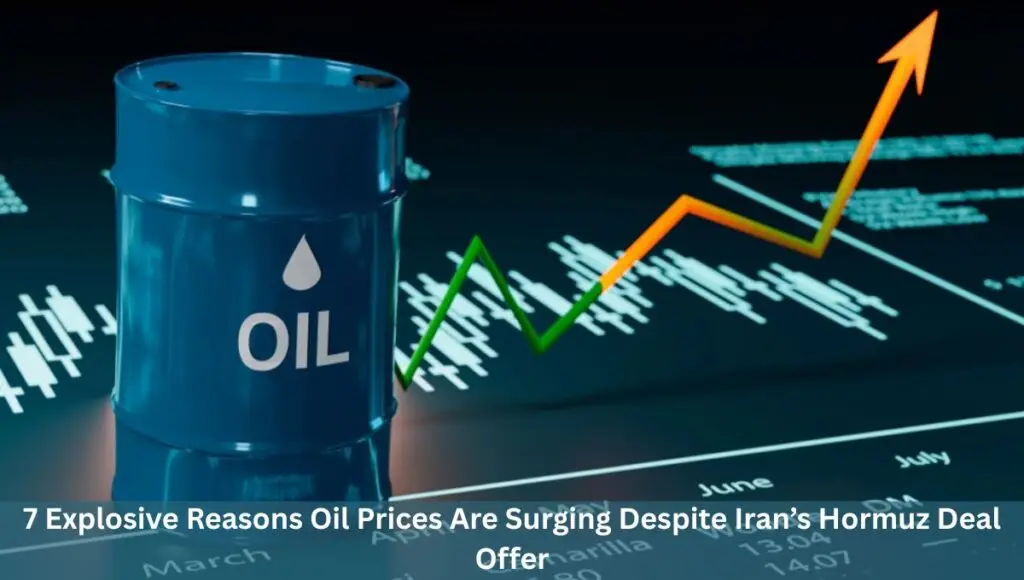
7 Explosive Reasons Oil Prices Are Surging Despite Iran’s Hormuz Deal Offer
Why Oil Prices Are Rising Despite Iran’s Proposal
1. Physical Supply Disruptions Still Ongoing
Markets are driven less by diplomatic rhetoric and more by actual supply flows. Despite Iran’s proposal, oil shipments through the Strait of Hormuz remain severely constrained.
Before the conflict, over 120 ships passed through the strait daily.
Now, that number has dropped dramatically, with fewer than 10 vessels crossing on some days—and many of them not carrying oil.
This sharp decline in traffic has created a tangible supply shortage, pushing prices higher.
2. Traders Don’t Trust Political Promises
Oil traders are skeptical about Iran’s intentions and the feasibility of its proposal.
The offer to reopen the strait comes with conditions, including:
- Lifting U.S. sanctions and blockade
- Ending the ongoing war
- Delaying nuclear negotiations
These demands make the proposal politically complex and unlikely to be accepted quickly. As a result, markets are pricing in continued uncertainty.
3. The Strait of Hormuz Remains a Strategic Flashpoint
The Strait of Hormuz is one of the most important energy corridors in the world, responsible for transporting nearly 20% of global oil supply.
Even a partial disruption has massive ripple effects across:
- Fuel prices
- Manufacturing costs
- Global trade routes
The ongoing standoff has effectively turned the strait into a geopolitical battleground, keeping markets on edge.
Iran’s Proposal: A Closer Look
Iran’s latest diplomatic move aims to break the deadlock in negotiations with the United States.
The proposal follows a phased approach:
Phase 1: Immediate Ceasefire and De-escalation
Iran calls for an end to hostilities and a long-term ceasefire agreement.
Phase 2: Lifting the U.S. Blockade
Tehran demands the removal of restrictions on its oil exports and shipping routes.
Phase 3: Reopening the Strait of Hormuz
Once conditions are met, Iran would allow normal shipping activity to resume.
Phase 4: Delayed Nuclear Talks
Discussions on Iran’s nuclear program would be postponed to a later stage.
Why the U.S. Is Unlikely to Accept the Deal
The United States has made it clear that Iran’s nuclear ambitions are central to any agreement. Delaying these discussions is seen as unacceptable by Washington.
Key Concerns from the U.S. Side
- Fear that Iran could advance its nuclear program during delays
- Loss of leverage if sanctions are lifted early
- Risk of setting a precedent for conditional control over international waterways
American officials have emphasized that any deal must ensure Iran cannot develop nuclear weapons under any circumstances.
Trump Administration’s Strategic Dilemma
The current situation presents a complex challenge for U.S. leadership.
Pressure Points
- Rising gasoline prices affecting domestic voters
- Global criticism over prolonged conflict
- Economic strain on allies dependent on Gulf oil
At the same time, maintaining pressure on Iran is seen as essential to achieving long-term strategic goals.
Impact on Global Oil Supply
According to industry estimates, the conflict has already reduced global oil production by approximately 14.5 million barrels per day.
Key Consequences
- Reduced availability of crude oil
- Increased competition among buyers
- Rising transportation and insurance costs
These factors are collectively driving prices upward, regardless of diplomatic developments.
Shipping Crisis: A Bottleneck That Won’t Clear Quickly
Even if a deal is reached, restoring normal shipping operations will take time.
Challenges Ahead
- Clearing mines from the waterway
- Repairing damaged infrastructure
- Managing backlog of stranded oil shipments
Experts warn that it could take months before supply chains stabilize.
Global Economic Ripple Effects
The rising cost of oil is already impacting economies worldwide.
Key Areas Affected
1. Fuel Prices
Consumers are facing higher petrol and diesel costs across multiple countries.
2. Food Prices
Transportation costs are pushing up prices of essential goods.
3. Inflation
Central banks may struggle to control inflation as energy costs rise.
Impact on Developing Countries
Emerging economies are particularly vulnerable to oil price shocks.
Why It Matters
- Higher import bills strain national budgets
- Currency depreciation increases cost of trade
- Reduced economic growth potential
Countries heavily reliant on imported energy are feeling the pressure most acutely.
Geopolitical Implications
The crisis is reshaping alliances and power dynamics in the region.
Key Developments
- Increased involvement of mediators like Pakistan and Oman
- Strengthening ties between Iran and Russia
- Growing tension between Western powers and regional actors
This evolving landscape adds another layer of uncertainty to global markets.
The Role of the Strait of Hormuz in Global Energy Security
The strategic importance of the strait cannot be overstated.
Why It’s Critical
- Shortest route for Gulf oil exports
- Essential for Asian energy imports
- Limited alternative routes available
Any disruption here has immediate global consequences.
Market Psychology: Fear Driving Prices Higher
Beyond physical supply issues, market sentiment plays a major role.
Key Factors Influencing Traders
- Fear of escalation
- Lack of clear resolution timeline
- Historical volatility in the region
This psychological component amplifies price movements.
Future Scenarios: What Could Happen Next
Scenario 1: Diplomatic Breakthrough
A negotiated settlement could stabilize markets, but recovery would be gradual.
Scenario 2: Prolonged Stalemate
Continued tensions could push oil prices even higher.
Scenario 3: Escalation of Conflict
Further disruptions could trigger a global energy crisis.
Energy Alternatives Under Spotlight
The crisis is accelerating interest in alternative energy sources.
Potential Shifts
- Increased investment in renewables
- Diversification of energy supply chains
- Strategic reserves being utilized
However, these changes will take time to impact markets.
What This Means for Consumers
For everyday people, the impact is already visible.
Key Effects
- Higher fuel bills
- Increased cost of living
- Potential slowdown in economic activity
These changes are likely to persist as long as the crisis continues.
Conclusion: A Crisis Far From Over
Despite Iran’s proposal to reopen the Strait of Hormuz, oil prices continue to rise, highlighting the deep-rooted uncertainty in global energy markets.
The fundamental issue is not just access to the waterway, but the broader geopolitical conflict between Iran and the United States.
Until a comprehensive agreement is reached—one that addresses both security concerns and energy flows—markets are likely to remain volatile.
For now, traders are focusing on one key reality:
oil supply remains constrained, and until that changes, prices will stay elevated.
Also Read: 7 Shocking Impacts of Iran’s ‘Tehran Tollbooth’ on Global Oil Markets
Also Read: China May Restart Fuel Exports as Domestic Stockpiles Surge
Related Posts:
- 7 Explosive Reasons Oil Prices Are Surging as Trump…
- 7 Powerful Reasons the U.S. Is Letting Countries Buy…
- 7 Critical Ways Iran’s Yuan Oil Plan Could Shake the…
- 7 Shocking Reasons Trump Says Oil Spike Is “Worth…

- 9 Strategic Reasons the US Allowed India to Buy…
- 10 Explosive Signals Trump Says Iran War Could End…