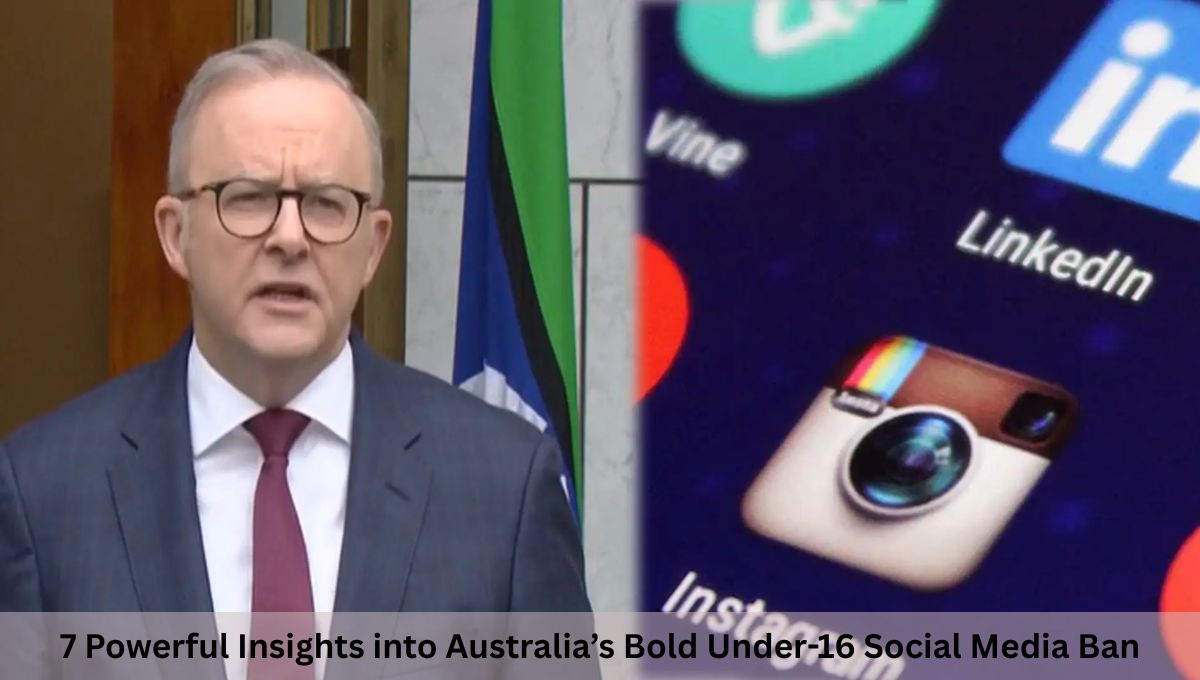
7 Powerful Insights into Australia’s Bold Under-16 Social Media Ban that has sparked global debate, teen reactions, tech-industry warnings, and a surge in alternative apps.Australia has taken a world-first step that is being closely watched by lawmakers, parents, educators, and technology companies across the globe:
a nationwide social media ban for children under 16.
Effective 10 December, ten of the world’s largest platforms—including TikTok, Instagram, Facebook, YouTube, Snapchat, Reddit, Twitch, X (formerly Twitter), Threads, and Kick—must block access to anyone under the age of 16 or face penalties reaching a staggering A$49.5 million (US$33 million).
With this unprecedented move, Prime Minister Anthony Albanese says Australia is “giving it a crack.” Supporters call it a monumental win for children’s mental health and online safety. Critics warn it could backfire, pushing teens into unregulated digital spaces. The world is watching closely as Australia becomes the test case for what a radical approach to online safety can look like.
This article provides a comprehensive, human-tone analysis of the new law, the political motivations behind it, the emotional reactions from families and teens, the concerns raised by tech companies, the unexpected surge of alternative platforms, and the broader implications for global tech regulation.
7 Powerful Insights into Australia’s Bold Under-16 Social Media Ban
Albanese Announces Landmark Social Media Ban: ‘Taking Back Control from Big Tech’
When Prime Minister Anthony Albanese addressed the nation, he spoke directly to parents, children, and critics. His message was unequivocal: the era of unchecked social media access for young teens is over.
A Major Policy Shift
“Across Australia, those under 16 are starting their day a little differently—without social media,” Albanese said in a national broadcast. “It’s a big change, and we’re the first country in the world to give it a crack. But it really matters.”
He emphasized that the policy is not about punishing children, but rather about placing responsibility on tech giants, noting that today’s young teens face pressures no other generation has had to confront.
“Algorithms, endless feeds, and pressures no generation before has had to deal with,” Albanese said. “Today’s change is about supporting you to keep your children safe online. Putting the responsibility right where it belongs—on the social media giants, not on parents.”
In a second message, he celebrated the move as a moment of empowerment:
“This is Australia showing enough is enough. It is about our families taking back control.”
How the New Law Works: Australia’s Online Safety Amendment (Social Media Minimum Age) Bill 2024
The law introduces a mandatory minimum age of 16 to open or maintain an account on major social media platforms. Importantly, parents cannot override this rule by providing consent.
Key Provisions
- All users must be 16 or older to hold an account.
- Tech companies are responsible for verifying ages and blocking under-16s.
- Failure to comply can result in fines up to A$49.5 million.
- Children and families are not penalized; enforcement targets platforms.
- The list of banned platforms can expand over time.
UNICEF Australia explains the intent clearly: “Anyone under 16 in Australia won’t be able to keep or make accounts on social media apps like TikTok, Instagram, YouTube, Snapchat, X, Facebook and more.”
Some platforms, such as Roblox, Pinterest, WhatsApp, YouTube Kids, Messenger Kids, and Google Classroom, are currently excluded, but officials warn the list is fluid and expanding.
Why Australia Banned Social Media for Under-16s
The Albanese government cites mounting research and urgent public concern over mental health, online predators, cyberbullying, body-image harm, and algorithm-driven content that captures young attention spans and shapes identity formation.
The Data Behind the Decision
Studies referenced by policymakers highlight:
- A sharp rise in anxiety, self-harm, and depression linked to excessive social media use.
- Escalating rates of cyberbullying, especially among girls aged 12–15.
- The role of algorithmic feeds in promoting harmful content, including unrealistic body standards and misinformation.
- Increased exposure to online grooming and extortion, especially on platforms with private messaging and ephemeral content.
One of the most influential voices behind the movement is Jonathan Haidt, social psychologist and author of The Anxious Generation. His book argues that social media has rewired childhood, reshaping how kids socialize and fundamentally affecting mental health.
Haidt describes the shift as “the largest corporate destruction of human potential in human history.” He strongly supports Australia’s decision, saying it pushes children toward healthier offline activities and peer interactions.
The Human Stories Behind the Ban: Grief, Advocacy, and a Call for Protection
For many parents who have lost children to online harms, this ban is not simply policy—it’s personal.
The Tragedy That Sparked a Movement
At an emotional event marking the launch of the law, Wayne Holdsworth spoke about his 17-year-old son, Mac, who died by suicide after being targeted in a sexual extortion scam.
“It’s really sad. I shouldn’t be here because he should have been protected,” Holdsworth said. “I should have known more. He should have known more.”
Holdsworth is among several grieving parents who met with Albanese and rallied support across political lines. Their efforts helped drive the proposal from a state-level idea in South Australia to a national mandate.
South Australia’s Role: The Premier Who Pushed the First Domino
Peter Malinauskas: ‘What’s the worst that’s going to happen by delaying kids’ access?’
South Australian Premier Peter Malinauskas championed the original groundwork for the law at the state level, inspired partly by the deaths of Australian teens and partly by conversations at home.
His wife was reading Haidt’s book and urged him nightly to do something about the escalating crisis. He commissioned draft legislation, which spread to New South Wales and ultimately gained federal traction.
Malinauskas argues that algorithms—not the internet broadly—are the problem:
“The difference between everything that’s available on the internet and a social media service is that addictive nature. It is the algorithms.”
He believes banning social media platforms under 16 is not a ban on the internet but a ban on addictive, data-harvesting, behavior-shaping systems targeting minors.
Teen Reactions: Grief, Humor, Anger, and Acceptance
As midnight approached on Tuesday, Australian teenagers—many of whom grew up on TikTok, YouTube, Instagram, and Snapchat—posted final messages, countdowns, and farewell notes.
A Digital Generation Says Goodbye
Popular TikTok creator Josh Partington, age 29, with over 75,000 followers, said:
“I’ll miss you guys.”
Teens posted messages like:
- “See you on the other side.”
- “#seeyouwhenim16”
- “I don’t know if my account will still be standing.”
One 13-year-old autistic teen wrote on Reddit:
“I’ll be completely alone for the next three years until I am 16.”
Others welcomed the change:
“Ngl, social media ban is probably for the best of us. All we do is sit behind a screen for hours.”
Some expressed anger at the Prime Minister, with comments such as:
“Just wait until we’re able to vote.”
Alternative Apps Surge as Teens Look for Digital Refuge
Despite the ban, teens quickly flocked to non-restricted platforms, creating a new digital landscape overnight.
Top Rising Apps After the Australia Social Media Ban
The most-downloaded apps on the Apple App Store became:
- Lemon8 – A TikTok-adjacent photo and video app integrated with the ByteDance ecosystem.
- Yope – A privacy-focused social app for sharing with close friends.
- Coverstar – A moderated, kid-safe alternative to TikTok, marketed as the “safest” option for ages 9–16.
Coverstar boasts no DMs and strict moderation, claiming it prevents grooming and harmful content.
Tech Industry Backlash: Meta Warns Ban May Make Kids Less Safe
Meta, owner of Facebook, Instagram, and Threads, issued a pointed statement criticizing the law.
Meta’s Key Concerns
“We’ve consistently raised concerns that this poorly developed law could push teens to less regulated platforms or apps. We’re now seeing those concerns become reality.”
Meta argues that:
- Teens may flock to apps without teen-specific safety features.
- Age verification technology is still flawed.
- Enforcement may be uneven and drive behavior underground.
Other tech companies quietly share these concerns, with some considering legal challenges.
Is the Ban Enforceable? Experts Warn of Loopholes and Workarounds
While many applaud the intent, experts say the policy faces major hurdles.
The VPN Problem
Teens can evade restrictions by:
- Using VPNs
- Borrowing adult IDs
- Moving to unregulated platforms
Internet Studies Professor Tama Leaver calls the ban “massively overhyped,” arguing:
“The tools to do this don’t really work yet.”
The government acknowledges these challenges but says perfection is not the goal—reducing harm is.
Will the Ban Reduce Bullying? Not Necessarily, Experts Say
Cyberbullying is not platform-specific; it can migrate. Leaver warns the ban may create a “false sense of security” for parents while pushing harmful behavior onto smaller platforms or private chats.
Some child advocates also worry that vulnerable kids may lose critical online support networks, especially LGBTQ+ teens, neurodivergent youth, and isolated students who rely on online groups for connection.
A Global Movement Taking Shape
Countries including Denmark, New Zealand, France, Malaysia, the UK, and members of the European Union are studying Australia’s model. Many governments are under pressure to act, as anxiety about teen mental health reaches alarming levels worldwide.
Australia’s eSafety Commissioner Julie Inman Grant believes the country is setting a new international standard, much like it did with gun reform in the 1990s. “How can you not follow a country clearly prioritizing teen safety ahead of tech profits?” she asks.
What Comes Next: Education, Monitoring, and Potential Legal Battles
The law includes mechanisms for ongoing evaluation. Inman Grant says platforms will receive information notices requiring proof of compliance. Her office will issue public updates before Christmas.
A Focus on Education
Parents like Holdsworth say the next step is empowering younger children with digital literacy:
“We’ve got an opportunity now to educate kids between eight and 15 so when they do get access to social media, they’re prepared.”
Legal Questions Ahead
Australia’s High Court will hear cases about:
- Privacy
- Free speech
- Political participation rights for minors
Some platforms may challenge the law’s definitions and enforcement mechanisms.
Albanese to Teens: Life Beyond Screens
On the eve of the ban, Albanese sent a video message to young Australians urging them to:
- Start a new sport
- Learn an instrument
- Read long-ignored books
- Spend time with friends offline
The message echoes Haidt’s core argument: children need more real-world experiences and fewer curated digital feeds.
Conclusion: A Historic Experiment with High Stakes
Australia’s under-16 social media ban is bold, controversial, and unprecedented. It represents a profound shift in how societies view technology’s role in childhood.
Whether it becomes a global blueprint or a cautionary tale depends on factors still unfolding:
- Will teens simply migrate to unregulated apps?
- Will mental health outcomes improve over time?
- Will enforcement be fair and effective?
- Will other nations adopt similar restrictions?
- How far will tech platforms go to comply—or resist?
For now, one thing is certain: Australia has drawn a line, prioritizing children’s safety over corporate growth and technological momentum. Supporters call it overdue. Critics call it risky. But the world is watching, and the debate over who protects children in the digital age has only just begun
Also Read: Nepal Lifts Social Media Ban Amid Youth Protests, Political Crisis, and Demands for Reform
Related Posts:
- Nepal Blocks Facebook, Instagram, YouTube and X: Ban…

- 7 Explosive Reasons Australia’s Teen Social Media…
- 7 Stunning Impacts of Australia’s Tough New Social Media Ban

- 9 Uncomfortable Truths About Australia’s Under-16…

- US Approves TikTok Deal: Oracle to Oversee…

- 20 Countries, 1 Bold Move: France Set to Ban Social…