
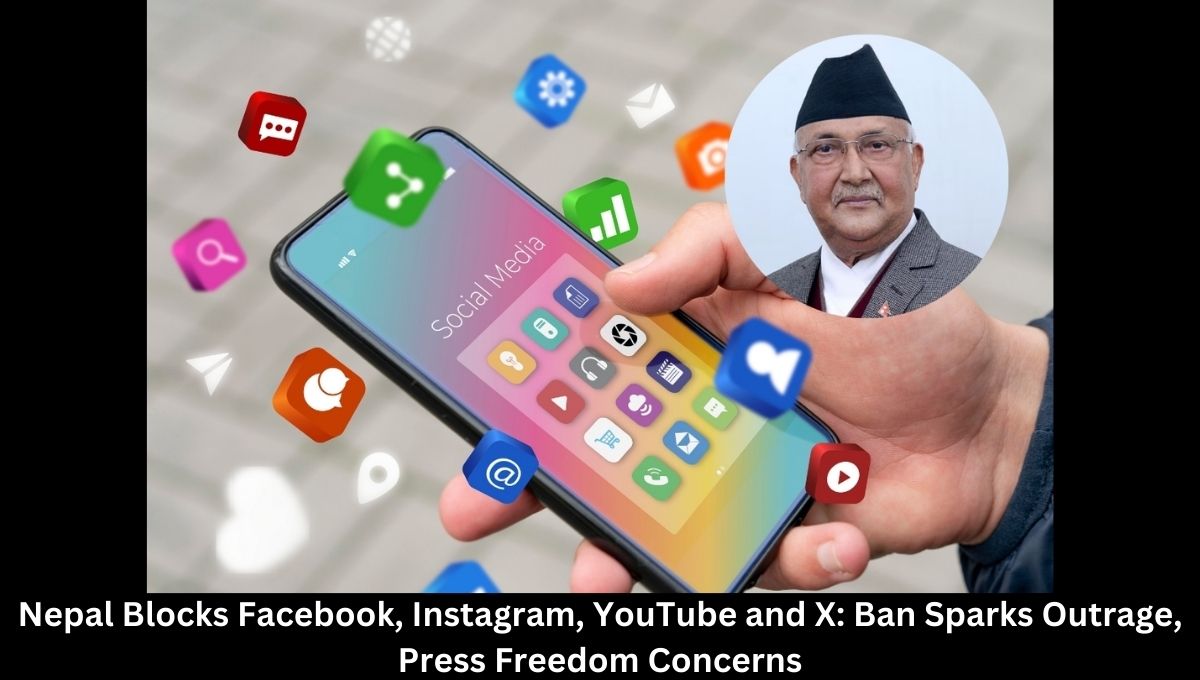
Citing misinformation and cybercrime, Nepal Blocks Facebook, Instagram, YouTube and X: Ban Sparks Outrage, Press Freedom Concerns. Nepal has plunged into digital turmoil after the government banned Facebook, Instagram, YouTube, X (formerly Twitter), Reddit, LinkedIn, and 20 other platforms for failing to register under new national regulations.
The sweeping crackdown, enforced on September 5, 2025, has disrupted millions of people’s online communication and sparked criticism from journalists, rights activists, and civil society groups who warn the move threatens press freedom and freedom of expression.
While the government insists the ban is necessary to regulate misinformation and cybercrime, citizens at home and abroad fear isolation, censorship, and economic losses.
Nepal Blocks Facebook, Instagram, YouTube and X: Ban Sparks Outrage, Press Freedom Concerns
Why Did Nepal Ban Facebook, Instagram, YouTube, and Other Platforms?
The Nepalese government argues that the ban is the result of non-compliance with local registration laws.
- The Ministry of Communication and Information Technology (MoCIT) had set a seven-day deadline from August 28 for all global social media companies to register operations in Nepal.
- Requirements included:
- Registering with the ministry
- Setting up a local contact office
- Appointing officials for compliance and grievance handling
- The deadline expired on September 4, and none of the major tech companies—including Meta (Facebook, Instagram, WhatsApp), Google (YouTube), or X Corp—submitted applications.
In response, Minister Prithvi Subba Gurung announced that unregistered platforms would be blocked nationwide with immediate effect.
“The ministry had given ample time to all social media companies to register. Since they failed to comply, we directed the Nepal Telecommunications Authority to block access effective September 5,” Gurung told reporters.
How Are Users Experiencing the Ban?
The ban began as an outage on Facebook and Instagram late Thursday night. Users trying to log in via browsers reported messages such as:
- “Hmm… something went wrong”
- “This site can’t be reached”
- “Safari can’t connect to the server”
Mobile applications for Facebook and Instagram remained functional at first but quickly became inaccessible as telecom providers enforced the order.
Nepali student Monika Malla told ANI:
“I tried logging in to Facebook via Safari and Google Chrome, but it’s not working anymore. The apps still work for now, but I’m sure they’ll go dark soon. It’s just a matter of time.”
By Friday morning, Facebook, Instagram, YouTube, X, Messenger, and Reddit had gone completely dark across Nepal.
Which Social Media Platforms Are Still Accessible?
Out of the 26 targeted platforms, only a handful remain available:
- TikTok, Viber, Nimbuzz, Wetalk, and Popo Live are registered and operating normally.
- Telegram and Global Diary are in the registration process.
- Major platforms such as Facebook, Instagram, YouTube, WhatsApp, LinkedIn, X, Reddit, Snapchat, Discord, WeChat, Pinterest, and Threads remain blocked until they comply.
The Supreme Court Order That Led to the Ban
The government’s decision comes after a Supreme Court ruling in August 2025.
- Nearly five years ago (2020), advocates and media groups filed writ petitions demanding restrictions on unlicensed platforms that broadcast foreign advertisements and unregulated content.
- On August 28, 2025, a joint bench of Justices Tek Prasad Dhungana and Shanti Singh Thapa issued a mandamus order directing the government to ensure compliance.
- The court stopped short of explicitly calling for a ban but said the government must enforce registration under the law.
The MoCIT interpreted the order as a green light to suspend non-compliant platforms.
Journalists and Rights Groups Condemn the Ban
The ban has drawn fierce criticism both domestically and internationally.
- Federation of Nepalese Journalists (FNJ):
“The government’s move to ban social media sites without giving alternatives not only restricts freedom of expression and press freedom but also affects the right to information guaranteed by the constitution,” said FNJ general secretary Ram Prasad Dahal.
- Committee to Protect Journalists (CPJ): Warned the restrictions would hinder reporting and limit citizens’ access to reliable information.
- Access Now (digital rights group): Compared the ban to China’s censorship practices, calling it “deeply troubling.”
- Pralhad Rijal, Senior Journalist:
“More than seven million Nepali youths live abroad for education or work. This decision directly affects their communication with family and friends back home.”
Impact on Nepali Citizens Abroad
With over 7 million Nepalis working or studying overseas, social media is a lifeline for communication.
- Facebook Messenger and WhatsApp are the most widely used platforms to connect with families.
- The sudden ban has left migrant workers in the Gulf, Malaysia, and India scrambling for alternatives.
- Many turned to VPNs or secondary platforms like Viber, but accessibility remains uncertain.
Economic and Creative Fallout
The ban could have severe economic consequences:
- Content Creators: Facebook recently included Nepal in its monetization program, allowing creators to earn from ads on reels, videos, and stories. That opportunity has now collapsed.
- Businesses: Thousands of small businesses rely on Facebook and Instagram for marketing, sales, and customer engagement.
- Tourism Promotion: With YouTube and Instagram gone, tourism campaigns face disruption.
Entrepreneur Sanjay Maharjan said:
“I run an online handicraft store. Ninety percent of my sales come through Facebook and Instagram ads. This ban is destroying my livelihood overnight.”
Social Media Penetration in Nepal
According to Statcounter (2025):
- Facebook: 87% share of social media users in Nepal
- X (Twitter): 6%
- YouTube: 5%
With internet penetration above 90%, the ban impacts nearly the entire connected population.
Government Justification: Fighting Cybercrime & Misinformation
Officials defend the move as essential to:
- Curb fake accounts spreading hate and rumors
- Reduce cybercrime linked to scams and fraud
- Maintain social harmony amid rising misinformation
Spokesperson Gajendra Kumar Thakur said:
“Users with fake IDs are spreading hatred and disturbing harmony. Platforms had ample notice to register. They refused. Blocking was the only option left.”
The Proposed Social Media Bill
Alongside the ban, Nepal is debating a new social media bill in parliament.
Key features include:
- Mandatory registration of all platforms
- Appointment of local liaison officers
- Fines and imprisonment for content deemed harmful to national interest
Critics argue the bill is a tool for censorship, while the government claims it ensures accountability.
Critics Call It a Censorship Tool
Rights advocates warn the ban is part of a broader strategy to control dissent.
- The government has a history of blocking TikTok temporarily over “obscene” content.
- Now, with Meta, YouTube, and X targeted, critics say the state is moving toward digital authoritarianism.
- Citizens fear their right to free expression, guaranteed under Nepal’s 2015 constitution, is being eroded.
What Happens Next?
The government has said the ban is not permanent.
- Platforms will be restored immediately once they register.
- Discussions between the ministry and telecom operators are ongoing.
- Civil society groups are preparing to challenge the ban in court as unconstitutional.
For now, Nepal remains cut off from the world’s largest social media platforms, raising urgent questions about digital rights, governance, and democracy.
Conclusion: A Nation in Digital Limbo
Nepal’s decision to block Facebook, Instagram, YouTube, and X marks one of the most sweeping social media bans in South Asia in recent years.
While the government insists the ban is about accountability and cybercrime, citizens, journalists, and rights groups see it as a dangerous slide toward censorship and authoritarianism.
As millions of Nepalis struggle to stay connected with loved ones, run businesses, or share their voices online, the controversy underscores a profound tension:
How far can governments regulate digital platforms without undermining democracy and freedom of expression?
The coming weeks will determine whether Nepal backs down under domestic and international pressure or doubles down, reshaping its digital future.
Also Read: Worried Migrants Head Home from India as Nepal’s Gen Z Protests Spiral into Political Turmoil
Also Read: The Gen Z uprising in Asia shows social media is a double-edged sword
Related Posts:
- 5 Major Takeaways from the US Supreme Court's…

- 7 Heartbreaking Facts About Venezuela's Earthquake Disaster

- Nepal Lifts Social Media Ban Amid Youth Protests,…

- 171 Gaza Flotilla Activists Deported Amid Alleged Torture

- 7 Powerful Facts About Ayatollah Ali Khamenei’s…

- In 8 Moves, EU Targets China-Linked Refineries and…
