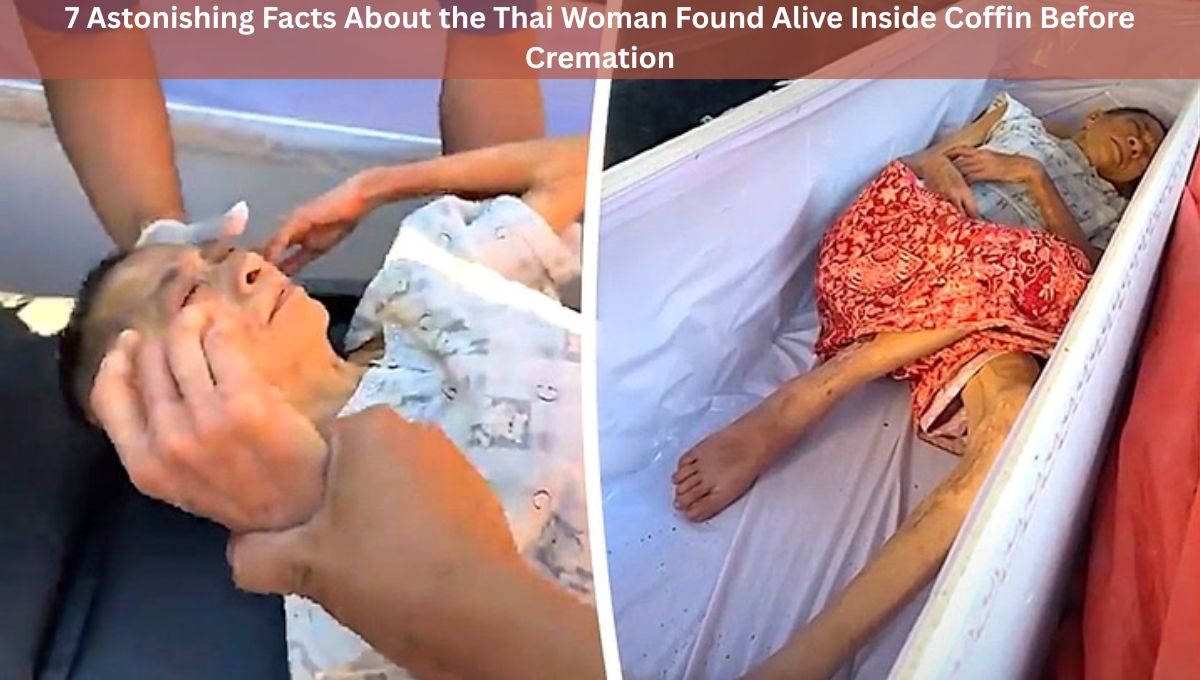
7 Astonishing Facts About the Thai Woman Found Alive Inside Coffin Before Cremation after a 500 km journey. In a shocking and almost unbelievable incident that has rapidly gained worldwide attention, a 65-year-old Thai woman—believed by her family to have died days earlier—was discovered alive inside her coffin just moments before she was to be cremated.
The dramatic moment unfolded at Wat Rat Prakhong Tham, a Buddhist temple located in Nonthaburi province on the outskirts of Bangkok. Temple staff said they were stunned, frightened, and overwhelmed when faint knocking sounds came from inside the coffin that had been brought in for the cremation ritual.
The extraordinary event has sparked discussions across Thailand about medical verification of death, rural healthcare limitations, and the life-threatening consequences of severe hypoglycaemia. It also triggered global fascination because such cases—although rare—have surfaced periodically in news headlines around the world.
Below is a detailed breakdown of the incident, including first-hand quotes, verified information from temple officials, and the timeline reconstructed from multiple reports.
7 Astonishing Facts About the Thai Woman Found Alive Inside Coffin Before Cremation
The Shocking Moment: Knock Heard From Inside the Coffin
The incident took place on a quiet Sunday afternoon when staff at Wat Rat Prakhong Tham prepared to meet a grieving family seeking a free cremation service. The woman, who had been bedridden for nearly two years, appeared to have died two days earlier according to her brother.
With no official death certificate available, the family had turned to the temple after a Bangkok hospital refused to accept her remains for organ donation. According to Pairat Soodthoop, the temple’s general and financial affairs manager, the staff initially began explaining cremation requirements and documentation.
Then they heard it—the faintest knock.
Pairat recalled his disbelief while speaking to the Associated Press:
“I was a bit surprised, so I asked them to open the coffin, and everyone was startled. I saw her opening her eyes slightly and knocking on the side of the coffin. She must have been knocking for quite some time.”
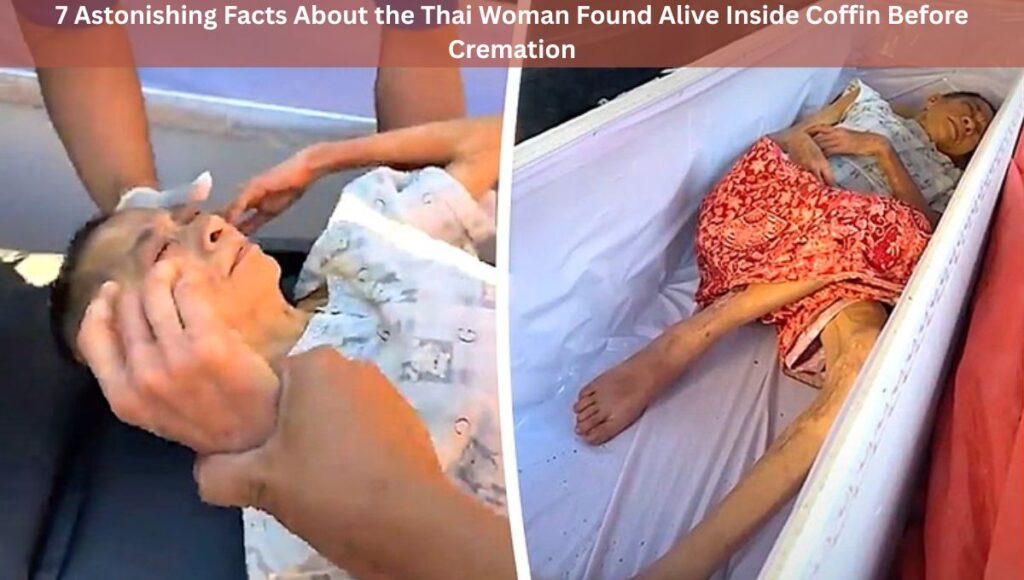
Temple staff froze in shock. Some stepped back. Others rushed forward, unsure of what they were witnessing. A video posted on the temple’s official Facebook page shows the woman lying in a white coffin placed in the back of a pickup truck. Her arms and head can be seen making slight movements—just enough to be unmistakably alive.
500km Journey Based on a Misunderstanding
The woman’s brother, who had been caring for her, told temple officials that she appeared to stop breathing on the morning of November 23. Because they lived in Phitsanulok, nearly 500 kilometres away from Bangkok, the family made the long journey in the belief that she had died naturally.
The brother had hoped to honour his sister’s wish—donating her organs to a hospital in Bangkok. But when he arrived, the hospital could not accept the body without an official death certificate, forcing him to seek cremation instead.
Pairat said:
“We were explaining how he could obtain a death certificate when we heard the knocking.”
In other words, the very conversation about death certification was interrupted by proof that the woman was still alive.
Bedridden for Years: How the Confusion Happened
According to her brother and temple officials, the woman had been bedridden for around two years due to multiple health complications. Her condition deteriorated sharply in the week before the incident. Two days before the journey, she reportedly became unresponsive and appeared to stop breathing.
In rural Thailand, especially in low-income households, immediate medical confirmation of death is not always accessible. Many families rely on visual cues: lack of breath, unresponsiveness, and coldness. If those signs align, the family may assume death without calling emergency services.
This is exactly what appears to have happened here.
Doctors Later Found the Real Cause: Severe Hypoglycaemia
After the shocking discovery at the temple, the woman was quickly transported to a nearby hospital. Doctors diagnosed her condition as severe hypoglycaemia—dangerously low blood sugar levels.
This condition can cause:
- loss of consciousness
- extremely weak breathing
- inability to respond
- coma-like symptoms
- absence of visible chest movement
In some rare extreme cases, a person in hypoglycaemic shock can appear lifeless even though vital signs continue faintly.
Doctors confirmed that the woman had not experienced cardiac or respiratory failure. Instead, she had suffered a critical metabolic crash that made her appear dead.
The symptoms align with what temple staff observed: faint movements, slow opening of the eyes, mild reflexive motions, and weak knocking.
Temple Staff and Abbot Step In to Cover Medical Costs
In a surprising act of compassion, the abbot of Wat Rat Prakhong Tham announced that the temple would cover the woman’s medical expenses. For a low-income family already struggling with health costs for two years, the temple’s assistance offers significant relief.
Temple manager Pairat said:
“The abbot has assured that all her medical expenses will be taken care of.”
This gesture highlights the temple’s long-standing commitment to community welfare. Wat Rat Prakhong Tham is known for providing free funerals and cremations for the underprivileged—one of the reasons the brother approached them after the hospital turned him away.
Viral Reaction in Thailand: Shock, Sympathy and Concern
As the story spread across Thailand, public reaction ranged from astonishment to criticism of rural healthcare pressures. Social media erupted with comments expressing:
- shock at how close the woman came to being cremated alive
- sympathy for the family, who acted in good faith
- praise for the temple for paying her medical bills
- concern that similar incidents could happen elsewhere without medical oversight
Some expressed frustration:
“People should not declare their own family members dead without a doctor!”
“Public healthcare needs to reach more rural areas to prevent this.”
Others saw the incident as a near miracle:
“She came back from the edge of death—this is a blessing.”
“It’s lucky the temple refused the cremation without paperwork.”
Similar Cases Worldwide: Not as Rare as You Think
Although it sounds like a scene from a horror movie, incidents of people being discovered alive shortly before burial or cremation have happened worldwide.
Recent high-profile cases include:
- Nebraska (USA), 2024: A 74-year-old woman declared dead at a nursing home was later found breathing at a funeral home.
- Iowa (USA), 2023: A 66-year-old woman woke up “gasping for air” inside a body bag.
- New York (USA), 2023: An 82-year-old woman declared dead at a nursing home was later found alive at a funeral home.
Medical experts say that misdiagnoses often involve metabolic crises like hypoglycaemia, hypothermia, drug overdose, or cardiac pauses that mimic death.
Why This Incident Matters: Gaps in Verification of Death
This case raises critical questions in Thailand:
1. Should every death require medical verification?
In many rural areas, deaths at home are often confirmed informally by family members. This case shows the dangers of that practice.
2. Is public awareness of hypoglycaemia symptoms sufficient?
Severe hypoglycaemia can be mistaken for death, especially in elderly or bedridden patients.
3. Are hospitals equipped to guide families without paperwork?
The hospital’s refusal, although legally correct, placed the family in an impossible situation—and nearly cost the woman her life.
4. Should transportation of bodies require prior verification?
Driving 500km with a living person trapped in a coffin demonstrates a major gap in the system.
Reconstructed Timeline of Events
Day 1 (Morning):
The woman becomes unresponsive and appears to stop breathing.
Day 1–2:
Family believes she has passed away due to her long illness.
Day 3 (Morning):
Her brother places her inside a coffin for transport.
Day 3 (Afternoon):
They drive nearly 500km from Phitsanulok to Bangkok.
Day 3 (Evening):
Bangkok hospital refuses body due to lack of death certificate.
Day 3 (Night):
Family approaches Wat Rat Prakhong Tham for free cremation. Temple also refuses for legal reasons.
Day 3 (Moments later):
Temple staff hear knocking from inside the coffin. Woman is found alive.
Day 3 (Immediately after):
She is transported to hospital and diagnosed with severe hypoglycaemia.
The Science Behind the “Appearance of Death”
Medical experts say hypoglycaemia can lead to:
- extremely shallow breathing
- muted pulse
- paralysis-like stillness
- lack of response to stimuli
- glassy or closed eyes
- cold extremities
To an untrained eye, these symptoms resemble the onset of death.
In some cases, the pulse becomes so faint that basic checks may fail to detect it. The body may go into a state of energy conservation, almost like suspended animation.
Family Speaks: “We Thought She Was Gone”
According to local media outlet Thailand News, the woman’s brother—identified as Mongkol—said:
“We had already collected the papers for her death. I was heartbroken, but today I’m just happy she is alive.”
His voice reportedly trembled as he spoke to the press, overwhelmed by relief after witnessing what he described as “a miracle.”
A Temple That Saved a Life
If not for the temple’s refusal to proceed without proper documentation, the woman may have been cremated alive.
Ironically, the administrative requirement of a death certificate—often seen as a bureaucratic inconvenience—directly saved her life.
Temple staff said they will continue supporting the woman and her family.
Conclusion: A Miracle, a Warning, and a Lesson
The case of the Thai woman found alive inside a coffin before cremation has ignited conversations throughout Thailand and around the world. It highlights:
- the importance of medical confirmation of death
- the dangers of hypoglycaemia misdiagnosis
- the struggles of rural families
- the compassion of Wat Rat Prakhong Tham temple
- and the extraordinary resilience of the human body
What could have been a tragic ending became a stunning lesson in vigilance, compassion, and the unpredictable nature of life. This astonishing event serves as a reminder: sometimes the line between life and death is much thinner than we think.
Also Read: 7 Shocking Moments from the COP30 Brazil Fire Chaos
Also Read: Woman Wakes Up in Coffin After Brother Tried to Donate Her Organs and Have Her Cremated