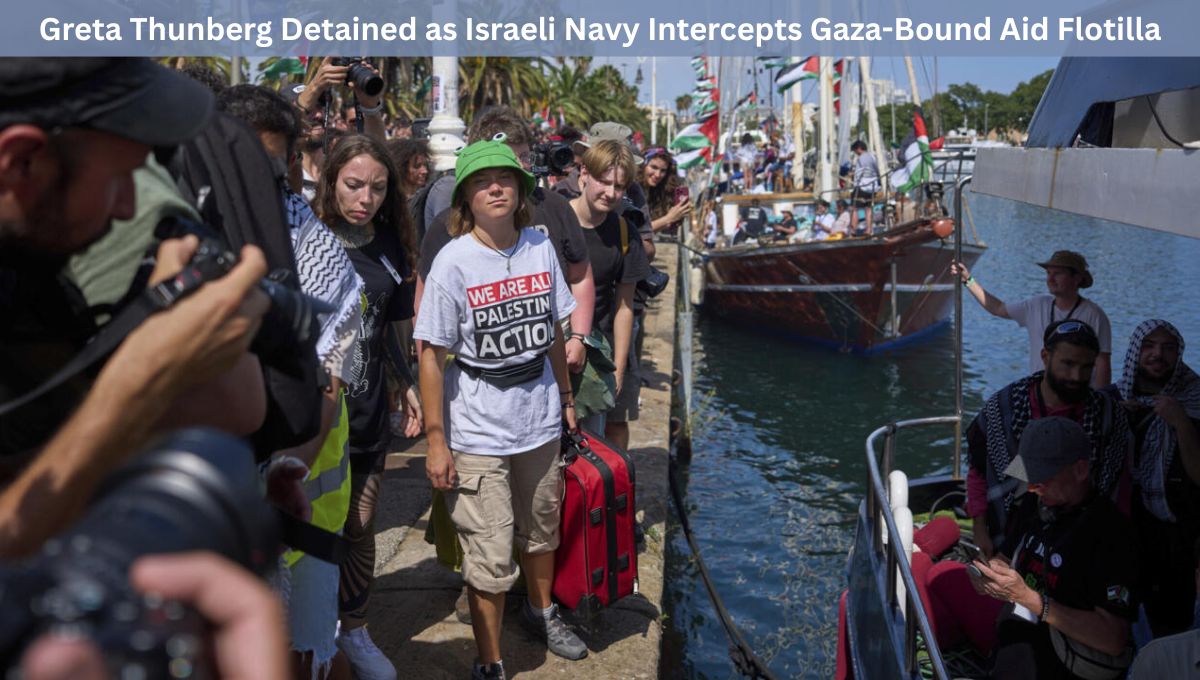
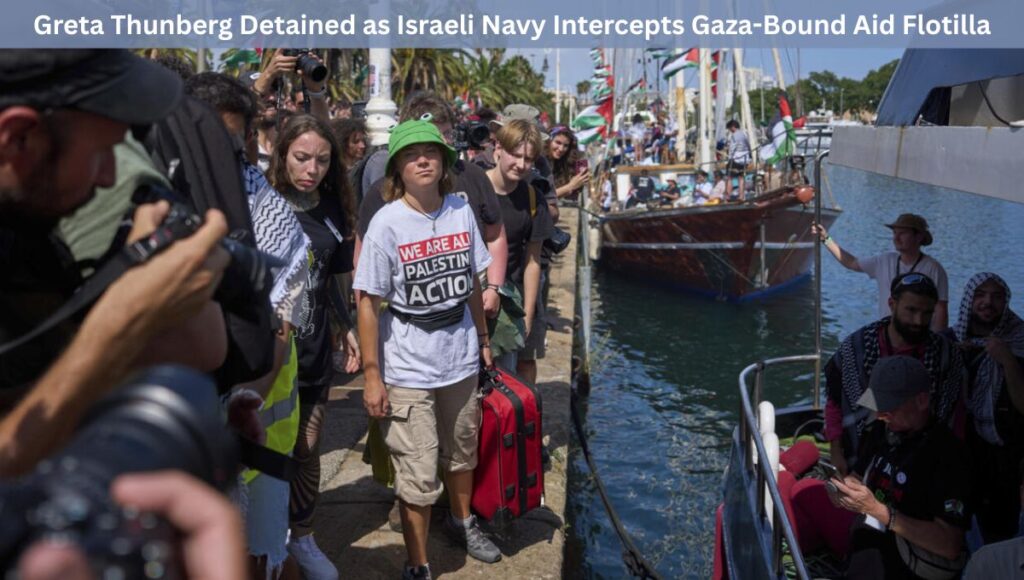
Swedish activist Greta Thunberg Detained as Israeli Navy Intercepts Gaza-Bound Aid Flotilla. Greta Thunberg, alongside hundreds of humanitarian volunteers, has been detained after Israeli naval forces intercepted the Global Sumud Flotilla (GSF) attempting to deliver aid to Gaza.
The flotilla, comprising more than 40 vessels and 500 participants from around 46 countries, aimed to break Israel’s 18-year blockade of the Palestinian enclave. The incident has prompted widespread international condemnation, protests in cities worldwide, and diplomatic backlash against Israel.
What Happened to the Gaza-Bound Flotilla?
On Wednesday evening, Israeli naval forces intercepted several flotilla vessels about 70 nautical miles from Gaza. Activists reported that some ships were rammed and targeted with water cannons, while communications were deliberately disrupted to prevent distress signals and livestream coverage.
According to the Global Sumud Flotilla organizers, at least 16 vessels were intercepted, and 28 were still sailing, approximately 46 nautical miles from Gaza.
Israel stated that the flotilla was approaching an active combat zone and violating a lawful naval blockade. The Israeli foreign ministry emphasized that the detainees were being safely transferred to an Israeli port.
Who Are the Activists and Participants?
The flotilla consists of over 500 participants, including:
- Swedish climate activist Greta Thunberg
- Italian and Spanish lawmakers
- Military veterans, doctors, clergy, and lawyers
- Celebrities such as Susan Sarandon
The mission, organized by GSF, aims to deliver food, water, and medical supplies to civilians in Gaza, rejecting Israel’s alternative route offers through Ashkelon or Cyprus.
Humanitarian Context in Gaza
Nearly two years into Israel’s war in Gaza, the enclave is experiencing a severe humanitarian crisis. According to the UN-backed Integrated Food Security Phase Classification, parts of Gaza are facing a man-made famine.
Israel maintains the blockade to prevent weapons smuggling into Gaza, while critics argue it constitutes collective punishment, severely restricting food, medical aid, and essential supplies.
Also Read: Gaza City suffering a ‘man-made’ famine that’s likely to spread, UN-backed initiative says
Israel’s Response and Rationale
The Israeli Ministry of Foreign Affairs issued a statement on X, claiming the flotilla’s purpose was provocation, not humanitarian aid. The ministry posted videos showing activists, including Thunberg, being transferred safely to ports.
Israel also cited evidence of some flotilla organizers’ alleged links to Hamas, which the GSF categorically denied as propaganda.
Flotilla Interception Details
- The flagship vessel Alma, carrying Thunberg, was boarded first.
- Other vessels, including the Surius and Adara, were intercepted shortly after.
- Activists reported hostile encounters with drones near Malta and Crete.
- International laws concerning blockade enforcement and intervention in international waters remain points of contention.
International Reactions
The interception drew swift responses from governments and organizations globally:
- Italy & Spain: Deployed naval vessels to monitor and assist the flotilla; Italian unions called for a general strike in solidarity.
- Turkey: Condemned Israel’s actions as a terrorist act.
- Colombia: President Gustavo Petro expelled Israeli diplomats and denounced the incident as an international crime.
- Ireland: Foreign Minister Simon Harris stressed that international law must be upheld.
- France: Urged Israel to ensure safety and guarantee consular protection for activists.
Past Incidents of Gaza-Bound Flotillas
Humanitarian flotillas have previously faced Israeli intervention:
- 2010 – Mavi Marmara Incident: 10 Turkish activists killed during a raid, leading to international condemnation.
- 2011-2018: Several smaller flotillas intercepted; activists detained, some subjected to violence.
- 2024-2025: Previous flotilla attempts, including Thunberg’s June 2025 mission, were blocked, with passengers detained and deported.
These incidents highlight a long-standing conflict between humanitarian missions and Israeli security measures.
The Current War and Humanitarian Crisis
The ongoing conflict between Israel and Hamas began on October 7, 2023, with the initial Hamas attack killing 1,200 people in Israel and taking 251 hostages. Israel’s military response has resulted in at least 66,000 Palestinian deaths, including a significant proportion of women and children.
The flotilla mission is intended to alleviate the suffering caused by ongoing military operations and the humanitarian blockade in Gaza.
Also Read: Israel Eases Gaza Aid Restrictions Amid Rising Global Outcry Over Starvation Crisis
Flotilla’s Goals and Challenges
Objectives
The Global Sumud Flotilla seeks to:
- Deliver humanitarian aid directly to Gazan civilians
- Draw international attention to the Gaza blockade
- Challenge Israel’s maritime restrictions on humanitarian shipments
Obstacles
- Israeli naval interception and military warnings
- Communications jamming and drone harassment
- Diplomatic pressure from surrounding nations
Despite these challenges, organizers insist on continuing their mission.
Humanitarian Aid Carried by the Flotilla
The flotilla ships carry symbolic yet critical aid, including:
- Food and baby formula
- Medical supplies and medicines
- Clothing and essential household items
Organizers emphasize that aid must reach civilians directly, rejecting alternative distribution proposals by Israel.
Protests and International Solidarity
The flotilla’s interception sparked global protests:
- Italy: Demonstrations in Rome, Pisa, Florence, and Turin; unions called for a general strike
- Turkey: Mass protests in Istanbul condemning Israeli actions
- Greece, Tunisia, Argentina: Solidarity rallies
- Colombia: Expulsion of Israeli diplomats and denunciation of Netanyahu’s government
Future Implications
Political Repercussions
The incident adds tension to international diplomacy:
- Criticism of Israel’s blockade policies
- Debates over legality of humanitarian intervention in conflict zones
- Strain on Israel-Colombia, Israel-Turkey, and Israel-Europe relations
Humanitarian Impact
The flotilla highlights the urgent need for aid in Gaza, as tens of thousands face food shortages, medical crises, and continued warfare-related destruction.
Conclusion
The detention of Greta Thunberg and other humanitarian activists aboard the Global Sumud Flotilla underscores the humanitarian crisis in Gaza and raises urgent questions about international law, military blockades, and the ethics of aid delivery.
The incident has mobilized governments, international organizations, and civilians worldwide to demand safety and humanitarian access for Gaza’s population. As the flotilla continues to sail and global scrutiny intensifies, the unfolding events may significantly influence the Israel-Gaza conflict, international diplomacy, and the future of humanitarian missions in war zones.
Related Posts:
- 171 Gaza Flotilla Activists Deported Amid Alleged Torture

- Israel Intercepts Gaza Aid Flotilla: 42 Boats…
- Greta Thunberg Detained by Israel During Gaza Aid…

- Greta Thunberg, Rima Hassan Detained as Israeli Navy…
- Trump’s 20-Point Gaza Peace Plan Gains Urgent Global…

- 7 Heartbreaking Facts About Venezuela's Earthquake Disaster