US Government Shutdown 2025: Why It Happened, Costs, and Political Fallout amid democrats’ push for healthcare subsidies. The United States has entered its first full government shutdown since 2018, after lawmakers failed to reach a funding deal before the midnight deadline on October 1, 2025.
The shutdown, triggered by a deadlock between President Donald Trump’s Republican Party and Senate Democrats over healthcare subsidies, has already furloughed nearly 750,000 federal workers, halted countless government services, and rattled financial markets.
With the White House threatening permanent layoffs within days, the crisis has turned into more than just a budget standoff — it is fast becoming a political showdown that could reshape the federal government.
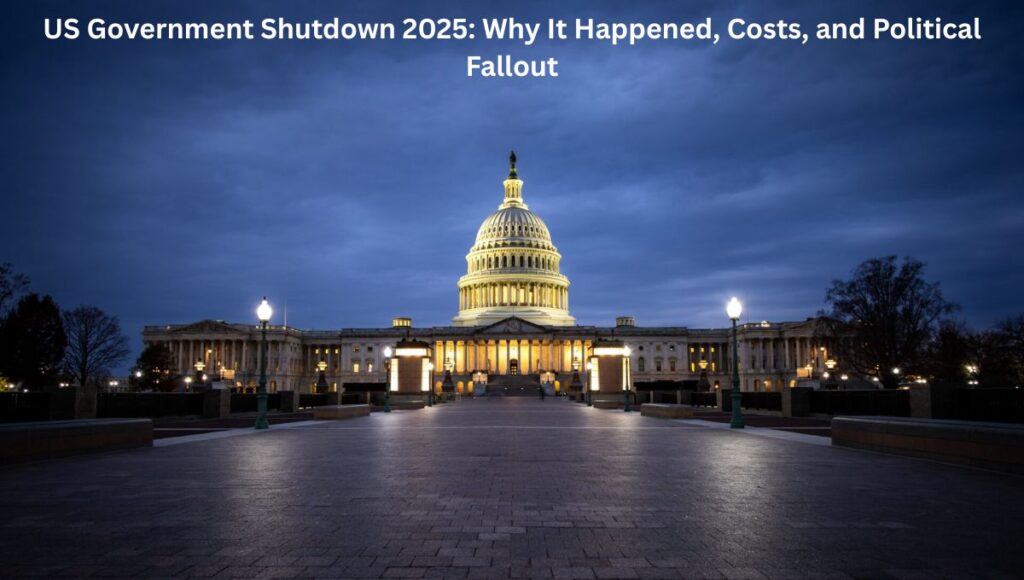
US Government Shutdown 2025: Why It Happened, Costs, and Political Fallout
Why the 2025 Government Shutdown Happened
At the core of the shutdown lies a fierce dispute over the Affordable Care Act (ACA) subsidies.
- Democrats’ Position: They want to extend subsidies for low-income Americans to keep insurance premiums affordable. Without them, Democrats argue, millions of families face skyrocketing health costs.
- Republicans’ Position: The GOP, led by Trump and Senate Majority Leader John Thune, insists that subsidies are an unnecessary expansion of Obamacare, and the budget must be passed without them.
- Trump’s Stance: The president has used the shutdown as leverage, declaring: “A lot of good can come from shutdowns. We can get rid of things we didn’t want — Democrat things.”
This political deadlock left the Senate unable to muster the 60 votes required to pass a funding bill. Both a Republican stop-gap bill and a Democratic proposal failed on the Senate floor.
Also Read : US Government Shuts Down for the First Time in Six Years as Senate Fails Funding Bill
Shutdown Costs: $400 Million Per Day
The Congressional Budget Office (CBO) estimates the shutdown is draining $400 million daily from the economy.
- Lost wages: 750,000 furloughed workers without pay.
- Delayed contracts: Federal projects and payments frozen.
- Reduced consumer spending: Families cut back amid financial uncertainty.
- Market jitters: Wall Street and global markets unsettled.
Past shutdowns showed how even short closures leave long-term scars on GDP, business confidence, and investment.
Also Read: What happens when the government shuts down
Trump Uses Shutdown as Political Weapon
Unlike previous shutdowns, the Trump administration has made it clear that this time furloughs could become permanent layoffs.
White House Press Secretary Karoline Leavitt warned:
“Mass job cuts will happen within two days. Sometimes you have to do things you don’t want to do.”
Vice President JD Vance accused Democrats of “holding the American people hostage” for healthcare subsidies, while Budget Director Russell Vought briefed Republicans on sweeping federal cuts.
Trump himself boasted that the shutdown was an opportunity to reshape government, reduce departments, and halt projects in Democrat-led states.
Bitter Partisan Blame Game
The standoff has ignited a bitter round of finger-pointing.
- Republicans accuse Democrats of prioritizing “illegal immigrants’ healthcare”.
- Democrats call that claim false, insisting their demand is to protect subsidies for millions of American citizens.
- Senate Majority Leader Thune framed Democrats as holding the nation hostage.
- Senate Democratic Leader Chuck Schumer countered, accusing Republicans of “bullying tactics”.
The rhetoric has spilled onto social media, with doctored videos, memes, and satirical counterattacks dominating online discourse.
Impact on Federal Workers
The shutdown’s most immediate victims are federal workers.
- Furloughed: 750,000 sent home without pay.
- Essential staff: Military, border agents, and air traffic controllers forced to work unpaid.
- Job insecurity: Trump has openly floated using the crisis to permanently cut government jobs.
For workers living paycheck to paycheck, the uncertainty is devastating. Families already struggling with inflation face the prospect of missed rent, unpaid bills, and mounting debt.
Services & Daily Life Disrupted
Essential services like the military, Medicare, and Medicaid continue, but countless civilian services are frozen or limited.
- Closed: National parks, museums, and monuments from the Statue of Liberty to Pearl Harbor.
- Paused: Student aid processing, civil rights investigations, and federal grantmaking.
- Suspended projects: Infrastructure funds, research, and community aid.
For ordinary citizens, the shutdown is already affecting everything from vacation plans to school programs.
Shutdown Hits Air Travel & Aviation Safety
Air travel has become one of the most visibly affected sectors.
- 13,000+ air traffic controllers are working unpaid.
- 11,300 Department of Transportation staff furloughed.
- Safety risks: Unions warn of fatigue, delays, and lower morale.
- Upgrades halted: Air traffic control modernization projects paused.
Airlines are bracing for mass disruptions if the shutdown persists.
Economic Fallout: Markets Rattle, Growth Threatened
The shutdown has already shaken markets:
- Dow Jones & S&P 500 dropped 0.6% immediately after the shutdown.
- Global markets reacted cautiously, fearing ripple effects.
- Investor confidence weakened, delaying investment and hiring decisions.
CBO estimates the longer the shutdown drags on, the harder it becomes for the economy to bounce back.
Lessons from Past Shutdowns
The 2018–2019 shutdown, the longest in US history at 35 days, cost $3 billion in lost GDP.
- In 2013 and 2018, shutdowns showed how quickly public opinion turns against the perceived intransigent side.
- Polls today suggest most Americans oppose shutdowns entirely, blaming both parties equally, though Republicans risk greater backlash as the ruling party.
Education & Students Hit Hard
The Department of Education has furloughed 90% of its staff.
- Civil rights investigations paused.
- Federal grants frozen.
- Student loan aid slowed.
- Head Start preschools risk losing funding if shutdown continues.
For families reliant on childcare and student aid, the shutdown is adding pressure.
Washington DC Businesses Brace for Impact
The nation’s capital, home to 50,000 federal workers, is already feeling the crunch.
Restaurants, bars, and shops are offering “shutdown specials” to unpaid workers.
- Free coffee at Compass Coffee.
- “Unhappy hour” deals at local bars.
- Free tickets from the Washington Spirit women’s soccer team.
- Colby’s Dogcare Spa pausing membership fees.
But beneath the humor lies a serious economic strain on the city’s economy.
White House Strategy: Leverage Shutdown to Reshape Government
Trump and his budget chief Russell Vought are openly using the shutdown to downsize the federal workforce.
- $18 billion infrastructure funds for New York projects frozen.
- Foreign aid rescinded through “pocket rescission.”
- Federal departments halved since Trump returned to office.
Democrats call the moves illegal, but the Supreme Court recently sided with the administration on one funding clawback.
What Happens Next?
Congress remains deadlocked.
- Senate talks: Some moderates exploring one-year ACA extension as a compromise.
- House: Not due back until next week.
- Trump: Insists Democrats must give in or face layoffs and deeper cuts.
With Yom Kippur recess delaying action and both sides refusing to budge, the shutdown could drag into mid-October — with the first missed federal paychecks looming.
Conclusion: A Shutdown Without End
The US government shutdown of 2025 is more than a funding lapse. It has become a political weapon, an economic threat, and a stress test of American governance.
- For Trump and Republicans, it’s leverage to reshape the federal government.
- For Democrats, it’s a battle to protect healthcare for millions.
- For workers and families, it’s an anxious wait for paychecks and stability.
The longer it continues, the deeper the wounds to both the US economy and American democracy.