After five days of deadly clashes, Thailand-Cambodia Border Ceasefire Holds Amid Tensions and Global Pressure. A fragile ceasefire between Thailand and Cambodia is holding despite lingering tensions, mutual accusations, and a humanitarian crisis that displaced over 300,000 people. Brokered in Malaysia with support from U.S. President Donald Trump and Malaysian Prime Minister Anwar Ibrahim, the ceasefire is the first significant step toward de-escalating one of Southeast Asia’s most intense border conflicts in more than a decade.
While guns have fallen silent along much of the 800-kilometer disputed border, sporadic skirmishes and mutual distrust have raised concerns about the long-term viability of peace.
Thailand-Cambodia Border Ceasefire Holds Amid Tensions and Global Pressure
Clashes Cease After Devastating Border Conflict
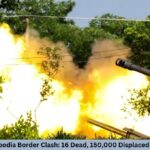
Fighting erupted last week following months of tension that began in May when a Cambodian soldier was killed in a skirmish.
The violence escalated dramatically after five Thai soldiers were injured by a landmine, prompting retaliatory strikes and artillery exchanges.
As of Tuesday, at least 43 people including civilians have been confirmed dead, and hundreds more wounded.
Villages along the border were abandoned, shops shuttered, and shelters overwhelmed as entire communities fled the frontline.
Commanders Meet to Reinforce Truce
On Tuesday, military commanders from both countries met to discuss mechanisms to uphold the truce. They agreed to:
- Halt troop movements
- Cease all artillery and gunfire
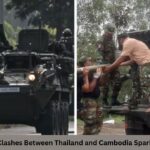
- Allow the retrieval of dead and wounded soldiers
- Establish four-member coordination teams from each side
Major General Winthai Suvaree, spokesperson for Thailand’s army, said that communication lines between local commanders will remain open ahead of the General Border Committee meeting scheduled for August 4 in Cambodia.
The committee includes senior military leadership and defense ministers from both sides.
Cambodia’s Defense Minister Tea Seiha confirmed the agreement and stated that Cambodia would invite international observers and foreign attachés to monitor the truce.
Trump and Anwar Broker Peace Deal Amid Trade Tensions
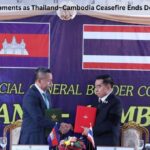
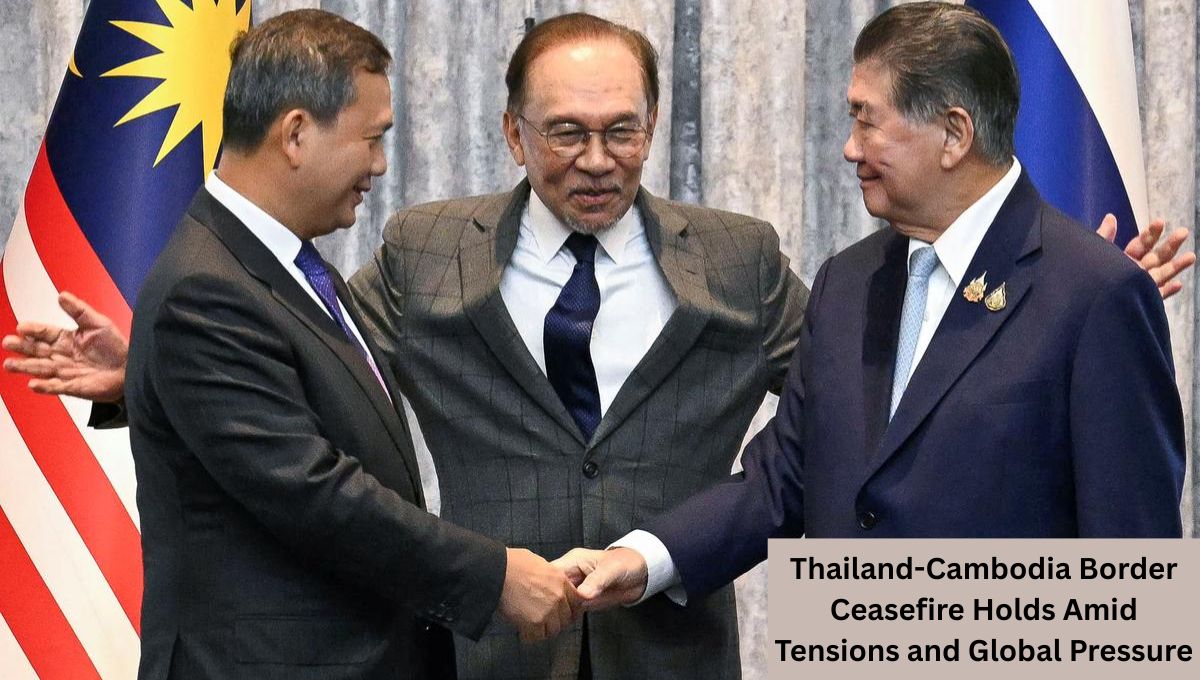
The ceasefire agreement was reached during a Monday meeting in Malaysia, where Thai Acting Prime Minister Phumtham Wechayachai and Cambodian Prime Minister Hun Manet met under pressure from international stakeholders.
The meeting was facilitated by Malaysian Prime Minister Anwar Ibrahim, with strong backing from the United States.
President Donald Trump, who had threatened to freeze U.S. trade talks with both nations if violence continued, played a pivotal role.
Trump made personal phone calls to both leaders and pledged to resume tariff negotiations, which had been stalled due to the conflict.
“President Trump and I are committed to an immediate cessation of violence and expect the governments of Cambodia and Thailand to fully honor their commitments,” said U.S. Secretary of State Marco Rubio.
Trade Leverage Drives Diplomatic Breakthrough
The U.S. currently imposes 36% tariffs on goods from Thailand and Cambodia its biggest export markets.
With the tariff deadline looming on August 2, economic pressure became a key motivator for both countries to agree to talks.
Thailand’s Finance Minister Pichai Chunhavajira stated that trade talks with the U.S. are now set to conclude before August 1, with Washington signaling flexibility following the ceasefire.
Thailand has estimated the economic damage from the conflict at over 10 billion baht ($300 million).
The government is rolling out a 25 billion baht relief package, including soft loans, tax relief, and loan repayment deferrals for affected regions.
Mutual Accusations Test Truce
Despite the agreement, the ceasefire remains fragile. Thailand accused Cambodia of violating the truce early Tuesday with gunfire in multiple locations.
Cambodia denied the claims, stating there were “no armed clashes” since midnight and reiterating its commitment to the peace accord.
Later in the day, a new skirmish was reported at Phu Makhuea, a mountain in Thailand’s Sisaket province, near a former hotspot.
The Thai military claimed to be responding and controlling the situation, while both governments exchanged complaints with Malaysia, the U.S., and China.
The Death of Cambodian General Srey Duk
Adding to the volatility was the confirmed death of General Srey Duk, deputy commander of Cambodia’s 3rd Support Division, during the conflict.
Gen Srey was considered a close ally of former Prime Minister Hun Sen and had been involved in sensitive border negotiations.
His death has been politicized. Jakrapob Penkair, adviser to Thailand’s PM, accused the general of instigating the conflict, citing provocative actions such as unauthorized musical performances in disputed zones and trench digging near Thai territory.
Border Residents Cautiously Return
As the border calms, displaced residents are slowly returning. In Thailand’s Kantharalak district, Chaiya Phumjaroen, 51, reopened his shop, saying,
“If they continue to fight, we have no opportunity to make money. I am very happy that a ceasefire happened.”
On the Cambodian side, Soklang Slay, who fled with his family from Oddar Meanchay province, said,
“Thailand often provokes the fighting first, but then accuses Cambodia. I really don’t want to see any new fighting happen.”
In Thailand’s Surin province, community leader Kritsada Jindasri remained skeptical:
“We still don’t totally believe (that it would stop). We still wait to assess the situation.”
International Involvement and Monitoring Urged
China, Malaysia, and the U.S. have all called for independent monitoring to ensure compliance.
Cambodia’s Foreign Affairs Commission called for international observers to be embedded in coordination teams.
“The agreement cannot be left to Thailand and Cambodia to implement alone,” warned Thitinan Pongsudhirak, a political analyst at Chulalongkorn University. “The hostilities are running so deep now that third-party oversight is essential.”
Decades of Tension: The Roots of the Conflict
This latest flare-up is part of a long-standing territorial dispute that dates back decades. One of the core issues is the 11th-century Preah Vihear temple, which sits in a disputed area.
Tensions peaked in 2008 when Cambodia tried to register the temple as a UNESCO World Heritage Site, triggering widespread protests and clashes.
Recent provocations, including border troop buildups, bans on Thai goods, and electricity/internet shutdowns, only exacerbated the situation.
Outlook: Fragile Peace or Temporary Pause?
Experts are warning that while the ceasefire is a significant step, it may be only a temporary pause unless deeper issues are addressed.
“Trump’s trade leverage and strongman mentality have helped save Thai and Cambodian people from further bloodshed,” said Kokthay Eng, a Cambodian political researcher.
But Bridget Welsh, a Southeast Asia expert, cautioned:
“A proper border survey should begin immediately. Right now, it’s on pause because the roots of the conflict have yet to be addressed.”
Conclusion: Cautious Optimism, Persistent Uncertainty
The Thailand–Cambodia ceasefire offers hope to war-weary civilians and traders devastated by the fighting, but tensions remain dangerously high. With U.S. trade negotiations hanging in the balance and international observers stepping in, the next few days will determine whether peace holds or conflict reignites.
As both sides prepare for the August 4 General Border Committee meeting, the world watches closely hoping this ceasefire won’t become another fleeting pause in a long and deadly conflict.
Also Read: Will the Cambodia-Thailand ceasefire hold?
Also Read: Trump Pushes for Ceasefire as Thailand-Cambodia Border War Escalates