
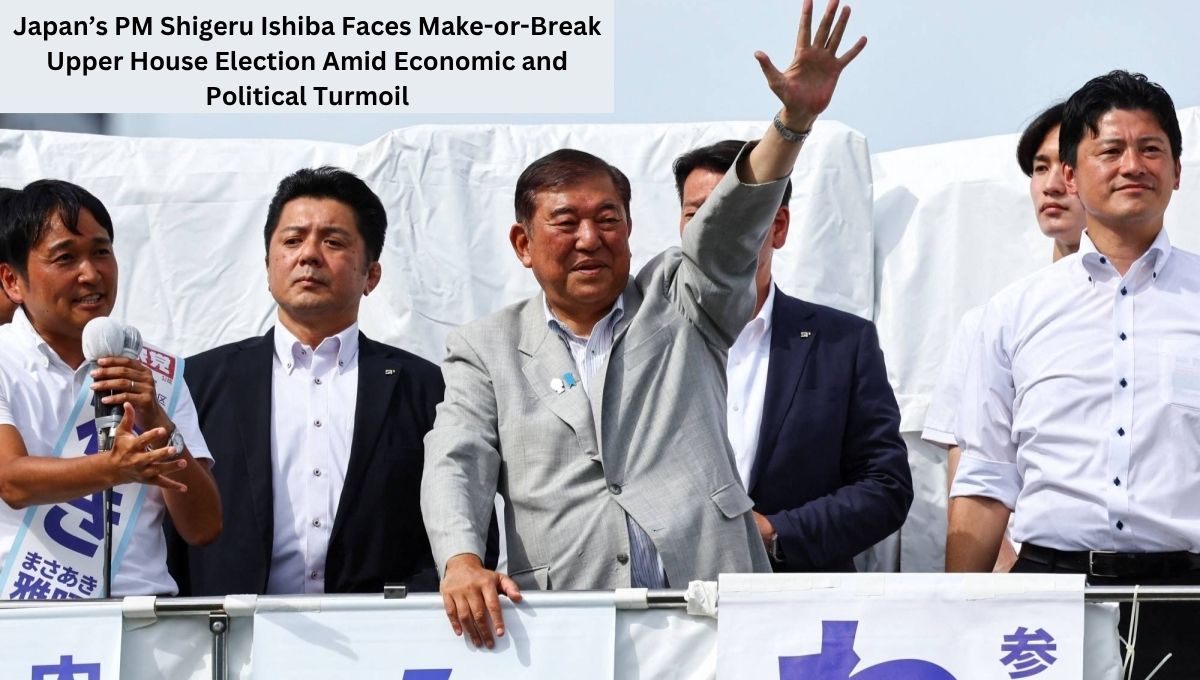
As Japan heads to the polls, Japan’s PM Shigeru Ishiba Faces Make-or-Break Upper House Election Amid Economic and Political Turmoil. Japan’s Prime Minister Shigeru Ishiba is facing one of the most pivotal moments of his leadership as the country prepares for the upper house election on July 20, 2025. With economic woes mounting and political pressure rising, this election could redefine the country’s trajectory.
The Liberal Democratic Party (LDP), along with its junior coalition partner Komeito, must secure at least 50 of the 124 contested seats to retain control of the 248-member upper house. But a storm of inflation, trade tensions, and rising populism has put that goal at serious risk.
Japan’s PM Shigeru Ishiba Faces Make-or-Break Upper House Election Amid Economic and Political Turmoil
Inflation, Rice Prices, and Public Discontent
Economic dissatisfaction is central to voter frustration. Inflation has surged over the past year, but the doubling of rice prices has become symbolic of the government’s failure to manage costs of living.
Once affordable, Japan’s staple food is now a burden on everyday households. The rising rice prices in Japan have sparked nationwide anger.
Shortages in rice production, coupled with logistical inefficiencies and global supply disruptions, have driven up costs dramatically.
To make matters worse, U.S. tariffs are looming including a 25% import tax set to hit Japanese goods on August 1, further intensifying economic uncertainty.
Trade Talks Falter Amid Ishiba’s Diplomatic Missteps
Shigeru Ishiba has struggled to manage Japan’s trade relationship with the U.S., particularly with President Donald Trump, who has demanded more favorable terms for American exports, especially autos and rice.
Unlike former PM Shinzo Abe, who leveraged personal diplomacy even playing golf with Trump Ishiba has failed to build similar rapport.
Critics say his appointment of Ryosei Akazawa as chief tariff negotiator, despite his lack of international experience, reflected poor judgment. If Ishiba can’t resolve the standoff, Japan’s largest industries may suffer.
Investors fear his weak negotiating position and lack of political capital could delay or derail a deal harming both the economy and the public’s trust in his leadership.
From Minority Government to Political Brinkmanship
After a crushing defeat in the lower house elections in October 2024, Ishiba has governed as the head of a fragile minority government. To pass legislation, he has relied on fragmented alliances and frequent concessions to opposition parties.
This has slowed decision-making, particularly on urgent economic reforms. Experts warn that even if the LDP narrowly avoids defeat this weekend, Ishiba’s weakened authority may render him a lame duck, unable to push through critical policies.
According to Yu Uchiyama, a political science professor at the University of Tokyo:
“If the coalition loses the majority, a push within the LDP to oust Ishiba is almost certain… even a narrow win won’t guarantee stability.”
Populist Surge: Sanseito Party Gains Ground
As mainstream parties falter, populist movements like the Sanseito party are gaining traction. Once a fringe group born on YouTube, Sanseito is now projected to win 10–15 seats, propelled by an ultra-nationalist and conspiracy-driven platform.
The Sanseito party in Japan is pushing a hardline stance against foreign workers, globalism, and vaccines tapping into deep-seated fears and economic insecurity.
Their rise marks a historic shift toward American-style populism in Japan. If their momentum continues, the LDP may be pressured to shift further right, potentially alienating its centrist base and destabilizing the coalition further.
Opposition Gains But Remains Divided
While Shigeru Ishiba’s popularity has plummeted to just 20.8%, according to a recent Jiji poll, Japan’s opposition remains fragmented.
The Constitutional Democratic Party of Japan (CDPJ) and the Democratic Party for the People (DPP) have failed to unify around a common agenda, even as they gain ground.
Despite that, former PM Yoshihiko Noda of the CDPJ believes that a ruling coalition loss could open the door to long-stalled reforms including same-sex marriage, family law changes, and a rollback of the unpopular consumption tax.
Yet, without cohesion, the opposition may still struggle to present a compelling alternative.
Internal Dissent: Koizumi’s Rise and Cabinet Cracks
Adding to Ishiba’s troubles is the growing influence of Shinjiro Koizumi, son of former Prime Minister Junichiro Koizumi, who recently took over as Japan’s farm minister after his predecessor resigned over the rice price scandal.
Koizumi’s bold decision to release emergency rice reserves won public support and sparked speculation that he could be a future leadership contender perhaps even challenging Ishiba after the election.
Immigration, Xenophobia, and Japan’s Shrinking Workforce
One of the most disturbing trends in the campaign has been the rising xenophobia fueled by populist narratives.
The Sanseito party and others have linked foreign workers to crime and job loss, despite Japan’s critical need for migrant labor to support its aging population.
In a bid to regain conservative support, the LDP has promised a crackdown on illegal immigration and tighter rules on social insurance use by foreigners.
Human rights advocates warn this could backfire, both morally and economically. Japan now faces a paradox: a country desperate for labor is turning hostile toward the very people it needs most.
What Happens If Ishiba Loses?
Should the LDP-Komeito coalition lose the upper house, Ishiba may still attempt to cling to power, citing the need for continuity in ongoing U.S. trade talks. But internal party pressures may force him to resign.
The problem? There’s no clear successor. With Japan election 2025 unfolding amid a volatile global economy and an unpredictable Trump administration, few politicians are eager to step into the hot seat.
This could lead to revolving-door leadership that further erodes confidence at home and abroad.
Japan at a Crossroads
As the country heads into Sunday’s upper house election, it does so under a cloud of uncertainty. Whether it’s U.S. tariffs, a struggling economy, or the rise of populist Japan, the election is about more than seats it’s about direction.
Will Japan continue under Shigeru Ishiba’s shaky leadership, turn to the populist right, or demand bold reforms from a fractured opposition?
The results of the July 20 vote may not topple the government immediately, but they will send a strong signal about what the Japanese people want from their leaders and what kind of country they want Japan to become.
Conclusion: A Defining Moment for Japan
For Prime Minister Shigeru Ishiba, this weekend could mark either a turning point or the beginning of the end. With inflation, trade anxiety, and voter dissatisfaction mounting, his political survival hangs by a thread.
Regardless of the outcome, Japan’s 2025 election will be remembered as a pivotal moment one that redefined its political landscape and exposed the deep undercurrents reshaping society. As the votes are counted, Japan and the world will be watching.
Also Read: Shigeru Ishiba’s Leadership in Crisis After Japan Elections 2025 Shock Loss
Also Read: Japan’s PM Ishiba vows to stay in office despite election debacle
Related Posts:
- Shigeru Ishiba’s Leadership in Crisis After Japan…
- Shigeru Ishiba Resigns as Japan’s Prime Minister…

- Far-Right Sanseito Surges in Japan’s Elections as PM…

- Japan 2025: Conservative Powerhouse Sanae Takaichi…

- 12 Explosive Shifts as Japan’s Iron Lady Takaichi…

- Sanae Takaichi Becomes Japan’s First Female Prime…
