7 Explosive Moves: Trump Unveils His High-Stakes Venezuela Plan while issuing stark warnings to Colombia, Iran, and Others.US President Donald Trump has thrown the Western Hemisphere into political shock after declaring that the United States is now effectively “in charge” of Venezuela following the dramatic military capture of President Nicolás Maduro.
In a series of interviews and remarks over the past several days, Trump has outlined a sweeping vision for Venezuela’s future—one that delays elections, prioritizes oil-led reconstruction, relies heavily on American leverage, and openly threatens further military action if cooperation breaks down.
The extraordinary developments have also sparked regional alarm. Colombia’s president has vowed resistance. Cuba has accused Washington of “state terrorism.” Iran has been warned it could be next. And legal scholars are questioning whether the US operation violated international law.
Here is a detailed look at what Trump has said, what his administration is planning, and why Venezuela—and much of Latin America—now faces a period of deep uncertainty.
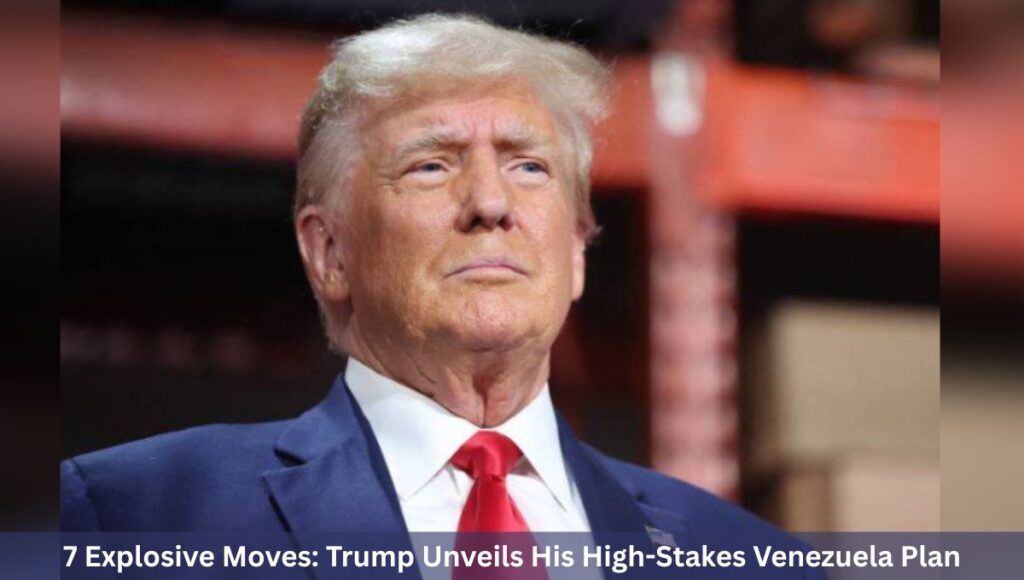
7 Explosive Moves: Trump Unveils His High-Stakes Venezuela Plan
“We’re in Charge”: Trump’s One-Word Answer Shocks Allies
Asked by NBC News who is ultimately in charge of Venezuela following Maduro’s capture, Trump did not hesitate.
“Me.”
The blunt response encapsulated the administration’s posture: Washington will dictate the direction of Venezuela’s transition, using military, economic, and political leverage to shape outcomes.
Trump later clarified that while he would not personally govern day-to-day affairs, a senior team—including Secretary of State Marco Rubio, Vice President JD Vance, Defense Secretary Pete Hegseth, and deputy chief of staff Stephen Miller—would oversee policy decisions under his authority.
Administration officials have since framed the arrangement as a temporary, force-backed transition rather than a formal occupation, though critics say it resembles a modern protectorate.
Maduro’s Capture: A Raid That Changed the Region
How the Operation Unfolded
US forces carried out a pre-dawn raid in Caracas, storming the presidential residence and capturing Nicolás Maduro and his wife, Cilia Flores.
The pair were flown to a US warship and later transferred to New York, where Maduro was arraigned on charges including:
- Narco-terrorism conspiracy
- Conspiracy to import cocaine into the United States
- Weapons-related offenses involving machine guns and destructive devices
Maduro pleaded not guilty, declaring in court, “I am still president of my country.”
Legal and Political Fallout
Legal experts say the operation raises serious questions under international law, which generally prohibits the use of force unless authorized by the UN Security Council or justified as self-defense.
The Trump administration argues that Maduro was an illegitimate leader facing US criminal indictments and that the operation was linked to counter-narcotics enforcement.
The justification remains contested.
No Elections—For Now
“You Can’t Have an Election”
Trump has ruled out new elections in Venezuela in the near term, saying the country must first be stabilized.
“You can’t have an election. There’s no way the people could even vote,” he told NBC News.
He cited:
- Infrastructure collapse
- Security concerns
- Lack of administrative capacity
According to Trump, holding elections within 30 days would be unrealistic, and the transition period could take many months.
Democracy Deferred
While senior Republicans have suggested that elections remain an eventual goal, the administration has been clear that democratic processes are not the immediate priority.
Secretary of State Marco Rubio described talk of election timelines as “premature,” arguing that Washington must deal with “immediate reality” first.
Oil at the Center of Trump’s Venezuela Strategy
US Oil Companies as Rebuilders
Trump has made clear that Venezuela’s vast oil reserves— the largest proven in the world—are central to his rebuilding plan.
“We have to nurse the country back to health,” he said, adding that US oil companies would play a leading role in restoring Venezuela’s energy infrastructure.
Under Trump’s proposal:
- US oil companies would invest heavily in repairs
- Washington may subsidize parts of the effort
- Companies would recover costs through revenue or reimbursement
Trump suggested the rebuilding effort could take less than 18 months, though experts say restoring Venezuela’s aging oil system could cost tens of billions of dollars.
A Crumbling Energy Sector
Venezuela’s state oil company PDVSA has admitted that:
- Pipelines are decades old
- Infrastructure has not been upgraded in nearly 50 years
- Returning to peak production could cost at least $58 billion
Energy experts warn that without political stability, even massive investment may fail.
Delcy Rodríguez and the Interim Government
A Sanctioned Leader in Power
With Maduro gone, Vice President Delcy Rodríguez was sworn in as interim president.
Despite being sanctioned by the United States and long considered a Maduro loyalist, Rodríguez has emerged as Washington’s preferred transitional partner—at least for now.
Trump said cooperation with Rodríguez would determine whether sanctions remain in place.
“If she doesn’t do what’s right, she is going to pay a very big price,” he warned.
Cooperation—or Else
US officials say Rodríguez has softened her rhetoric and called for “cooperation” with Washington, though she has also publicly insisted Maduro remains Venezuela’s legitimate leader.
Behind the scenes, US officials believe Rodríguez may seek guarantees for her personal safety or an exit strategy if cooperation collapses.
Threat of a Second Military Incursion
Trump has repeatedly warned that US forces are prepared to strike again if Venezuelan officials stop cooperating.
“We’re prepared to do it,” he said. “We anticipated doing it, actually.”
While he said he does not expect another operation to be necessary, the threat has heightened anxiety in Caracas and across the region.
Security incidents—including gunfire and unidentified drones near the presidential palace—have underscored how fragile the situation remains.
“Not at War”—But Ready to Strike
Trump insists the United States is not at war with Venezuela.
“No, we’re not,” he said.
Instead, he framed US actions as part of a broader fight against:
- Drug trafficking
- Criminal networks
- Governments accused of exporting crime into the US
Critics argue the distinction is largely rhetorical, given the scale of the military action involved.
Colombia Reacts: “Come Get Me”
Petro Pushes Back
Colombian President Gustavo Petro has emerged as Trump’s most vocal regional critic.
After Trump suggested that Colombia could face a similar operation, Petro responded defiantly:
“Come get me. I’m waiting for you here.”
Petro accused the US of undue interference and warned that any violent intervention would provoke resistance.
Rising Regional Tensions
Trump has accused Petro of facilitating drug trafficking—claims Petro strongly denies.
Colombia’s foreign ministry has condemned Trump’s remarks as violations of international law, warning that threats and force between states are unacceptable.
Other Countries on Trump’s Radar
In the days following Maduro’s capture, Trump issued warnings or comments targeting several other nations.
Cuba
Trump said Cuba is “ready to fall” but suggested military action would not be necessary. Havana, however, accused the US of “state terrorism” after Cuban nationals were reportedly killed in the Venezuela raid.
Mexico
Trump renewed pressure on Mexico over drug trafficking and said he has repeatedly offered to send US troops—offers President Claudia Sheinbaum has rejected.
Greenland
Trump again floated the idea of acquiring Greenland for national security reasons, alarming Denmark and NATO allies.
Iran
Trump warned Iran it would “get hit very hard” if it continues cracking down on protesters, reigniting fears of escalation after recent US strikes on Iranian nuclear facilities.
Congress Divided, Legal Questions Loom
Democrats have criticized Trump for failing to seek congressional authorization before the Venezuela operation.
Trump insists lawmakers were aware and that he has “good support congressionally,” though he has declined to provide details.
Legal scholars warn the precedent could reshape how the US uses force abroad—particularly in the Western Hemisphere.
What This Means for Venezuelans
On the streets of Caracas, daily life remains tense but subdued.
Residents report:
- Long lines for food and medicine
- Heavy security presence
- Fear of renewed violence
Opposition supporters have celebrated privately, while others worry that replacing Maduro with a US-backed interim leader may not deliver real change.
A High-Risk Gamble
Trump’s Venezuela strategy marks one of the most aggressive assertions of US power in Latin America in decades.
Supporters say it removes a criminal regime and restores American dominance in the region. Critics warn it risks prolonged instability, regional backlash, and entanglement in another open-ended foreign intervention.
For now, one thing is clear:
Venezuela’s future is being shaped not in Caracas, but in Washington—and by a president who says, without hesitation, that he is in charge.
Also Read: 32 Dead: Cuba’s Fierce Fighters Killed in Shocking U.S. Venezuela Raid
Also Read: By excluding opposition, Trump risks creating ‘Madurism without Maduro’ | Opinion