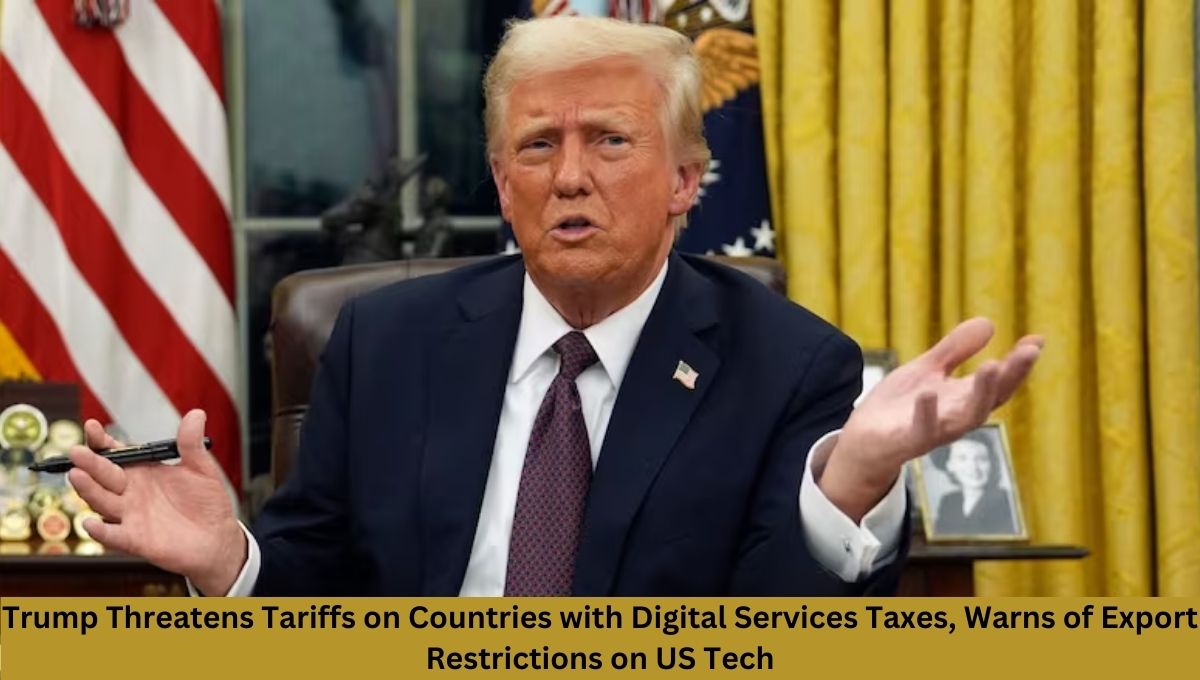
Trade tensions escalate as Trump Threatens Tariffs on Countries with Digital Services Taxes, Warns of Export Restrictions on US Tech. US President Donald Trump has issued his sharpest warning yet against countries imposing Digital Services Taxes (DSTs) and new regulations on American technology giants, threatening “substantial tariffs” and export restrictions on chips unless governments roll back what he called “discriminatory actions.”
Taking to his Truth Social platform on Monday, Trump declared that the United States would no longer act as the “piggy bank” or “doormat” of the world. He accused European governments and others of unfairly targeting American companies like Alphabet (Google), Meta (Facebook, Instagram, WhatsApp), and Amazon while giving a “free pass” to major Chinese tech firms.
“Digital Taxes, Digital Services Legislation, and Digital Markets Regulations are all designed to harm or discriminate against American Technology,” Trump posted. “They also, outrageously, give a complete pass to China’s largest Tech Companies. This must end, and end NOW!”
Trump warned that unless foreign governments removed these policies, the US would impose “substantial additional tariffs” on exports to America and also consider export restrictions on semiconductors and protected technologies.
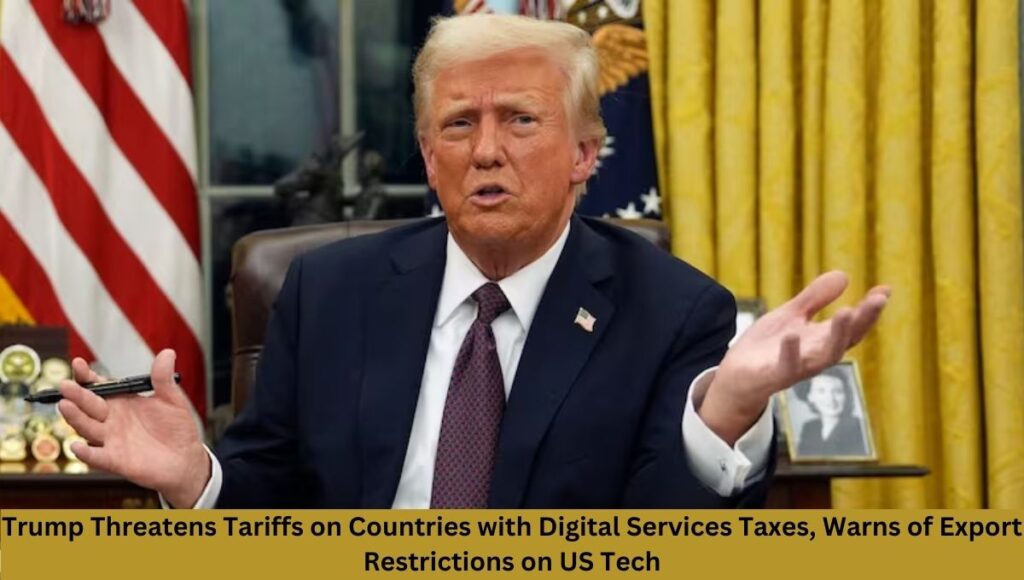
Trump Threatens Tariffs on Countries with Digital Services Taxes, Warns of Export Restrictions on US Tech
What Is a Digital Services Tax (DST)?
A Digital Services Tax (DST) is a revenue-based tax that countries impose on large tech companies for providing digital services to local users. Unlike traditional corporate income taxes, which are calculated on profits, DSTs are usually levied on gross revenues from activities like:
- Online advertising
- Digital marketplaces
- Social media platforms
- Sale of user data
Key Features of DSTs:
- Revenue-Based Taxation: Applied on gross revenues, not net profits.
- Targeted at Multinationals: Designed to affect companies with massive global revenues.
- Jurisdiction-Specific: Tax is based on where the user is located, not where the company is headquartered.
DSTs have gained momentum since 2018, particularly in Europe, Canada, and Asia, as governments seek fairer taxation of tech giants that generate substantial revenue from users without having a physical presence in their countries.
Countries like France, Italy, Spain, the UK, India, and Canada have either implemented or proposed DSTs, typically at rates around 2–3% of digital revenues.
Trump’s Anger Over Digital Services Taxes
Trump has long argued that DSTs unfairly single out American tech companies while leaving Chinese competitors largely untouched.
In June, the US suspended trade talks with Canada after Ottawa announced a new 3% digital tax on US-based multinationals.
Canada later confirmed it would roll back the measure after Washington retaliated with tariff threats.
Trump views these taxes as a direct attack on America’s economic leadership in the technology sector.
His latest warning appears primarily aimed at European countries where the Digital Services Act (DSA) and Digital Markets Act (DMA) are already reshaping online competition and content moderation.
Also Read: What Is A Digital Services Tax That Can Increase Trump Tariffs
Exclusive: Trump Administration Weighs Sanctions on EU Officials
In an unprecedented move, sources revealed that the Trump administration is also considering sanctions on European Union officials responsible for implementing the DSA.
According to insiders, punitive measures could include visa restrictions on individual officials from Brussels or EU member states. The rationale? The US claims that the DSA:
- Places unfair financial burdens on American companies.
- Suppresses freedom of expression by requiring stricter moderation of online content.
- Unjustly favors European competitors.
Senior State Department officials are still debating whether to move forward, but discussions have intensified.
Secretary of State Marco Rubio reportedly instructed US diplomats to lobby EU governments to amend or repeal the DSA.
A State Department spokesperson said: “We are monitoring increasing censorship in Europe with great concern but have no further information to provide at this time.”
The European Commission rejected Washington’s criticism, insisting that the DSA is designed to make online platforms safer while safeguarding freedom of expression.
Escalating US-EU Trade Tensions
Trump’s tariff threats come just a week after Washington and Brussels had pledged to cooperate on reducing digital trade barriers and avoiding new tariffs on electronic transmissions. The fragile truce now appears at risk.
Key flashpoints include:
- The EU’s Digital Services Act (DSA): Regulates online content moderation, requiring tech firms to remove hate speech and illegal material.
- The EU’s Digital Markets Act (DMA): Prevents large platforms from abusing dominance in digital markets.
- National DSTs in France, Spain, Italy, and the UK: Target revenues from US-based digital services.
For the US, these measures are seen as discriminatory and protectionist. For Europe, they are necessary reforms to ensure fair competition and user protection.
Trump’s Tariff Diplomacy Strategy
Since returning to office in January, Trump has aggressively wielded tariffs as a foreign policy weapon.
Unlike traditional broad-based tariffs, his administration has imposed sector-specific duties targeting steel, aluminum, autos, and now potentially semiconductors and digital services.
Notably:
- The US is preparing to double tariffs on Indian imports in retaliation for New Delhi’s continued purchase of Russian oil.
- Canada backed down on its digital tax after Trump’s tariff threats.
- European governments now risk being hit with new duties unless they adjust or scrap DSTs.
Trump’s Broader Fight Against “Censorship”
The Trump administration frames the battle not only as an economic dispute but also as a defense of free speech.
Officials accuse Europe of “censoring conservative voices” online through the DSA’s rules on hate speech and misinformation.
Vice President JD Vance even stunned European leaders earlier this year by alleging that the EU was silencing right-wing parties like Germany’s AfD.
Trump has also sanctioned foreign officials before most notably a Brazilian Supreme Court judge accused of restricting free expression during former President Jair Bolsonaro’s legal troubles.
This pattern suggests that Washington’s opposition to DSTs is tied to both economic interests (protecting US companies) and ideological battles (opposing restrictions on political speech).
Global Impact of Trump’s Threats
Trump’s aggressive stance could have far-reaching consequences:
- Trade Wars with Allies: Europe, Canada, and India risk new tariffs that could strain relations.
- Tech Sector Volatility: US tech giants may gain leverage abroad but face regulatory uncertainty.
- Chip Export Restrictions: Limiting semiconductor exports could disrupt global supply chains.
- Geopolitical Fallout: Trump’s rhetoric about China receiving a “free pass” could further escalate US-China tensions.
Why Trump Sees DSTs as a Direct Threat
The fundamental reason Trump opposes DSTs is that they erode the global dominance of American tech firms.
- Alphabet (Google) dominates online advertising.
- Meta (Facebook, Instagram, WhatsApp) controls vast social networks.
- Amazon commands global e-commerce and cloud computing.
DSTs cut directly into their revenues, reduce profitability, and set precedents for more aggressive taxation.
Worse, Trump argues, these taxes discriminate by design, as they only apply to companies above certain revenue thresholds thresholds that mostly capture US-based tech giants.
Conclusion: A Digital Tax Showdown Ahead
The clash over Digital Services Taxes is shaping into one of the most explosive fronts of Trump’s trade agenda. By threatening tariffs, export restrictions, and even sanctions on officials, Washington is signaling it will not tolerate foreign measures that undermine US tech companies.
Europe, Canada, and other countries now face a stark choice: roll back digital regulations or risk a trade confrontation with the world’s largest economy. Whether this pressure campaign succeeds or sparks a broader trade war remains to be seen. But one thing is clear: under Trump, the United States will demand “respect for American technology” or impose consequences.
Also Read: Trump Ends Canada Trade Talks Over Digital Services Tax on US Tech Giants