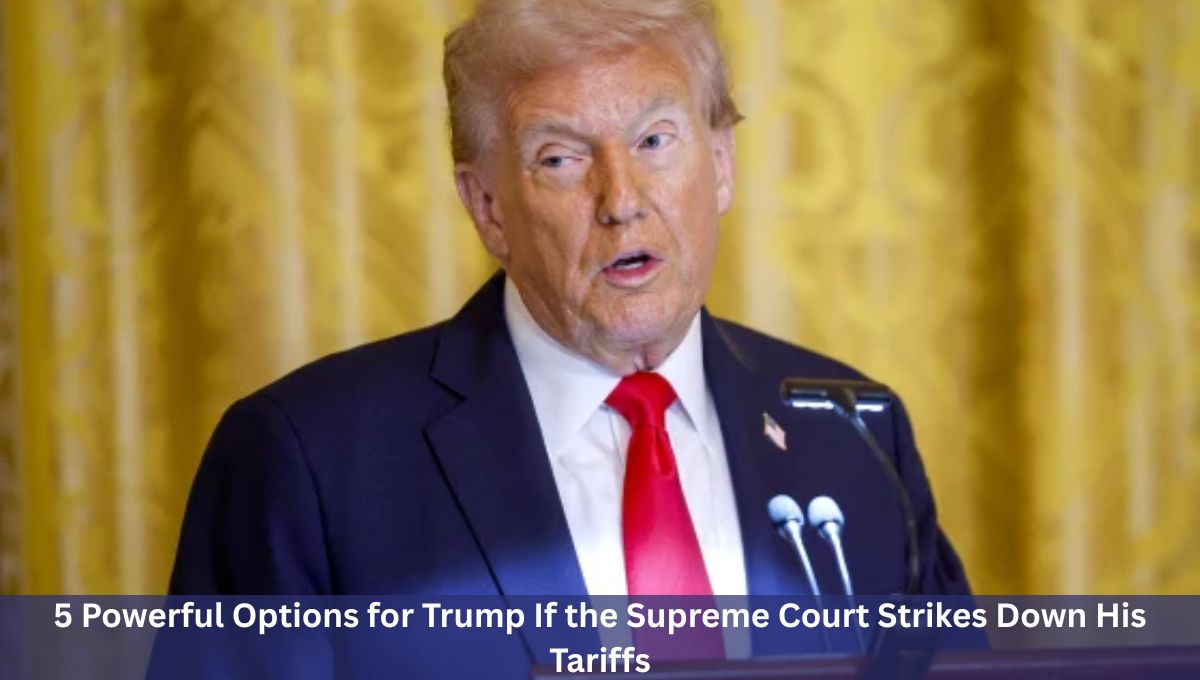
From refund chaos to plan B moves — 5 Powerful Options for Trump If the Supreme Court Strikes Down His Tariffs. The stakes could hardly be higher. When President Trump vowed that a defeat in the Supreme Court would leave the United States “defenceless” and “reduced to almost Third World status”, he wasn’t using hyperbole — at least not simply political rhetoric.
On 5 November 2025, during marathon oral arguments, the Supreme Court justices — including several conservative appointees of Trump himself — pressed his administration hard on whether the 1977 International Emergency Economic Powers Act (IEEPA) gives the president authority to impose sweeping tariffs on imports.
What happens if the court rules against him? Importers and businesses could face massive refund uncertainties. But even then, the president has “Plan B” options to continue an aggressive tariff approach. This article explores how we got here, what’s at risk, and what tools remain on the table if the court curbs his current strategy.
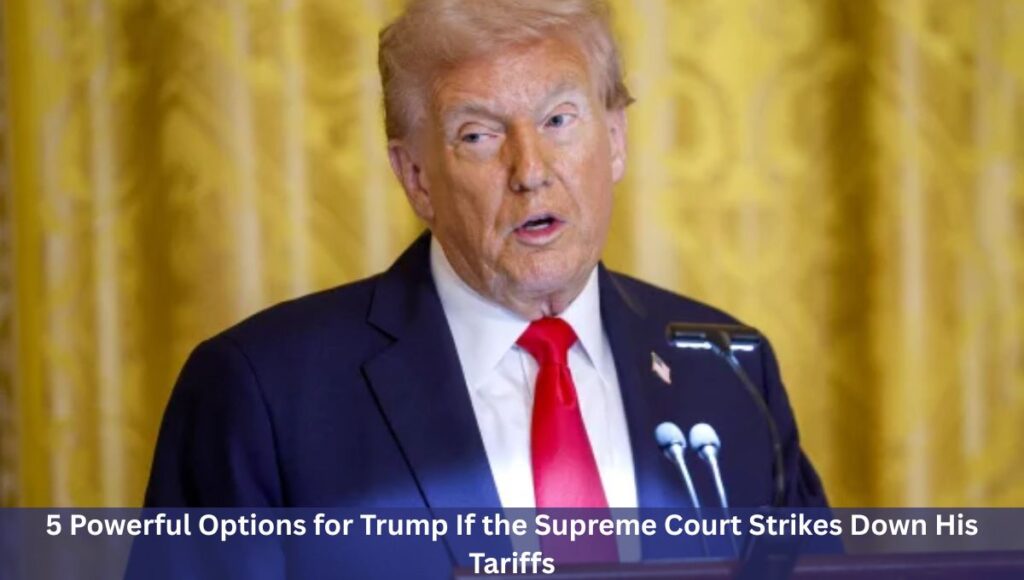
5 Powerful Options for Trump If the Supreme Court Strikes Down His Tariffs
Why the Supreme Court is sceptical
The legal framework
The central statute under scrutiny is IEEPA, which allows the president, after declaring a national emergency, to “regulate” imports and exports of goods, when the “national security, foreign policy, or economy” is at stake.
However, IEEPA does not explicitly use the word “tariff” or “duty” for revenue purposes. That matters, because the Constitution assigns to Congress the power to levy taxes and duties.
What the justices asked & what they flagged
- Chief Justice John Roberts asked: “The justification is being used for a power to impose tariffs on any product, from any country, in any amount, for any length of time… so why doesn’t the major-questions doctrine apply?”
- Justice Neil Gorsuch wondered if recognising such broad power would allow Congress to abdicate its trade-regulation role entirely.
- Justice Amy Coney Barrett pressed the administration’s lawyer: “Can you point to any other place … where ‘regulate importation’ has been used to authorize tariffs?”
- Justice Sonia Sotomayor bluntly asked: “You want to say that tariffs are not taxes — but that’s exactly what they are.”
Why these matters
If the court rules that IEEPA does not permit the vast tariff regime Trump has invoked, it would force:
- A reevaluation of more than $90 billion in tariff revenue collected so far.
- Major disruption to the administration’s broader trade strategy, which uses tariffs to address the US trade deficit and global supply-chain vulnerabilities.
- A recalibration of the balance between congressional authority and presidential power in trade matters — a significant constitutional moment.
What are President Trump’s “Plan B” options?
Even if the Supreme Court invalidates his IEEPA-based tariffs, experts say the president still has several tools at his disposal.
1. Section 301 of the Trade Act of 1974
This statute allows the U.S. to impose tariffs against a foreign country that engages in “unfair” trade practices or discrimination against U.S. businesses. According to the Associated Press, there are no preset limits on the size of tariffs under Section 301, though they generally expire after four years unless extended. Trump has used Section 301 before (particularly against China), making this a familiar fallback.
2. Section 232 of the Trade Expansion Act of 1962
This law allows tariffs on imports deemed a threat to U.S. national security. The president can initiate investigations via the Commerce Department, then impose duties. There’s no explicit numerical cap on the tariff rates, making it a potent alternative.
3. Section 338 of the Tariff Act of 1930 (Smoot-Hawley era)
A rarely used and very aggressive option: Section 338 authorises up to 50 % tariffs on imports from countries that discriminate against U.S. firms, without the need for a full investigation. The Trump administration has reportedly flagged this as a “Plan B” if the Supreme Court rules against the IEEPA route.
4. Re-structuring tariff policy
Even if IEEPA-based tariffs collapse, the administration could adjust other existing import-duty regimes, negotiate bilateral/reciprocal tariffs, or rely on executive agreements to impose duties or quotas indirectly. Experts believe it’s “hard to see any path where tariffs end.”
5. Importer strategy and refunds
If the Supreme Court rules against the administration’s existing tariffs, U.S. importers may seek large refunds. But the administrative process is uncertain and messy:
- Up to $90 billion in revenue already collected is under dispute.
- Businesses may need to file separate appeals or protests, and as one justice put it: “Would the reimbursement process be a complete mess?”
- Some banks and investment firms are reportedly buying “refund claims” from importers at deep discounts (e.g., 20-30 % of the expected refund) so importers canexit and avoid uncertainty.
Implications for U.S. trade, business & global economy
For U.S. businesses and importers
- Many U.S. companies have already absorbed higher costs, halted product development or shifted supply chains because of the tariffs.
- If refunds are granted, businesses will need to monitor liquidation dates, file protests with U.S. Customs and Border Protection (CBP) and possibly wait years for claims to process.
- Some importers may face cash-flow constraints, making the prospect of selling off refund claims attractive (but risky).
For global trade partners
- A ruling against Trump’s use of IEEPA could signal that U.S. presidents cannot unilaterally impose sweeping tariffs — which may reassure some trading partners and multilateral institutions.
- On the other hand, if the president switches to Section 301, 232 or 338 tools, those too carry disruptive potential for global supply chains.
For the U.S. economy
- The average U.S. tariff rate reportedly rose from around 2.5 % in January 2025 to 17.9 % under the Trump administration’s broader tariff regime.
- A major legal reversal could create uncertainty in markets, affect trade flows and raise questions about how much of the tariff burden will be shifted onto U.S. consumers, businesses and exporters.
- The separation of powers between Congress and the presidency will be clarified — with implications well beyond trade.
What to watch next
- Decision timetable: The Supreme Court took up the case on an expedited basis, suggesting a decision may come relatively soon.
- Language of the ruling: Will the court rule narrowly (i.e., only that IEEPA can’t be used for tariffs) or broadly (limiting presidential trade powers more generally)?
- Refund guidelines: Will the administration and CBP issue procedural guidance for importers seeking refunds? The “mess” is already anticipated.
- White House moves: Whether the administration immediately pivots to alternate authorities (Section 301, 232, 338) or delays depends on the ruling’s timing and language.
- Congressional reaction: Congress may step in to clarify statutory authority over tariffs — either by passing new legislation or restricting presidential powers.
- Business strategy: Importers and exporters will monitor whether the ruling triggers supply-chain disruptions, changes in cost structures or opportunities/refunds arising from prior tariffs.
Conclusion:
The Supreme Court hearing on President Trump’s tariffs is more than just a trade-policy case — it is a constitutional moment, testing the boundaries of presidential power and America’s trade architecture. While the justices appear sceptical of the administration’s expansive use of IEEPA to impose sweeping tariffs, the struggle doesn’t end there.
Even in the event of a loss, the president still has formidable tools at his disposal: Section 301, Section 232, Section 338 and more. For U.S. businesses, importers and global trade partners, the message is clear: prepare for change, and possibly turmoil. A refund-storm may come — or a new wave of tariffs under a different statute may begin.
In short, the tariff war is far from over.
Also Read: 5 Powerful Takeaways as Trump Calls Supreme Court Tariff Case a ‘Life-or-Death’ Moment for America
Also Read: Will The Supreme Court Strike Down Trump’s Tariffs?