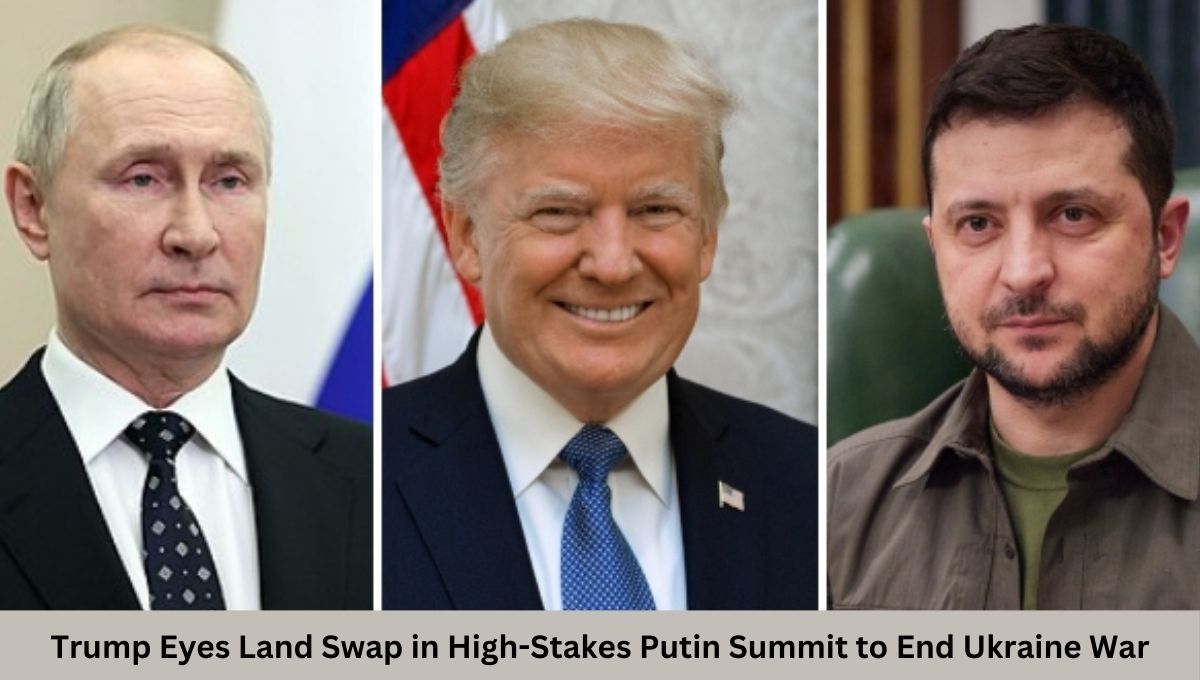
Sparking fears in frontline towns and concerns across Europe, Trump Eyes Land Swap in High-Stakes Putin Summit to End Ukraine War. As global attention zeroes in on Alaska, US President Donald Trump is preparing for a high-stakes face-to-face meeting with Russian President Vladimir Putin aimed at ending the Ukraine war.
The summit, scheduled for Friday, could mark a turning point in the deadliest European conflict since World War II or deepen divisions over how peace should be achieved. Trump has made waves by suggesting a controversial “land swap” between Ukraine and Russia as part of any settlement.
The idea has already sparked alarm among Ukrainians living near the frontlines and prompted unease among NATO allies and European Union leaders who have been excluded from the initial talks.
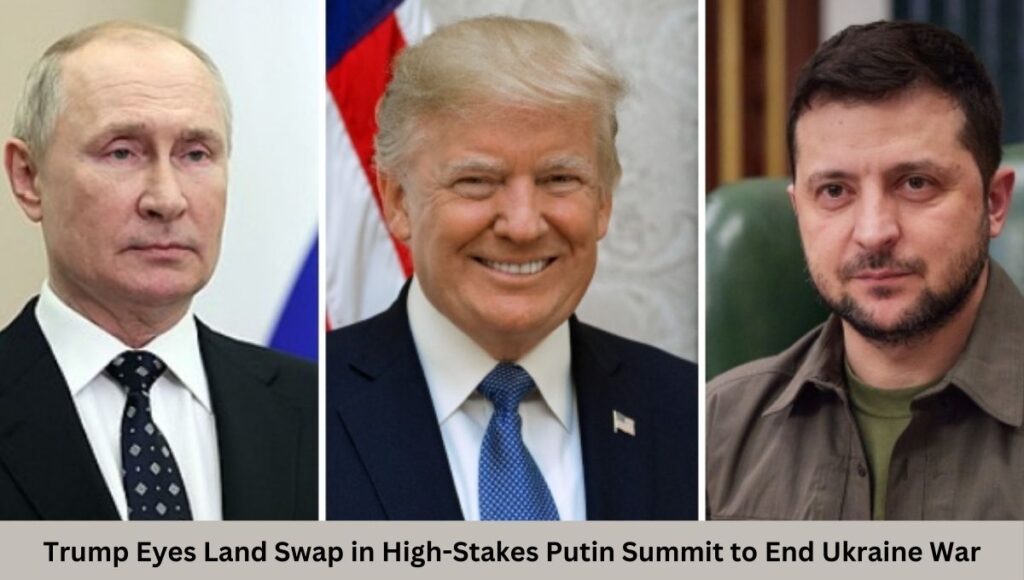
Trump Eyes Land Swap in High-Stakes Putin Summit to End Ukraine War
Trump’s Bold Claim: A Deal in “Two Minutes”
Speaking from the White House, Trump declared that he would know within “the first two minutes” of his meeting with Putin whether a deal was possible.
“It’s a feel-out meeting,” Trump said, emphasizing that Friday’s encounter was meant to test Moscow’s willingness to compromise. “At the end of that meeting, I’ll either tell him, ‘lots of luck, keep fighting,’ or ‘we can make a deal.’”
The Alaska summit, proposed months ago, is framed by Trump as a personal diplomatic test a stage to showcase his deal-making skills and, perhaps, reshape the course of a war that has devastated Ukraine since Russia’s February 2022 invasion.
The Land Swap Proposal
On August 11, Trump confirmed what many feared: his peace plan would involve territorial concessions by both sides.
“There’ll be some land swapping going on,” Trump said. “I know that through Russia and through conversations with everybody, to the good of Ukraine.”
While acknowledging that Russia currently controls what he called “very prime territory,” Trump suggested he would work to reclaim some of it for Ukraine.
The remark immediately drew backlash from Kyiv, where officials have consistently rejected land-for-peace deals.
Ukraine’s Firm Position: No Land for Peace
Ukrainian President Volodymyr Zelensky and EU foreign policy chief Kaja Kallas have been unequivocal: no territorial concessions should be made to secure a ceasefire.
“An aggressor can’t be rewarded for aggression,” Kallas warned. “Otherwise, we will just see more aggression around the world because it pays off.”
Zelensky has stressed that any settlement recognizing Russian control over Ukrainian land would undermine the principles of sovereignty and territorial integrity and embolden Moscow to launch future offensives.
European Leaders Left Out
One of the most contentious aspects of the upcoming meeting is the absence of European leaders and Zelensky from the table.
Although there had been talk of inviting Ukraine’s president, Trump has now suggested a follow-up meeting involving himself, Putin, and Zelensky instead.
European capitals are frustrated at being sidelined, especially given the war’s direct impact on continental security. Former UK Foreign Office head Lord Simon McDonald warned:
“Brace ourselves for some pretty outrageous Russian demands. Putin is going to ask for things that nobody else would concede with the possible exception of Donald Trump.”
Frontline Panic: Sloviansk’s Fears
In Sloviansk, a frontline city in Donetsk, Trump’s land swap suggestion has caused visible anxiety.
The town has endured conflict since 2014, first falling to Moscow-backed separatists before being recaptured by Ukrainian forces.
Local journalist Mykhailo described the mood:
“Many of my friends want to stay here and we all will have to leave. Frankly speaking, I don’t think it is going to happen, but it makes people nervous.”
For Ludmila, a resident injured by a land mine, the talk of peace negotiations feels hollow. “For them it is all a spectacle. They decide one thing, say another, and do another. That’s always been politics,” she said.
Human Cost of the War
The emotional toll of the Ukraine war is stark. In Kramatorsk, soldiers come and go from the frontlines, families endure long separations, and air raid sirens remain part of daily life.
Natalia and Sviatoslav, residents of the region, recently buried their pregnant daughter Sofia, her husband, and their baby all killed in a Russian airstrike on Kyiv. “They left from the war, and it was quiet there, but the war caught them there,” Natalia said.
For Tetyana, whose husband has fought since the second day of the invasion, territorial disputes feel secondary. “I don’t care about those territories. I just want him to be alive and come home.”
The Kremlin’s Possible Demands
Reports indicate that Moscow has floated a proposal to US envoy Steve Witkoff: a ceasefire in exchange for control over parts of Donbass Russia has not yet captured. Kyiv has rejected this outright, calling it a nonstarter.
Analysts expect Putin to push for recognition of Russia’s territorial gains and for the lifting of Western sanctions.
The Kremlin has long sought to secure legitimacy for its occupation of Crimea, Donetsk, Luhansk, and other regions seized since 2022.
Trump’s Trade Leverage
Trump has tied his optimism for a deal to the possibility of restoring US–Russia trade. With Moscow’s economy weakened by sanctions and a 50% US tariff on Russian oil, he believes economic incentives could bring Putin to the negotiating table.
“If Vladimir Putin went toward business instead of toward war… it would be a very different story,” Trump said.
Europe’s Diplomatic Countermoves
Though left out of the Alaska summit, Europe is not standing idle. Kallas recently convened a virtual meeting of EU foreign ministers to reaffirm support for Ukraine and announce new sanctions on Russia.
German Chancellor Friedrich Merz has organized a remote conference for European leaders, Zelensky, and Trump just two days before the Alaska talks a last-minute bid to ensure European voices are heard.
Polish Foreign Minister Radoslaw Sikorski voiced blunt frustration:
“This is a matter of existential European security interest. We appreciate Trump’s efforts, but we’ll be taking our own decision in Europe too.”
The Stakes in Alaska
For Trump, the Alaska meeting is an opportunity to demonstrate statesmanship and reinforce his narrative that the war would never have happened under his leadership.
For Putin, it’s a chance to secure sanctions relief and potentially lock in his territorial gains.
For Ukraine, the stakes are existential: any compromise that leaves Russian troops in occupied territory risks not only the loss of land but the erosion of international norms.
Analysts Warn of Theater
Diplomatic experts caution that the Alaska summit could be more theater than breakthrough.
“The end will be as protracted as the war has been long,” said Lord McDonald. “The meeting is a milestone, but it doesn’t actually mean it will lead anywhere.”
Some analysts note that even if Trump and Putin reach a preliminary understanding, turning that into a binding agreement involving Ukraine without alienating Europe will be a monumental challenge.
What Happens Next
Trump has hinted at a three-way meeting with Putin and Zelensky after Alaska, but no date is set. He says he would first share any proposed deal with Zelensky, then with EU and NATO leaders “out of respect.”
Meanwhile, Ukrainian forces brace for continued fighting, civilians cling to daily routines under the threat of shelling, and European diplomats weigh how to protect their interests if Washington pursues a separate track.
Whether the Alaska summit produces a diplomatic breakthrough or merely another round of posturing, one thing is clear: the war in Ukraine and the debates over how to end it remain at the center of global politics.
Also Read: Zelensky Rejects Land Swap Ahead of Trump-Putin Alaska Peace Talks
Also Read: What to expect from Friday’s Trump-Putin summit on US soil: Will a peace deal actually be reached?