At high-stakes meeting, Putin’s Viral Alaska Summit Moment with Trump: Shrug, Memes, and Mystery. The high-stakes Trump-Putin Alaska Summit produced no breakthrough on Ukraine, but it did generate viral moments that set social media ablaze. Chief among them was Vladimir Putin’s bizarre shrug and facial expression when asked by a journalist, “Will you stop killing civilians?” The Russian president gestured to his ears, as if he had not heard the question, triggering a flood of memes and renewed debate over his English-language skills.
The summit, billed as a potential milestone in ending Europe’s bloodiest war since 1945, left as many questions as answers. While U.S. President Donald Trump hailed it a “10/10 meeting” and claimed “extremely productive” progress, the two leaders offered no details, no ceasefire, and no concrete steps toward peace. Instead, the world got optics, symbolism, and a viral shrug that may come to define the event.
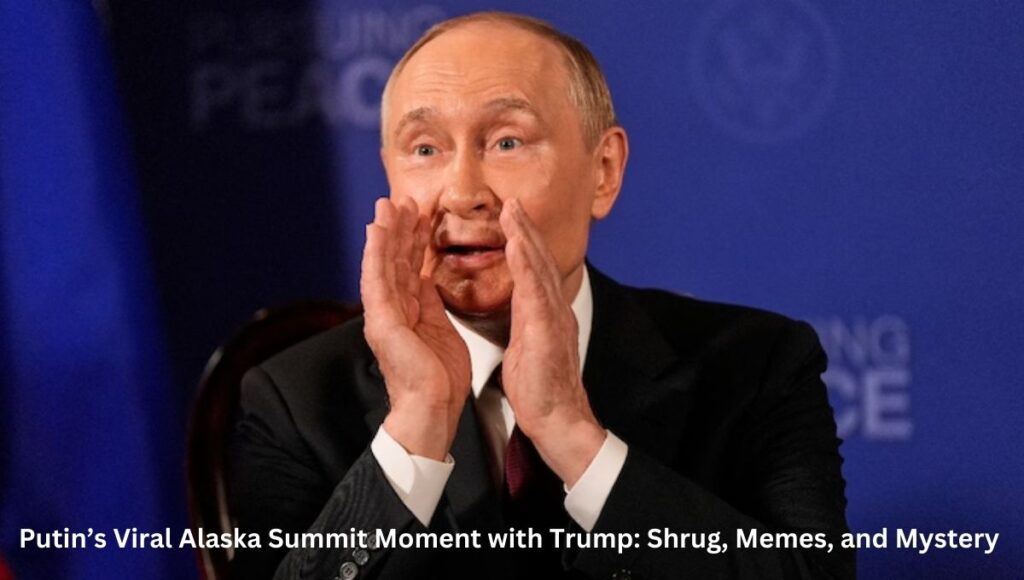
Putin’s Viral Alaska Summit Moment with Trump: Shrug, Memes, and Mystery
Putin’s Shrug Sparks Meme Storm
The moment occurred as Trump and Putin sat across from journalists at Joint Base Elmendorf-Richardson in Anchorage.
A reporter shouted: “Will you stop killing civilians?” Putin’s reaction a mix of bewilderment, a smirk, and a finger pointing at his ears suggested either feigned ignorance or a deliberate refusal to acknowledge the question.
Within minutes, X (formerly Twitter) erupted.
- “Confused when asked real questions,” one user wrote.
- Another joked: “Me pretending not to hear my coworker asking for help with Teams.”
The Lincoln Project quickly chimed in: “Putin speaks English, by the way.”
The shrug came to symbolize Putin’s unwillingness to confront accountability, while also feeding a viral meme culture around the otherwise tense summit.
Does Putin Speak English? The Debate Rekindled
The viral moment also reignited a long-running question: how fluent is Vladimir Putin in English?
Throughout his career, Putin has almost exclusively spoken Russian in public forums.
Yet observers at the Alaska summit noted that he and Trump shared several moments without interpreters, from pleasantries on the red carpet to private jokes.
Most notably, Putin climbed into Trump’s armored limousine nicknamed “The Beast” for a one-on-one conversation without aides or translators, a rare setup that raised eyebrows.
Former U.S. ambassador to Russia John Sullivan told CBS:
“He’s not as fluent in English as he is in German… but he could have a conversation with President Trump in English that Trump would understand.”
Indeed, toward the end of the press conference, Putin himself offered proof. Chuckling, he looked at Trump and said in English: “Next time in Moscow?”
Trump Rolls Out the Red Carpet
If Putin’s shrug was the viral highlight, the red carpet welcome was the symbolic centerpiece.
When Putin’s presidential aircraft landed in Alaska, U.S. troops knelt down to straighten the red carpet rolled out for him.
Images of kneeling soldiers went viral, with Ukrainian politician Mustafa Nayyem sarcastically captioning it: “Make kneeling great again.”
Trump’s warm welcome stood in stark contrast to his treatment of other world leaders. He clapped as Putin descended the staircase, smiled broadly, and shook hands warmly optics that critics said legitimized a man wanted by the International Criminal Court for alleged war crimes.
For the Kremlin, the image was priceless: Putin, long ostracized in the West, now received like a statesman on U.S. soil.
A Summit of Mystery and Symbolism
Beyond viral moments, the Alaska summit was shrouded in mystery.
- Private limo chat: Putin and Trump rode together in the presidential limousine, a conversation without interpreters that remains a subject of speculation.
- No press Q&A: Unlike typical Trump appearances, the leaders offered statements but refused to take questions from reporters.
- History lesson: Putin spoke about Alaska’s Russian past before even mentioning Ukraine, casting the talks in a strange historical frame.
The secrecy fueled questions about what, if anything, the two leaders actually agreed on.
“Up to Zelensky Now” – Trump Deflects Responsibility
While Putin played coy, Trump framed the outcome as progress but shifted responsibility to Ukrainian President Volodymyr Zelensky.
“Now it’s really up to President Zelensky to get it done,” Trump told Fox News’ Sean Hannity. He added that European nations “have to get involved a little bit, but it’s up to President Zelensky.”
Trump suggested that land swaps and security guarantees were discussed, but he emphasized: “Ukraine has to agree to it. Maybe they’ll say no.” His advice to Zelensky was blunt: “Gotta make a deal.”
Putin’s Conditions Remain Unchanged
Despite Trump’s optimism, Putin signaled little movement from Moscow’s long-standing demands.
Speaking about “root causes,” he implied Ukraine would need to accept Russia’s sovereignty over Crimea and occupied regions, agree to neutrality, and limit foreign military presence.
For Kyiv, such terms remain unacceptable. Zelensky has repeatedly vowed not to cede territory, calling instead for a “just peace” backed by the United States and NATO.
Tariffs, Sanctions, and China
Interestingly, Trump tied the summit to broader global issues. He announced a pause on tariffs against China for buying Russian oil, saying: “Because of what happened today, I think I don’t have to think about that now.”
India, however, remains under a 50% U.S. tariff on imports linked to Russian crude.
Trump has also threatened sanctions on Moscow but has not followed through, even after Putin ignored his ceasefire deadline earlier this month.
The linkage between Ukraine peace talks and trade policy with China raised eyebrows among analysts, who warned it blurred lines between diplomacy and Trump’s transactional style.
Ukraine and NATO React With Caution
Kyiv had feared the Alaska summit could lead to a deal over its head. Zelensky was not invited to participate, and NATO leaders expressed unease about Trump’s solo outreach to Putin.
Zelensky, writing on Telegram before the summit, stressed: “It’s time to end the war, and the necessary steps must be taken by Russia. We are counting on America.”
So far, neither Kyiv nor Brussels has endorsed Trump’s approach.
War Continues Unabated
While Trump and Putin exchanged smiles in Anchorage, the battlefield told a different story.
Ukraine reported intercepting 61 of 85 drones launched overnight by Russia, while Russia claimed to have downed 29 Ukrainian drones targeting Rostov and Bryansk.
Civilians in Donetsk, Sumy, and Chernihiv remained under air raid alerts, underscoring the gap between summit diplomacy and on-the-ground reality.
Five Takeaways From the Alaska Summit
- Putin’s Return to the Global Stage – From international pariah to red-carpet guest in the U.S. within months.
- Viral Shrug Overshadows Talks – Putin’s meme-worthy reaction became the summit’s most remembered moment.
- Trump Defers to Zelensky – The U.S. president shifted responsibility rather than securing a deal.
- No Ceasefire, No Concessions – Despite optimistic language, the core issues remain unresolved.
- Future Meeting in Moscow? – Putin’s English-language invitation suggests another summit could follow.
The Putin-Trump Dynamic
Throughout the summit, the personal rapport between Trump and Putin was evident.
Trump clapped enthusiastically at Putin’s arrival, laughed during private moments, and praised the talks as “extremely productive.”
For Putin, flattery worked in his favor. He echoed Trump’s claim that the Ukraine war would not have happened if Trump had been president instead of Joe Biden.
But for critics, the optics reinforced fears that Trump is too close to Moscow.
What Wasn’t Said
Perhaps most striking was what was left unsaid. Trump, normally loquacious, spoke briefly and vaguely, offering no new initiatives.
He did not threaten “severe consequences” if a ceasefire wasn’t reached, despite warning earlier this month.
The absence of concrete commitments highlighted the gap between Trump’s campaign promise to end the war in 24 hours and the reality of intractable negotiations.
Conclusion: Optics Over Outcomes
The Trump-Putin Alaska Summit will be remembered less for policy than for performance. Putin’s shrug, the kneeling soldiers, the limo ride, and the red-carpet spectacle all carried symbolic weight.
Yet for Ukraine, the absence of a ceasefire or concrete plan means the war continues into its fourth year.
Trump may have won a photo-op and Putin a return to the world stage, but peace remains elusive. As Trump himself admitted: “We didn’t get there. But we have a very good chance of getting there.”
For now, the world is left with memes, mystery, and the lingering question: what exactly did Trump and Putin discuss in The Beast?
Also Read: Trump-Putin Alaska Summit: High-Stakes Talks on Ukraine and Global Diplomacy
Also Read: “Trump Didn’t Lose, Putin Clearly Won”: Ex-US NSA John Bolton On Alaska Summit