
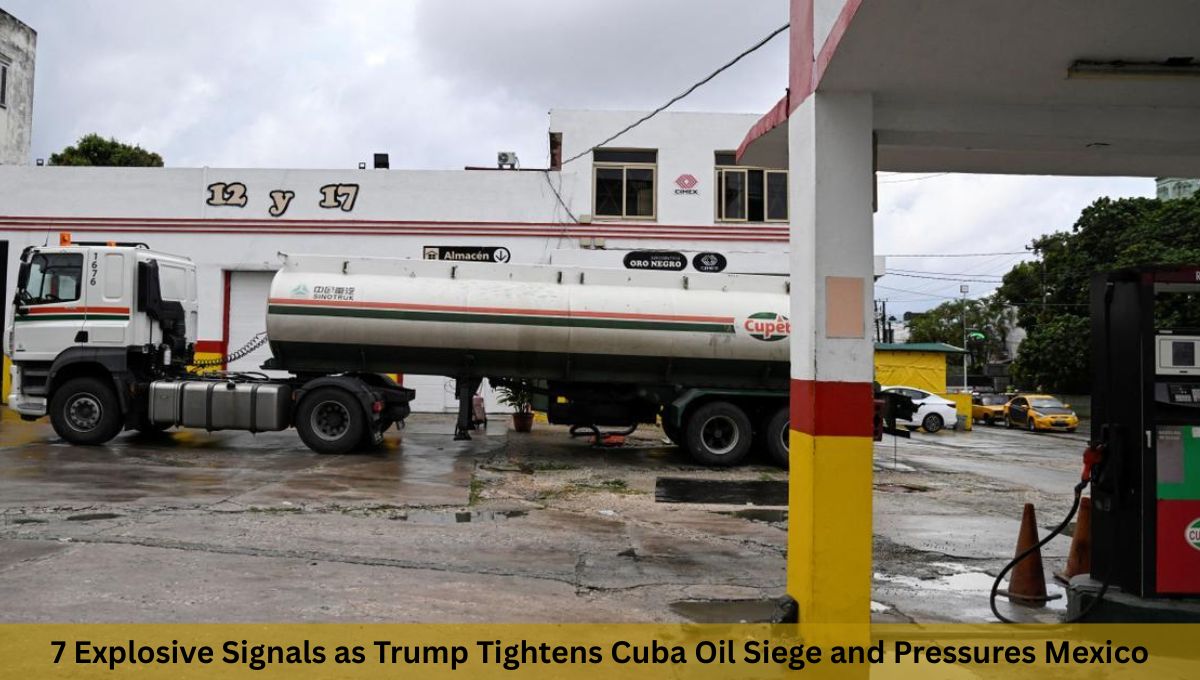
7 Explosive Signals as Trump Tightens Cuba Oil Siege and Pressures Mexico after Venezuela’s collapse.The United States has dramatically escalated pressure on Cuba, with President Donald Trump claiming that Mexico will stop sending oil to the energy-starved island, a move that could tip Cuba into its most severe humanitarian crisis in decades.
Speaking to reporters at the White House, Trump said flatly:
“Mexico is gonna cease sending them oil.” He offered no evidence, but the statement alone has sent shockwaves across Latin America, energy markets, and diplomatic circles.
With Venezuela — Cuba’s historic oil lifeline — effectively cut off following the January 3 capture of President Nicolás Maduro, Havana is now facing what analysts describe as a near-total energy chokehold.
This article examines the seven critical signals emerging from Washington’s intensified campaign — and why the stakes extend far beyond Cuba.
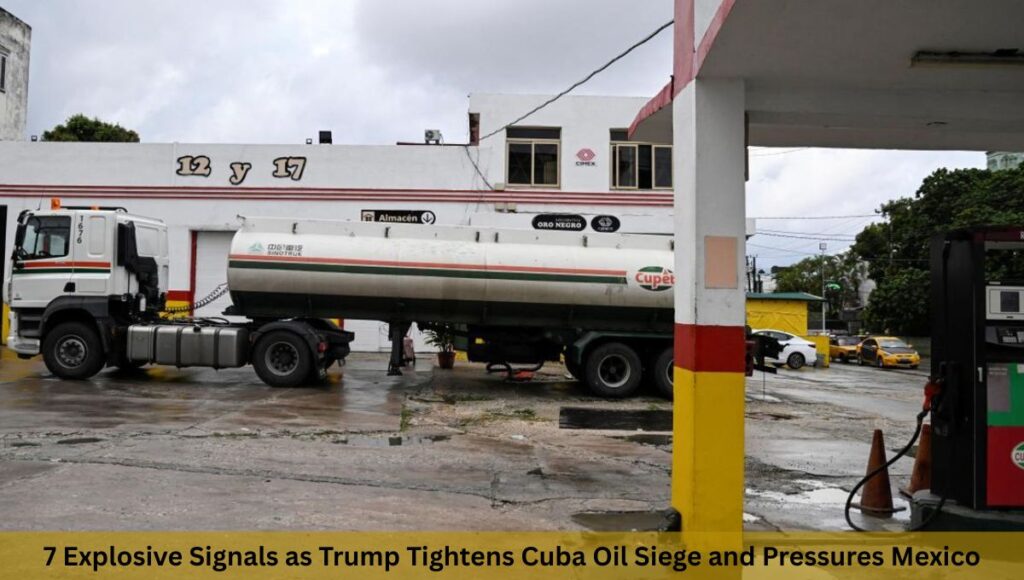
7 Explosive Signals as Trump Tightens Cuba Oil Siege and Pressures Mexico
1. Trump Signals a De Facto Oil Blockade
Trump’s remarks mark the clearest indication yet that his administration is prepared to enforce what critics call a virtual oil blockade against Cuba.
Mexico is currently Cuba’s single largest oil supplier, providing crude and refined fuel essential for:
- Electricity generation
- Transportation
- Aviation fuel
- Hospital and water-pumping systems
Any disruption would immediately worsen blackouts already stretching up to 20 hours a day in some regions.
While Mexican authorities have not confirmed Trump’s claim, Reuters has reported that Mexico’s government is actively reviewing its Cuba oil policy amid fears of U.S. retaliation.
2. Mexico Caught Between Humanitarian Aid and U.S. Retaliation
President Claudia Sheinbaum’s administration has insisted that oil shipments to Cuba are humanitarian, not commercial.
“We will seek to ship aid without seeking confrontation,” Mexican officials said, adding that future assistance may include “other products” instead of fuel.
However, Trump has made clear that humanitarian intent will not shield countries from consequences.
Last week, he signed an executive order threatening tariffs on any nation that supplies oil to Cuba, effectively weaponizing trade to enforce U.S. foreign policy.
Mexico — deeply dependent on access to the U.S. market — now faces a stark dilemma.
3. Venezuela’s Collapse Leaves Cuba Exposed
For over two decades, Venezuelan oil sustained Cuba’s economy, powering its grid and subsidizing its social systems.
That support evaporated after:
- The capture of Venezuelan President Nicolás Maduro
- Washington’s seizure of Venezuelan energy exports
- The collapse of Caracas–Havana cooperation
Trump has been blunt:
“Cuba doesn’t have Venezuela to prop it up anymore.”
With no comparable alternative supplier willing to risk U.S. sanctions, Cuba’s energy vulnerability has never been greater.
4. Washington Claims Talks With Cuba’s ‘Highest People’
Despite the escalating pressure, Trump says negotiations are underway.
“So we’re talking to the people from Cuba — the highest people in Cuba,” he said, suggesting a possible deal without outlining terms.
Cuba’s Foreign Ministry has neither confirmed nor denied formal talks, but reiterated that Havana is willing to engage only under conditions of equality and respect for sovereignty.
Diplomats describe current contacts as informal exchanges, not structured negotiations — a fragile channel overshadowed by mounting threats.
5. Energy Crisis Already Crippling Daily Life
Even before Trump’s latest moves, Cuba was enduring:
- Chronic fuel shortages
- Rolling nationwide blackouts
- Severe shortages of food and medicine
The situation worsened immediately after Washington announced tariff threats. AFP reporters observed long fuel queues in Havana, while emergency rationing measures were quietly activated.
Cuban economists warn that the island may have only weeks of oil reserves remaining, raising alarms over:
- Hospital operations
- Water purification
- Food distribution networks
Regional analysts fear a humanitarian cascade, not a contained crisis.
6. Tourism Collapse Signals Broader Economic Breakdown
Cuba’s fragile economy — already battered — is unraveling further.
Official statistics show:
- 1.8 million visitors in 2025, down 17.8% year-on-year
- Missed government target of 2.6 million tourists
- Sharp declines from Canada, Germany, and Russia
Fuel shortages, blackouts, and transportation failures have repelled tourists even before the latest U.S. escalation.
Argentina has gone so far as to advise its citizens to avoid Cuba altogether, while other countries have revised travel warnings.
Tourism — Cuba’s primary source of hard currency — is no longer cushioning the crisis.
7. Global Fallout and Rising International Alarm
Russia has condemned U.S. actions, with Foreign Minister Sergei Lavrov calling economic and military pressure on Cuba “unacceptable.”
European and Latin American embassies have reportedly activated evacuation contingency plans, while U.S. diplomatic staff in Havana have been advised to prepare for potential escalation.
The Vatican has also weighed in, with Pope Leo XIV urging dialogue to avoid violence.
Behind the scenes, diplomats warn that secondary sanctions — punishing third countries for aiding Cuba — could fracture international trade norms and deepen global tensions.
Is Regime Change the Endgame?
Trump and Secretary of State Marco Rubio have been explicit about their hostility toward Havana’s communist leadership.
“NO MORE OIL OR MONEY FOR CUBA: ZERO!” Trump declared previously, predicting the government is “ready to fall.”
Critics argue that the strategy mirrors past U.S. campaigns in Venezuela:
- Isolate energy supplies
- Apply economic siege
- Force political collapse
Supporters say pressure is necessary to force reforms. Opponents call it collective punishment.
What Happens Next
Three paths now appear possible:
- Mexico continues oil shipments, risking U.S. tariffs
- Mexico halts fuel exports, deepening Cuba’s crisis
- Negotiations accelerate, producing a limited deal
Each scenario carries global implications — for energy security, humanitarian law, and geopolitical stability.
What is clear is that Cuba is approaching a critical inflection point, and the world is watching to see whether diplomacy or economic warfare prevails.
Bottom Line
Trump’s claim that Mexico will stop sending oil to Cuba may prove premature — but the pressure behind it is very real.
With Venezuela sidelined, sanctions tightening, and allies wavering, Cuba faces one of the most dangerous moments in its post-Cold War history.
Whether this ends in dialogue, disaster, or dramatic realignment will shape not just U.S.–Cuba relations — but the future of power politics across the Americas.
Also Read: 7 Explosive Moves as Trump Threatens Cuba’s Oil Lifeline
Also Read: Cubans under siege as US tightens its stranglehold
Related Posts:
- 9 Explosive Signals as Trump Targets Cuba’s Oil…

- Can the EU and NATO Impose Tariffs on India and…

- 7 Critical Reasons Kharg Island Is Iran’s Oil “Crown…

- 9 Explosive Revelations as Trump Declares His Health…
- 5 Powerful Highlights as Trump Lands Second Nobel…

- 11 Punitive Shockwaves from Trump’s Cuba Oil Tariff Threat
