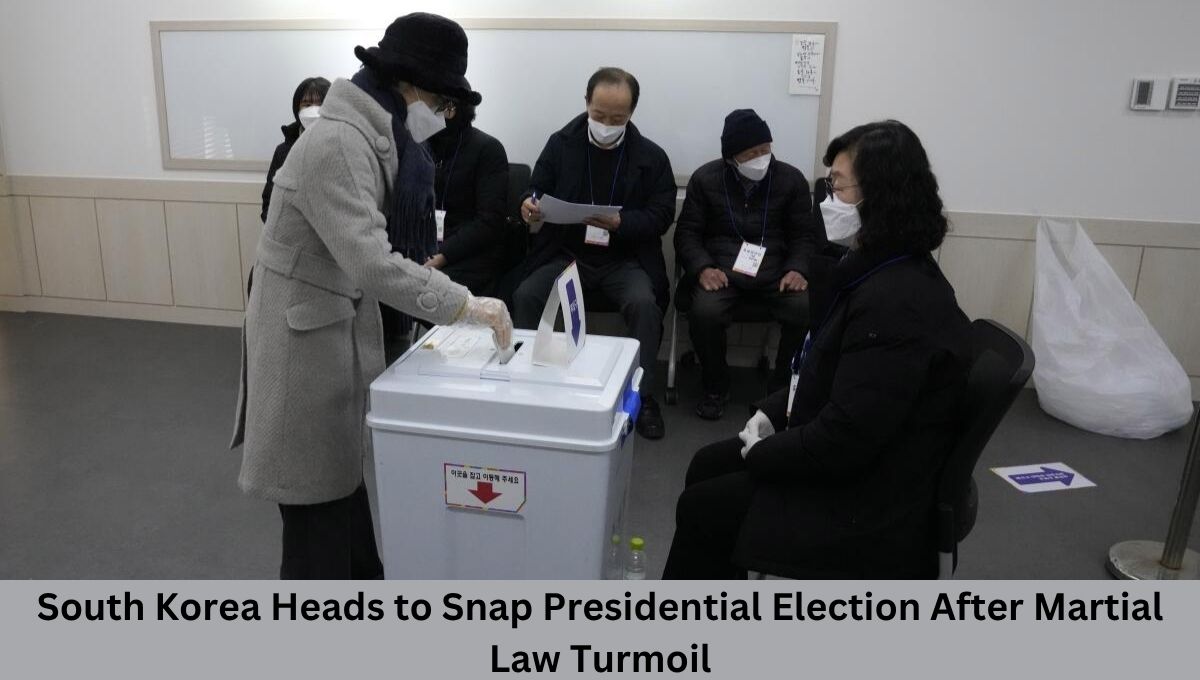
Amid political upheaval, South Korea Heads to Snap Presidential Election After Martial Law Turmoil. South Korea is voting in a pivotal snap presidential election on Tuesday, June 3, after a historic political crisis triggered by former President Yoon Suk-Yeol’s shock declaration of martial law last December. With 44.3 million eligible voters, the nation is at a crossroads seeking to restore stability, defend democratic values, and redefine its global alliances after six months of unprecedented unrest.
This unexpected early election follows Yoon’s impeachment and arrest for what the Constitutional Court of South Korea later ruled as five major constitutional violations. Among them: seizing the National Assembly with military force and attempting to detain sitting judges.
South Korea Heads to Snap Presidential Election After Martial Law Turmoil
Martial Law Sparks Chaos
On December 4, 2024, South Koreans were stunned when Yoon Suk-Yeol declared martial law. Claiming a looming threat from North Korea and accusing internal forces of subversion, Yoon called on the military to take control of the government.
The military attempted to shut down the National Assembly, where opposition leaders gathered in defiance.
In extraordinary scenes broadcast live, lawmakers climbed over barricades and forced their way into the assembly to vote against the martial law decree. That same day, facing domestic and international outrage, Yoon lifted martial law by 4 a.m. But the damage was already done.
Mass Protests Sweep the Nation
The backlash from citizens was swift and unrelenting. Mass protests erupted across South Korea, reminiscent of past democratic uprisings. Seoul’s streets filled with demonstrators carrying candles and K-pop light sticks, chanting slogans to uphold democracy and demanding Yoon’s resignation.
For months, South Koreans from all walks of life remained mobilized. The trauma of past military dictatorships resurfaced, adding fuel to the movement. The public’s resistance became a powerful symbol of Korea’s democratic resolve.
Yoon Impeached and Arrested
On December 14, 2024, the National Assembly voted to impeach Yoon, though his party tried to block the move by walking out. Eventually, Prime Minister Han Duck-soo took over as acting president. After evading authorities for weeks, Yoon was arrested on January 15, 2025.
On April 4, 2025, the Constitutional Court unanimously upheld his impeachment. The court cited serious violations, including ordering the arrest of Supreme Court justices and blocking parliamentarians from performing their duties.
With the presidency vacant since April, the snap election was scheduled for June 3—marking one of the most consequential moments in South Korea’s democratic history.
High-Stakes Presidential Contest: Lee vs. Kim
The election has been dominated by two key figures: Lee Jae-myung of the Democratic Party and Kim Moon-soo of the conservative People Power Party.
Lee, a former human rights lawyer who narrowly lost the 2022 presidential race to Yoon, has called June 3 “judgment day”. He spearheaded efforts in parliament to impeach Yoon and has promised to hold accountable those complicit in the martial law crisis.
Kim, Yoon’s former labor minister, has struggled to distance himself from the disgraced former president. His reluctance to criticize Yoon has alienated many moderates. Despite running a campaign focused on the economy and deregulation, Kim has been labeled by Lee as “Yoon Suk-Yeol’s avatar.”
South Koreans Vote in Huge Numbers
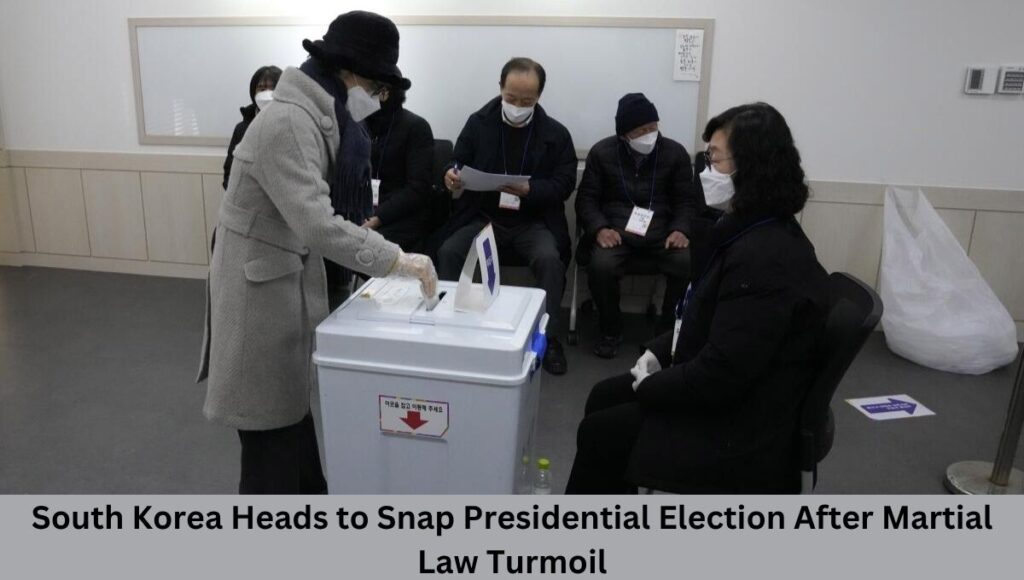
By 3 p.m. KST, 30.5 million people nearly 69% of the electorate had already voted. Turnout is running ahead of the 2022 election, reflecting intense public engagement. Unconventional polling stations, from car dealerships to ssireum (traditional wrestling) arenas, highlight the urgency of the vote.
The vote has brought out passionate sentiments. “I hope the issues surrounding martial law are addressed more clearly and transparently,” said Kim Yong-Hyun, a 40-year-old voter in Seoul. “There are still many things that don’t make sense.”
Election Outcome Could Reshape Asia-Pacific Alliances
This election may not only redefine South Korea’s democracy, but also its foreign policy orientation. If Lee Jae-myung wins as Gallup Korea polls suggest he may steer Seoul away from Yoon’s strong pro-U.S.-Japan stance and take a more nuanced approach to China and North Korea.
Lee has called for renewed dialogue with North Korea, questioned rapid defense alignment with Japan, and stated South Korea should stay out of any potential China-Taiwan conflict. However, in recent weeks, he has softened his rhetoric on the U.S. to attract centrist voters, supporting trilateral cooperation with Tokyo and Washington.
In contrast, Kim has promised to restore ties with the U.S. and build military strength, echoing Yoon’s hardline approach.
No Transition Period: Immediate Inauguration
Due to the impeachment, the presidency has been vacant since April, and the winner of Tuesday’s vote will be inaugurated within hours of certification on Wednesday. There is no transition period, leaving little time to prepare for pressing diplomatic and economic challenges.
The new president must address the divisive political climate, rebuild trust in democratic institutions, and confront a looming showdown with Donald Trump’s tariffs set to take effect in July unless overturned by U.S. courts.
Can the New Leader Heal a Divided Nation?
One of the greatest challenges ahead is healing the domestic divide. South Koreans have been deeply polarized, with pro-Yoon groups rallying with “Stop the Steal” slogans and liberals calling for full prosecution of those involved in the martial law plot.
Lee has pledged unity and no political revenge, but critics suspect he may pursue criminal investigations against former officials. Meanwhile, Yoon Suk-Yeol remains on trial for rebellion, a charge that carries a possible life sentence or death penalty.
Final Thoughts: Democracy on the Line
The South Korea snap election is more than a choice between two candidates it’s a referendum on the future of Korean democracy. As the world watches, South Koreans are deciding whether to move forward from the shadows of martial law or risk deeper polarization and instability.
Whoever wins will inherit a fractured nation and immense pressure. But as millions cast their votes, one thing is clear: the Korean people remain the true guardians of their democracy.
Also Read: Lee Jae-myung Wins South Korean Presidency in Historic Snap Election
Also Read: Beyond the Strongman: What’s at Stake in South Korea’s Snap Presidential Election