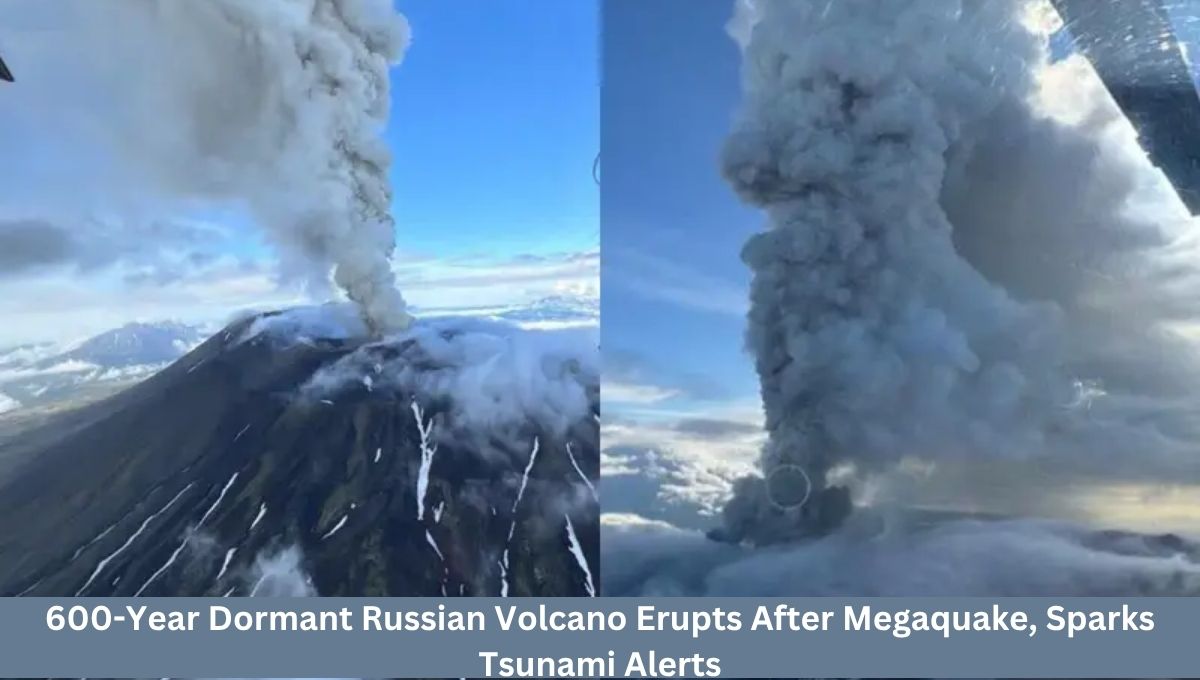
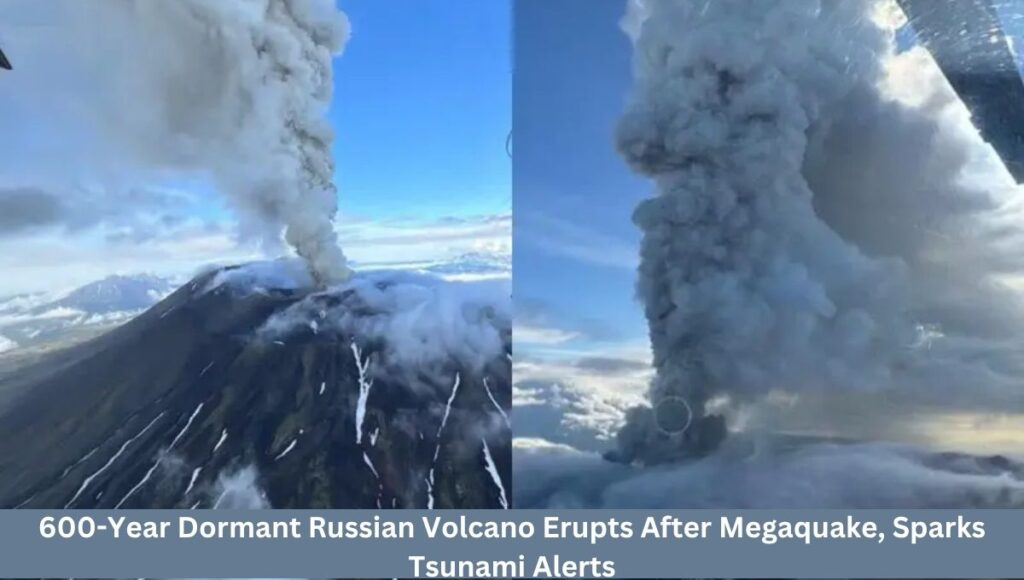
Krasheninnikov volcano a 600-Year Dormant Russian Volcano Erupts After Megaquake, Sparks Tsunami Alerts. For the first time in over six centuries, Russia’s Krasheninnikov volcano in the Kamchatka Peninsula erupted overnight, stunning scientists and raising aviation alerts. The eruption follows a powerful 7.0 magnitude earthquake that rocked the nearby Kuril Islands just days earlier, leading some experts to speculate a possible connection between the seismic event and the volcanic awakening.
According to Russia’s RIA state news agency, the Kamchatka Volcanic Eruption Response Team confirmed this is the first historically confirmed eruption of Krasheninnikov in 600 years. The last known lava flow from the volcano dates back to approximately 1463, plus or minus 40 years, said Olga Girina, head of the team.
600-Year Dormant Russian Volcano Erupts After Megaquake, Sparks Tsunami Alerts
A Dormant Giant Awakens
Standing at 1,856 meters, the Krasheninnikov volcano is part of the seismically active “Ring of Fire,” which circles the Pacific Ocean and includes the majority of the world’s earthquakes and volcanic eruptions.
The eruption was sudden and dramatic. An ash plume soared up to 6,000 meters (nearly 3.7 miles) into the sky, prompting Russian authorities to issue an orange aviation code a warning indicating heightened risk for aircraft in the region.
“The ash cloud has drifted eastward, toward the Pacific Ocean. There are no populated areas along its path,” Russia’s Ministry for Emergency Services confirmed via Telegram.
Linked Events: Earthquake, Tsunami, and Eruptions
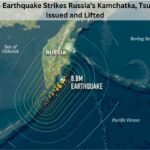
Just days before the Krasheninnikov volcano erupted, a massive 8.8 magnitude earthquake struck Russia’s Far East, triggering tsunami warnings as far away as Chile and French Polynesia.
That quake was followed by the eruption of Klyuchevskoy, Kamchatka’s most active volcano, suggesting a chain reaction of geological activity across the region.
Olga Girina noted the likelihood of a connection. “This [eruption] may be related to the seismic events earlier in the week,” she said.
Experts are studying whether stress shifts in the Earth’s crust caused by the earthquake could have activated dormant magma chambers.
New Tsunami Warnings After 7.0 Quake in Kuril Islands
Over the weekend, the Pacific Tsunami Warning Center and the US Geological Survey confirmed a 7.0 magnitude earthquake near the Kuril Islands, just south of Kamchatka.
In response, Russia’s Emergency Ministry issued tsunami alerts for three regions on the Kamchatka coast.
Although the expected wave heights were low and no damage has been reported, the Ministry warned residents: “You must still move away from the shore.”
The alert served as a reminder of the volatile nature of the Pacific “Ring of Fire.”
While the Pacific Tsunami Warning Center eventually withdrew its threat assessment, Russian authorities maintained their stance on caution, especially given the region’s recent chain of geological upheavals.
Prophecy or Coincidence? Manga Sparks Online Frenzy
Strangely enough, the earthquake and tsunami also set off a viral storm online thanks to a decades-old Japanese manga.
The comic book “The Future I Saw” by Ryo Tatsuki, originally published in 1999, gained renewed attention for appearing to predict the 2011 Tohoku earthquake and suggesting another disaster would occur in July 2025.
As the massive quake struck last week, millions in China searched for the term “Prophecy” on social media platforms like Douyin (China’s TikTok).
Fans pointed to the manga’s “prediction” of an earthquake in July 2025 originating in the Philippine Sea and triggering catastrophic tsunamis.
Though this latest quake struck far from the predicted epicenter and tsunami waves were far smaller than those from the 2011 disaster, the event stirred anxiety across Asia.
Japanese social media lit up with messages like “I’m getting goosebumps!” and debates intensified about whether Ryo Tatsuki’s eerie visions were legitimate premonitions or simply coincidence.
Travel Cancellations and Rising Panic Across Asia
The resurgence of the so-called Tatsuki prophecy caused widespread panic among tourists and would-be travelers to Japan.
Many canceled or delayed trips in anticipation of a disaster that, thankfully, did not materialize.
Andrea Wang, a 25-year-old Chinese traveler, canceled her spring vacation to Japan earlier this year due to concerns about the manga’s prediction.
Even after the recent quake caused no widespread damage, she remains wary and doesn’t plan to travel to Japan in 2025.
Tour agencies across Asia, including WWPKG in Hong Kong, reported a sharp decline in Japan-bound tour bookings up to 70% lower in June and July compared to last year.
Japan’s Preparedness and Historical Memory
Even without prophecy-fueled fear, Japan is no stranger to earthquake anxiety. The memory of the 2011 Tohoku disaster where over 22,000 people died or went missing still looms large in the national consciousness.
Earthquake drills start as early as preschool, and emergency alerts are part of daily life.
The government continues to warn of a potentially devastating Nankai Trough quake, which experts believe has a 70-80% chance of occurring in the next 30 years.
This subduction zone off southern Japan is capable of generating megaquakes, with past incidents in 1944 and 1946 claiming thousands of lives.
As with this week’s events, Japan’s advanced warning systems kicked in effectively.
Coastal evacuations were ordered, high-speed trains were slowed, and authorities maintained high vigilance throughout the quake and tsunami scare.
Scientists Warn Against Pseudoscience
Seismologists have cautioned the public against relying on manga prophecies or psychic predictions, reiterating that earthquakes cannot be predicted with any scientific accuracy.
Even Tatsuki herself has urged readers not to take her dreams too literally. In a recent interview, she said, “Please don’t be overly swayed by my manga. It’s just what I saw in my dreams.”
Still, the popularity of her work speaks volumes about how deeply people crave a sense of control or forewarning especially in geologically unstable areas like Japan and Russia’s Far East.
The Ring of Fire is Stirring
The Kamchatka Peninsula, located on the northwestern edge of the Pacific “Ring of Fire,” is a hotspot for volcanic and earthquake activity.
It houses over 160 volcanoes, 29 of which are active. The Klyuchevskoy and now Krasheninnikov eruptions serve as stark reminders that this region remains very much alive geologically.
The string of recent events an 8.8 megaquake, a 7.0 quake in the Kuril Islands, two significant volcanic eruptions, and tsunami alerts stretching across the Pacific has raised global concerns about the broader implications of such tectonic instability.
Aviation and Environmental Concerns
With the eruption of the Krasheninnikov volcano, aviation authorities issued an orange alert, signaling moderate to high risk to flights in the region due to ash clouds.
Volcanic ash can severely damage aircraft engines and electronics, so pilots are advised to reroute flights around affected airspace.
Environmental scientists are also monitoring the impact of the ash plume, which has drifted eastward toward the Pacific Ocean.
Fortunately, no populated areas lie in its immediate path, minimizing the threat to human life for now.
Conclusion: A Reminder of Nature’s Power
Whether or not the Krasheninnikov eruption was directly triggered by recent earthquakes, the timing and intensity of geological activity across Russia’s Far East and the Pacific serve as a humbling reminder of nature’s unpredictability.
From volcanic awakenings after centuries of slumber to viral manga prophecies gripping millions, the week’s events reflect the delicate balance between science, culture, and human imagination in times of crisis. While the worst may have passed for now, both scientists and citizens remain on high alert bracing for what the “Ring of Fire” might unleash next.
Also Read: Russia earthquake has caused a ‘parade of volcanic eruptions’: Expert
Also Read: Massive 8.8 Earthquake Hits Russia’s Kamchatka, Triggers Tsunami Alerts Across Pacific