In one of the most brutal Russia-Ukraine conflict is Victory Near? Putin-Trump Call Sparks Russian Confidence as Ceasefire Talks Begin. As the Russia-Ukraine enters its fourth year, a high-stakes phone call between U.S. President Donald Trump and Russian President Vladimir Putin has stirred cautious optimism and renewed diplomatic movement. With the Kremlin signaling readiness for peace negotiations and Trump publicly urging a ceasefire the momentum has triggered both hope and hesitation on all sides.
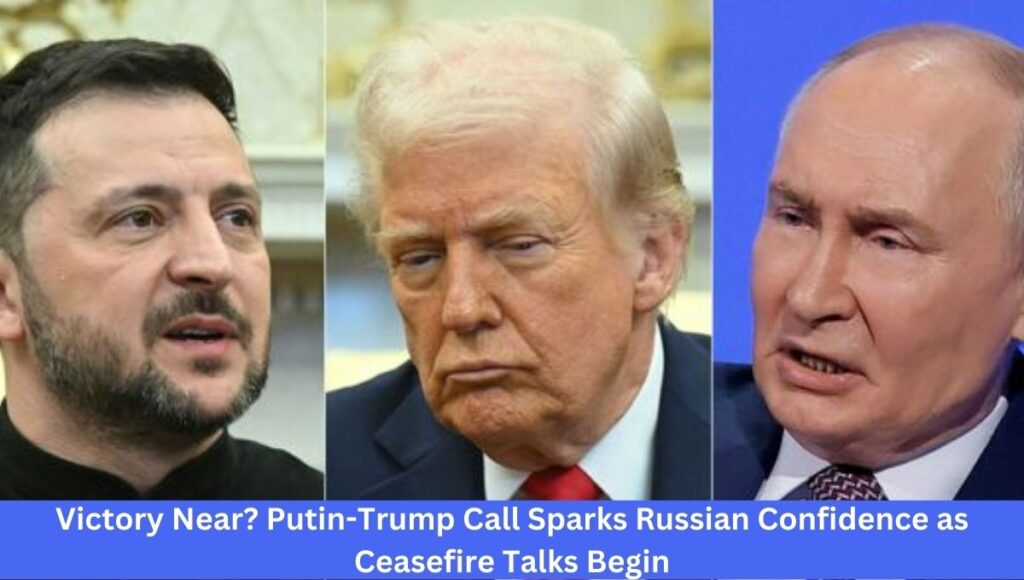
Victory Near? Putin-Trump Call Sparks Russian Confidence as Ceasefire Talks Begin
Putin-Trump Call Spurs Hopes of a Ceasefire
On May 19, 2025, President Donald Trump and Vladimir Putin held a more than two-hour conversation addressing the ongoing Ukraine war, marking a pivotal moment in international diplomacy.
Trump described the call as “excellent,” and said Ukraine and Russia would “immediately” begin ceasefire negotiations.
“The conditions for that will be negotiated between the two parties,” Trump noted in a social media post, adding that only Russia and Ukraine could know “the details of a negotiation that nobody else would be aware of.”
Putin also praised the exchange, calling it “very frank and useful,” while indicating that Russia was open to drafting a memorandum for a future peace agreement.
Though no ceasefire has yet been implemented, both leaders appeared optimistic at least in tone about the possibility of progress.
Mixed Reactions in Moscow: Confidence and Uncertainty
Back in Moscow, the public mood was a mixture of growing confidence and lingering doubts. In the suburbs of the Russian capital, 40-year-old homemaker Anastasia expressed impatience and resolve.
“I just want Vladimir Vladimirovich [Putin] to get justice done,” she said, echoing official Kremlin rhetoric. “I don’t want my children to have to solve this issue. Let’s decide it here and now.”
But trust in Trump appeared to be in short supply among ordinary Russians. Anastasia dismissed the former real estate mogul and current U.S. president as “just a businessman” driven by money, not principle.
Other voices, like that of 72-year-old pensioner Sofiya, revealed a more subdued sentiment. “Uncertainty,” she said simply when asked how she felt about the Trump-Putin call.
“It’s interesting what will happen to us, not only to our families, but our country.”
Putin’s Maximalist Demands Remain
Despite the hopeful language about peace, Russia’s expectations remain uncompromising. At recent peace talks in Istanbul the first direct negotiations between Moscow and Kyiv since 2022 Russian negotiators demanded that Ukraine cede remaining territories in the east and south.
These include areas in Donetsk, Luhansk, Kherson, and Zaporizhzhia, which Russia claims to have annexed.
Putin also continues to insist on Ukraine’s neutrality, its exclusion from NATO, and the removal of Ukrainian President Volodymyr Zelensky from office.
In the absence of Ukrainian concessions, Russian state TV warned that more land could be seized, citing historic wars as justification for a prolonged conflict.
“If the four regions will not be recognised in the nearest future, the next time there will be six regions,” said state broadcaster Yevgeny Popov.
Ukraine’s Response: Skepticism and Conditional Optimism
Ukrainian President Volodymyr Zelensky has responded cautiously to the proposed ceasefire talks, expressing a willingness to engage in “full and unconditional” dialogue. However, he emphasized that Russia must first prove its seriousness through action.
“I really count on it that everybody is very interested in a ceasefire. Too many losses; we really want to finish this war,” Zelensky said. “I’m not sure that Russia is ready, and we don’t trust them.”
Zelensky also criticized Moscow’s delegation to the Istanbul talks as “non-decision-makers,” signaling concern that the Kremlin may be stalling while preparing for a summer offensive.
Trump’s Diplomatic Gamble and the Vatican Offer
The Trump administration is under pressure to deliver results. Trump has long claimed he would end the war swiftly once back in the White House.
Now, with negotiations underway, his skills as a self-declared dealmaker face a critical test.
Vice President JD Vance suggested that Trump is willing to abandon peace efforts if Putin appears insincere. “We’re more than open to walking away,” Vance said. “It takes two to tango.”
Interestingly, Trump also revealed that the Vatican had offered to host the negotiations, though no location has yet been confirmed.
Sanctions, Strategy, and the Road Ahead
Trump’s administration has hinted that further sanctions against Russia could follow if peace efforts collapse.
Treasury Secretary Scott Bessent criticized the Biden-era sanctions for failing to significantly cut Russia’s oil revenues, hinting at a more aggressive economic strategy if diplomacy falters.
Still, Putin appears to be weighing military and diplomatic options simultaneously. Russian analyst Konstantin Kalachev described the Trump call as a “tactical victory” for Putin and predicted an intensified summer ground campaign if talks stall.
“There will be no peace while Russia has not yet used the option of a final offensive,” Kalachev warned.
Conclusion: Talks Begin, but War Grinds On
The Trump-Putin call has reignited dialogue, but the path to peace remains fraught.
Russia holds significant leverage on the battlefield, and its demands for territory and neutrality from Ukraine show little sign of moderation.
On the other hand, Ukraine with the backing of Western allies is demanding that Russia demonstrate goodwill before any ceasefire can be taken seriously.
With both sides under pressure and Trump’s reputation as a global negotiator on the line, the coming weeks may determine whether diplomacy can halt a war that has claimed tens of thousands of lives.
Also Read: US Envoy Witkoff Meets Putin in St. Petersburg Amid Stalled Ukraine Ceasefire Talks
Also Read: Putin aims to destroy Ukraine and has zero interest in a compromise peace
Related Posts:
- 11 Explosive Revelations From Ted Cruz’s Leaked…
- Trump’s 20-Point Gaza Peace Plan Gains Urgent Global…

- 5 Powerful Highlights as Trump Lands Second Nobel…

- Can the EU and NATO Impose Tariffs on India and…

- 5 Major Takeaways from the US Supreme Court's…

- Impacts of the Trump-Putin Call on Ukraine’s 2025 Strategy