In a strategic and solidarity-driven phone call, Modi and Lula Unite as Trump’s Tariffs Disrupt Global Trade. In a phone conversation that lasted over an hour, Indian Prime Minister Narendra Modi and Brazilian President Luiz Inácio Lula da Silva tackled the fallout of the 50% US tariffs imposed on both nations by President Donald Trump.
Amid rising global economic uncertainty, the two leaders reaffirmed their commitment to a robust India-Brazil Strategic Partnership and explored paths for BRICS solidarity and multilateral diplomacy. This diplomatic outreach underscores the urgency for Global South cooperation in the face of unilateral economic pressure from the United States.
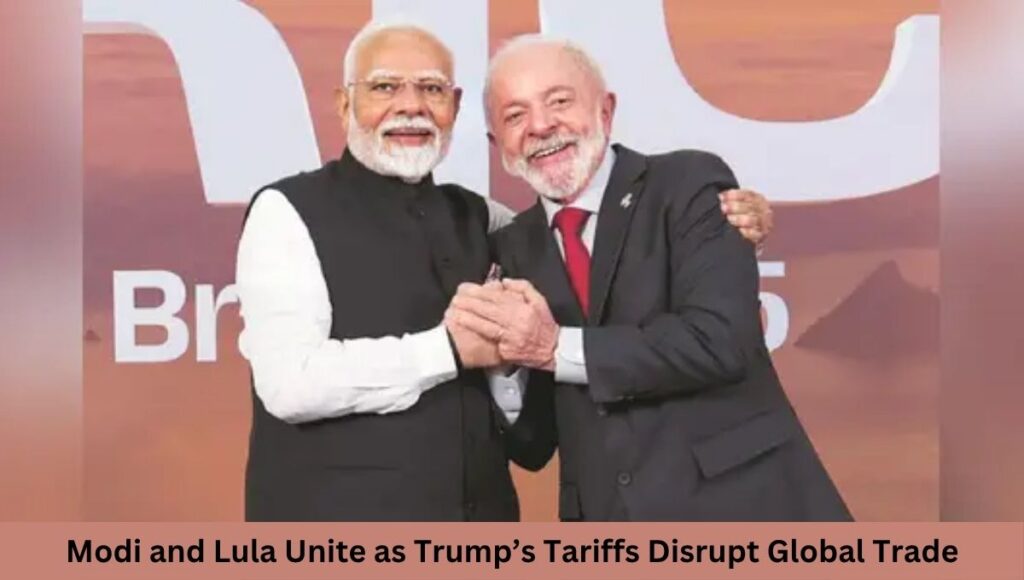
Modi and Lula Unite as Trump’s Tariffs Disrupt Global Trade
A Conversation of Strategy and Solidarity
Strengthening South-South Cooperation in Turbulent Times
President Lula initiated the phone call, focusing on the global economic situation and the implications of what he described as “unilateral tariffs”.
He emphasized that India and Brazil are the most affected nations by Trump’s sweeping tariff hikes.
Both leaders emphasized the need for stronger bilateral ties as a shield against external shocks. “We reaffirmed the importance of defending multilateralism,” Lula said in a social media post.
Prime Minister Modi echoed this sentiment, saying the two nations are committed to “a strong, people-centric partnership that benefits the Global South.”
The leaders agreed to expand cooperation in trade, energy, technology, agriculture, health, defence, and digital inclusion.
Trump’s 50% Tariffs Trigger Diplomatic Alarm
India and Brazil Targeted Over Russia Ties and Political Disputes
On August 7, Trump imposed an additional 25% tariff on Indian exports, citing India’s ongoing energy trade with Russia. This increased total US tariffs on India to a staggering 50%.
Simultaneously, Brazil faced a 50% tariff on key exports from energy and agriculture to aircraft prompted in part by Trump’s opposition to the legal prosecution of former Brazilian President Jair Bolsonaro. Trump allegedly conditioned relief on Lula dropping the charges.
These tariffs mark one of Trump’s most aggressive trade actions since his return to office and have rattled markets and bilateral relations.
Lula Accuses Bolsonaro of Undermining Brazil
Former President and Son Allegedly Lobbied Trump for Tariffs
In a stunning twist, President Lula accused Jair Bolsonaro and his son Eduardo of orchestrating the US sanctions. Lula described the move as an act of betrayal:
“There is no precedent for a president and his son to incite a foreign power against Brazil,” he declared.
Eduardo Bolsonaro had publicly taken credit for influencing Trump’s decision, deepening the internal rift in Brazilian politics.
Trump had previously called Lula’s charges against Bolsonaro a “witch hunt,” injecting more geopolitical tension into the trade debate.
India’s Measured Response
Condemns Tariffs, Holds Off on Retaliation
India has described the additional 25% tariff as “unjustified and unreasonable” and promised to “take all necessary action” to protect national interests.
However, like Brazil, India has not announced reciprocal tariffs signaling a cautious but strategic response.
Diplomatic analysts suggest that Modi is focusing on global alliances, particularly through BRICS and WTO mechanisms, rather than direct retaliation.
Lula Plans State Visit to India in 2026
Strengthening Bilateral Ties Through High-Level Engagement
In a show of growing solidarity, Lula confirmed a state visit to India in early 2026. Ahead of this, Brazilian Vice President Geraldo Alckmin will visit India in October with a delegation including ministers and business leaders.
Their mission? To enhance cooperation on key areas like:
- Trade and commerce
- Defence and energy
- Critical minerals and sustainability
- Digital infrastructure and financial platforms
This visit will also prepare the groundwork for upgrading the India-MERCOSUR trade agreement, aiming to reach the $20 billion trade target by 2030.
Trade Tech Synergy: UPI Meets PIX
India and Brazil Explore Digital Payment Integration
The leaders discussed their nations’ respective real-time digital payment platforms India’s UPI (Unified Payments Interface) and Brazil’s PIX.
Both countries are exploring interoperability or collaborative frameworks to boost cross-border trade and financial inclusion.
This move reflects broader BRICS ambitions to create alternatives to Western-dominated financial networks.
BRICS Unity in Focus
Coordinated Response to Trump’s Unilateralism
A key outcome of the call was a pledge to coordinate closely on BRICS policy, especially as Brazil prepares to hand over the rotating BRICS presidency to India next year.
Lula is also planning to speak with other BRICS leaders, including China’s President Xi Jinping, to formulate a unified response to Trump’s tariff war.
“What Trump wants is to dismantle multilateralism and replace it with unilateralism,” Lula said bluntly.
BRICS now comprises over 40% of the world’s population and a growing share of global GDP. The bloc is increasingly viewed as a counterbalance to US hegemony.
The WTO Factor: Lula Goes Legal
Brazil Files Formal Complaint, India May Follow
Brazil has filed a formal request for WTO consultations, calling Trump’s tariff hike a violation of global trade rules.
Though WTO dispute resolution can be slow and uncertain, it signals Brazil’s commitment to a rule-based international order.
India is closely monitoring the situation and is expected to pursue parallel legal avenues if bilateral talks with Washington stall.
Modi’s Diplomatic Pivot?
Eyes on China, Less Dependence on US Ties
Modi’s phone call with Lula comes at a time of growing disillusionment with the US, especially after Trump’s aggressive tariff actions.
Sources suggest Modi is considering a visit to China, signaling a potential recalibration of India’s foreign policy.
While India has historically balanced its relationships between the US, Russia, and the Global South, Trump’s latest move may push New Delhi closer to BRICS and East Asia-led alliances.
Building a New Trade Order: BRICS as a Force
Alternatives to Dollar and New Preferential Trade Pacts
The India-Brazil Strategic Partnership is just one piece of a larger movement toward South-South trade cooperation. With interest growing in:
- De-dollarization
- BRICS payment systems
- New regional trade agreements (RTAs and PTAs)
BRICS is on the cusp of redefining global economic governance.
With upcoming summits and leadership transitions within BRICS, India and Brazil are expected to lead initiatives that will reduce dependence on Western institutions and create fairer, more inclusive trade networks.
Conclusion: The Global South Takes a Stand
Modi-Lula Call Could Shape the Future of Multilateralism
The hour-long phone conversation between Prime Minister Modi and President Lula represents more than just bilateral engagement it’s a clear message to the world: The Global South is no longer passive.
As India and Brazil strengthen ties, lead BRICS coordination, and challenge unfair trade practices, the groundwork is being laid for a new global order one that champions multilateralism, fairness, and mutual respect.
While Trump’s tariff war has thrown up roadblocks, it has also galvanized unity among emerging powers. Whether through WTO disputes, BRICS integration, or digital innovation, India and Brazil are determined to shape the future of global trade on their terms.
Also Read: Brazil’s Lula dials PM Modi, extends support against Trump’s ‘unilateral’ tariffs
Also Read: “I Won’t Call Trump”: Lula Defiant After US Tariff Hike on Brazil
Related Posts:
- Xi Jinping, Lula, and Jaishankar Call for BRICS…

- BRICS Denounces Trump Tariffs, Condemns Iran Strikes…
- Trump Targets BRICS With 10% Tariffs: A Dollar…
- Lula to Trump: ‘We Don’t Want an Emperor’ as BRICS…

- 7 Powerful Reasons Russia Is Backing India’s BRICS…
- Trump Targets Sri Lanka, BRICS with Sweeping Tariffs