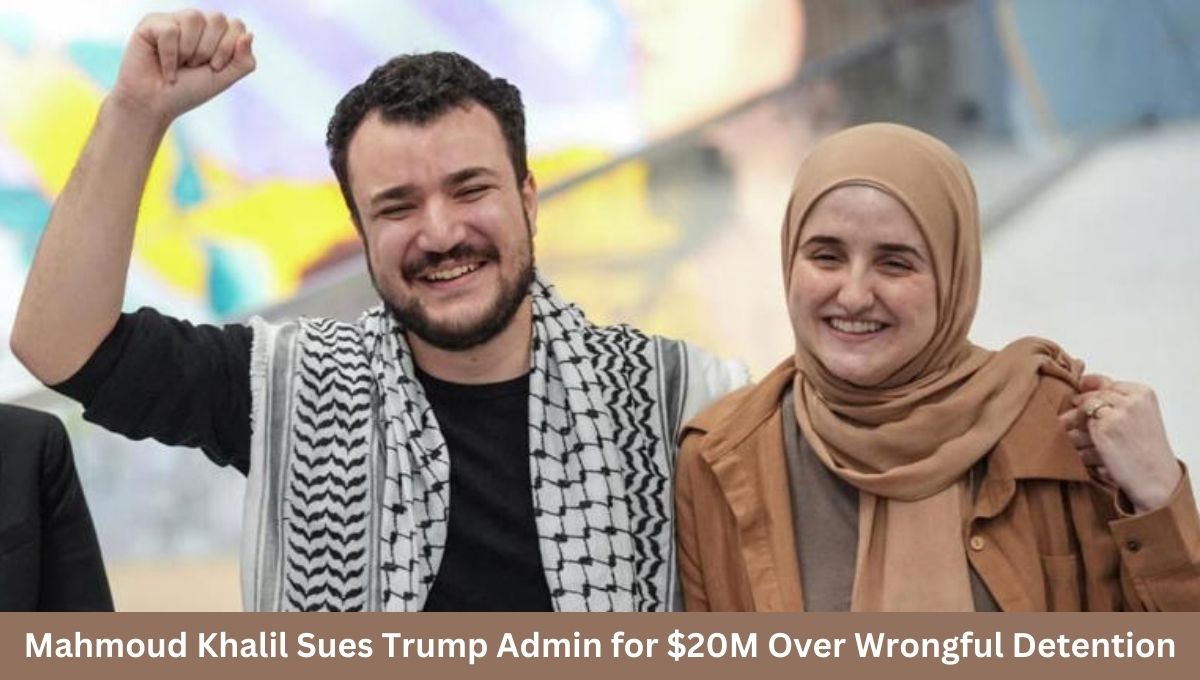
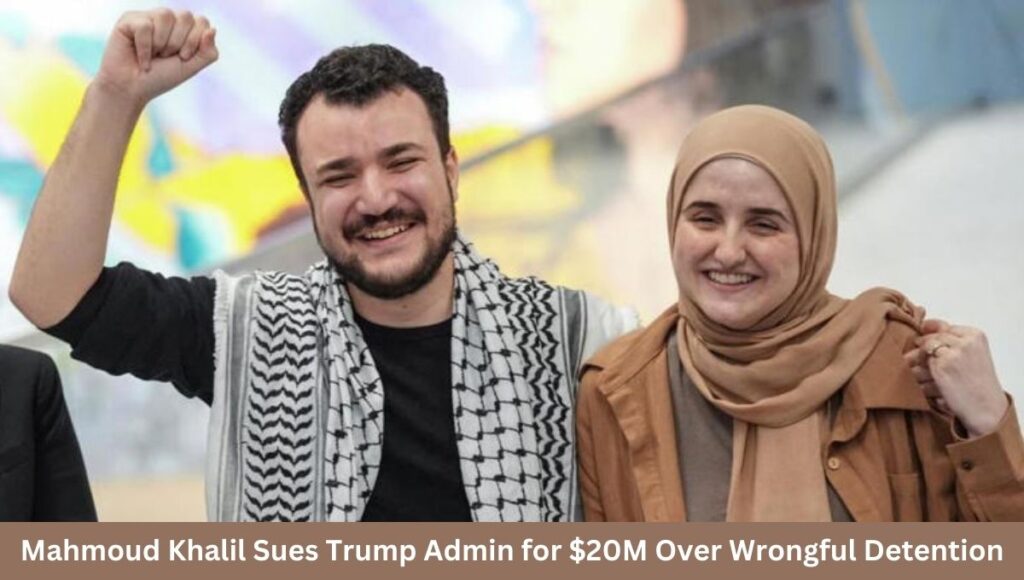
A Palestinian-American activist Mahmoud Khalil Sues Trump Admin for $20M Over Wrongful Detention. In a powerful move against what he calls “political retaliation and abuse of power,” Palestinian-American activist Mahmoud Khalil has filed a $20 million legal claim against the Trump administration, alleging wrongful imprisonment, malicious prosecution, and an unlawful campaign to deport him due to his pro-Palestinian activism during campus protests.
The claim, a precursor to a lawsuit under the Federal Tort Claims Act, names the Department of Homeland Security (DHS), Immigration and Customs Enforcement (ICE), and the U.S. Department of State as defendants. It comes just weeks after a federal judge ordered his release following 104 days of detention at a Louisiana immigration center.
Mahmoud Khalil Sues Trump Admin for $20M Over Wrongful Detention
Arrested Without a Warrant: “They Tried to Intimidate Me”
Khalil, a 30-year-old permanent U.S. resident, was arrested on March 8, 2025, by plainclothes federal agents as he returned home from dinner with his wife, Noor Abdalla, in New York City.
He says the agents refused to show a warrant and appeared unaware of his legal immigration status. “They effectively kidnapped me,” Khalil said. “No explanation, no paperwork just handcuffs and silence.”
He was flown overnight to the LaSalle Detention Center in Jena, Louisiana, a remote immigration jail where he alleges his location was deliberately concealed from both his family and legal team for several days.
From Student Leader to Target of Deportation
Khalil was a prominent figure in the pro-Palestinian student movement at Columbia University, which became a national symbol of dissent amid the escalating Israel-Gaza conflict that began in October 2023.
As lead student negotiator, he helped organize peaceful protests condemning U.S. military aid to Israel and demanding university divestment from weapons manufacturers.
“They targeted me because of my voice,” Khalil said. “I stood for human rights and was punished for it.”
Trump’s Crackdown: “We Will Deport You”
Upon returning to the White House in 2025, President Donald Trump made no secret of his intentions to crack down on student protesters, whom he labeled “Hamas sympathizers” and “anti-American radicals.”
In one of his earliest executive orders of the new term, Trump instructed federal agencies to revoke student visas and deport foreign nationals involved in pro-Palestinian protests.
“To all the resident aliens who joined in the pro-jihadist protests: come 2025, we will find you and we will deport you,” Trump wrote on social media.
Khalil was the first high-profile arrest under this directive.
Branded a National Security Threat Without Charges
Khalil was never charged with a crime, nor was any link to Hamas or terrorism ever substantiated. Yet, a State Department memo signed by Secretary of State Marco Rubio justified Khalil’s deportation on the grounds that his views posed “serious adverse foreign policy consequences” for the U.S.
“What they’re really saying is that political beliefs are grounds for deportation,” Khalil said. “That’s not law that’s authoritarianism.”
The Trump administration and DHS repeatedly called him a “pro-terrorist, anti-Semitic activist”, despite Khalil’s long-standing condemnation of antisemitism and support for peaceful protest.
Detained in Inhumane Conditions
Khalil described his time at the LaSalle Detention Center as “horrendous.” Held in a dormitory with more than 70 men, he reported constant lighting, lack of privacy, inedible food, and denial of medical treatment for a chronic ulcer. During his stay, he lost 15 pounds (7 kilograms).
“I cannot remember a night when I didn’t go to sleep hungry,” he said. “I wouldn’t wish that on anyone.”
Khalil says the emotional toll was immense. He missed the birth of his first child, Deen, while detained in Louisiana. “That’s something I will never forgive,” he added.
A Federal Judge Steps In
On June 20, 2025, after more than three months in custody, a federal judge in New Jersey ordered Khalil’s release, ruling that the deportation order was likely unconstitutional.
Despite the judge’s decision, the government launched new allegations, claiming Khalil misrepresented information on his green card application accusations his legal team calls “retaliatory and baseless.”
Lawsuit Seeks Justice and Accountability
The $20 million claim filed under the Federal Tort Claims Act alleges:
- False arrest
- False imprisonment
- Malicious prosecution
- Abuse of process
- Intentional infliction of emotional distress
- Negligent infliction of emotional distress
Khalil says the lawsuit isn’t just about compensation, but restoring dignity and preventing future abuses.
“Nothing can restore the 104 days stolen from me,” he said. “But there must be accountability.”
He added that any settlement he receives would be used to support other activists targeted by government retaliation.
Alternatively, he said he would accept a formal apology and meaningful reform of immigration enforcement practices.
DHS Response: “Absurd Claims”
In an emailed statement, DHS spokesperson Tricia McLaughlin dismissed Khalil’s claim as “absurd,” accusing him of engaging in “hateful behavior” and “endangering Jewish students.”
Khalil responded: “This is not about hate. This is about free speech, due process, and civil rights. I have condemned antisemitism throughout my life.”
His legal team argues that the DHS response mirrors the same rhetoric used to smear Khalil and silence pro-Palestinian voices.
A Broader Pattern of Suppression?
Khalil’s arrest appears to be part of a larger pattern under Trump’s renewed leadership. Several other students including Rümeysa Öztürk, Mohsen Mahdawi, and Badar Khan Suri were also detained for pro-Palestinian expression.
Human rights advocates warn that Trump’s policies blur the line between national security and political repression, creating a chilling effect across campuses nationwide.
“They’re making an example out of me,” Khalil said. “But I won’t be silenced.”
Trying to Move Forward But Staying Vigilant
Now out of detention, Khalil says he lives with lingering trauma. He avoids large crowds, seldom travels alone, and worries about continued government surveillance.
Still, he finds hope in fatherhood and advocacy. Recently, he took baby Deen for his first swim a moment of joy after months of separation.
“He wasn’t a fan,” Khalil laughed. “But we’re making memories now memories they couldn’t take away.”
The Legal Fight Continues
With deportation proceedings still active and his lawsuit unfolding, Khalil’s case could become a landmark moment for civil liberties in the U.S.
His legal team hopes it will draw public attention to what they see as dangerous government overreach, and spark a broader movement for immigration justice and free expression.
“If no one pushes back,” Khalil warned, “they’ll keep doing this to others — again and again.”
A Turning Point in 2025 America?
As the political climate in America grows more polarized, Mahmoud Khalil’s $20 million lawsuit shines a spotlight on the fragile balance between national security and constitutional rights.
Is the U.S. government using its powers to protect citizens or to suppress dissent?
Khalil believes the answer will define the next chapter in America’s democracy.
“They think they’re untouchable,” he said. “Unless there’s accountability, it will continue.”
Also Read: Military Deployment in LA Sparks Outrage, Legal Battle Over Immigration Raids