
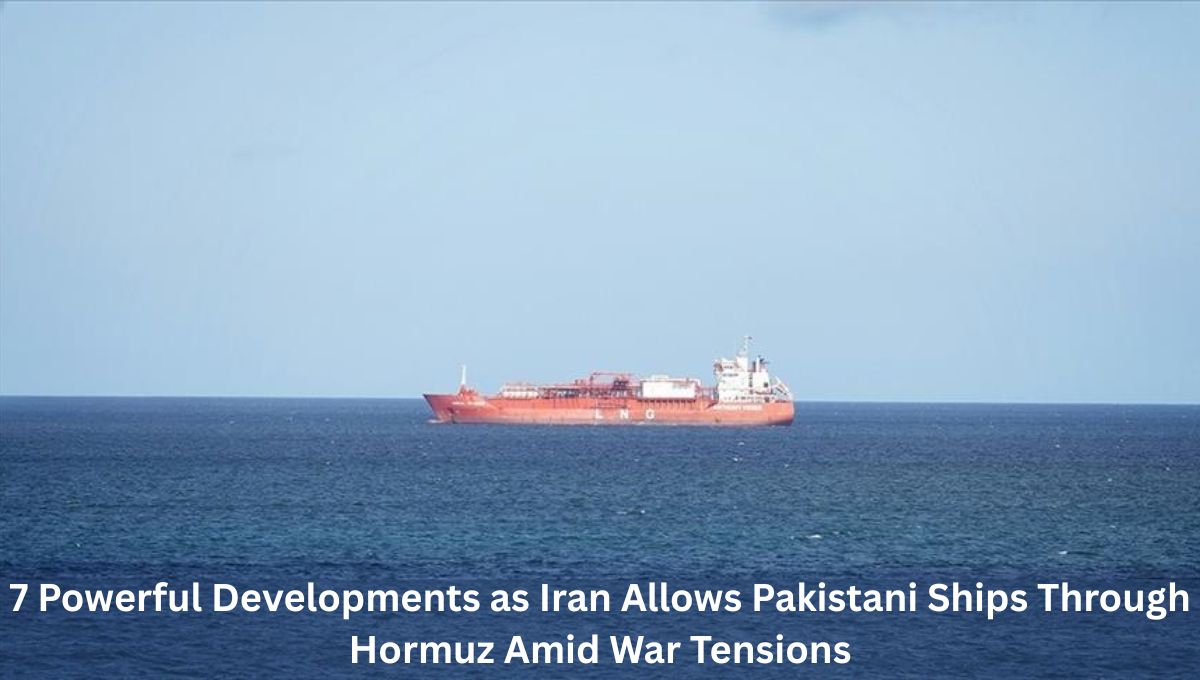
7 Powerful Developments as Iran Allows Pakistani Ships Through Hormuz Amid War Tensions — A key step toward de-escalation. In a significant diplomatic development, Iran has agreed to allow 20 Pakistani-flagged ships to transit the Strait of Hormuz, offering a rare moment of cautious optimism amid escalating tensions in the Middle East.
Pakistan’s Foreign Minister Ishaq Dar described the move as a “harbinger of peace,” emphasizing its potential to reduce tensions and stabilize one of the world’s most critical maritime chokepoints.
With the global economy already strained by conflict, energy disruptions, and geopolitical uncertainty, this decision carries implications far beyond regional politics.
The Strait of Hormuz—through which nearly one-fifth of global oil supply passes—has become the focal point of the ongoing crisis involving Iran, the United States, and its allies.
Any shift in access or control over this narrow waterway has immediate ripple effects across global markets.
7 Powerful Developments as Iran Allows Pakistani Ships Through Hormuz Amid War Tensions
Iran’s Decision: Controlled Access Instead of Closure
A Limited but Symbolic Opening
Under the agreement, Iran will allow two Pakistani ships per day to pass through the Strait of Hormuz.
While the number may appear modest, the symbolic significance is substantial. This decision demonstrates that Iran is not pursuing a complete shutdown of the strait.
Instead, it is implementing a selective access model—permitting transit for countries it considers friendly while restricting or denying passage to adversarial nations.
Diplomatic Engagement Behind the Move
The development follows direct diplomatic engagement between Islamabad and Tehran.
Reports indicate that Ishaq Dar held discussions with Iran’s Foreign Minister Abbas Araghchi, focusing on de-escalation and peaceful dialogue.
Pakistan has increasingly positioned itself as a mediator in the broader US-Iran conflict, leveraging its geographic proximity and diplomatic channels to facilitate communication.
The Strait of Hormuz: Why It Matters Globally
A Critical Energy Lifeline
The Strait of Hormuz is widely regarded as the most important oil transit chokepoint in the world.
On a typical day, around 20 million barrels of oil and significant volumes of liquefied natural gas pass through this narrow passage.
Disruptions here can:
- Trigger global oil price spikes
- Disrupt supply chains across Asia, Europe, and beyond
- Create inflationary pressure worldwide
- Impact energy security for major economies
A Fragile Maritime Corridor
Since the onset of the conflict, maritime traffic through the strait has reportedly dropped dramatically, with many vessels stranded or rerouted.
Insurance costs for shipping companies have surged, while logistical bottlenecks have intensified.
Iran’s decision to allow selective passage suggests a strategic shift—from outright disruption to controlled leverage.
Iran’s Emerging “Toll Booth” Strategy
Turning Geography into Power
One of the most consequential developments in this crisis is Iran’s attempt to monetize its control over the Strait of Hormuz.
Iranian officials are reportedly considering a system where ships must:
- Register with authorities
- Provide cargo and route details
- Receive clearance codes
- Potentially pay transit fees
This model effectively transforms the strait into a regulated gateway controlled by Tehran.
Potential Revenue Windfall
If implemented, the toll system could generate massive revenue:
- Estimated $600 million per month from oil shipments alone
- Up to $800 million monthly when LNG is included
Such figures rival earnings from major global trade routes like the Suez Canal.
For a country facing heavy economic sanctions, this presents a powerful alternative revenue stream.
Legal and Global Concerns
Conflict with International Law
Experts argue that imposing transit fees in an international strait violates established maritime law under the United Nations Convention on the Law of the Sea (UNCLOS).
The principle of “transit passage” ensures that all vessels have the right to move freely through such waterways without interference or charges.
Global Pushback Intensifies
World leaders and institutions have expressed strong opposition:
- The United States has labeled the idea “illegal and dangerous”
- G7 nations have emphasized the need for toll-free navigation
- Maritime experts warn of long-term instability if the precedent is set
Despite this, Iran appears determined to test the limits of international norms.
Selective Access: Allies vs Adversaries
Who Gets Through?
Iran has made it clear that access to the Strait of Hormuz will depend on political alignment.
Countries reportedly allowed passage include:
- Pakistan
- India
- China
- Russia
- Iraq
Meanwhile, vessels linked to:
- The United States
- Israel
- Certain Gulf nations
may face restrictions or outright denial.
Geopolitical Implications
This selective approach effectively weaponizes geography.
It allows Iran to:
- Reward allies
- Pressure adversaries
- Influence global trade routes
Such a system could reshape maritime dynamics and deepen geopolitical divisions.
Impact on Global Energy Markets
Oil Prices Surge
The disruption in shipping has already led to a sharp rise in oil prices, with crude reportedly crossing $100 per barrel.
This has triggered:
- Increased fuel costs globally
- Inflation in consumer goods
- Economic uncertainty in energy-dependent nations
Supply Chain Disruptions
Beyond oil, the strait also handles:
- Fertilizer components
- Industrial materials
- Consumer goods
Restrictions in these flows could impact agriculture, manufacturing, and food security worldwide.
Humanitarian Corridor: A Partial Relief
In a notable move, Iran has agreed to facilitate humanitarian shipments through the strait.
This includes:
- Food supplies
- Agricultural materials
- Essential aid
While limited, this step signals Iran’s willingness to maintain a degree of international cooperation amid conflict.
Pakistan’s Role: Emerging Diplomatic Bridge
Strategic Positioning
Pakistan’s successful negotiation for ship passage highlights its growing diplomatic influence in the region.
Its approach focuses on:
- Dialogue over confrontation
- Neutral mediation
- Regional stability
Broader Implications
If Pakistan continues to facilitate communication between opposing sides, it could play a crucial role in:
- De-escalating tensions
- Enabling humanitarian access
- Supporting future peace talks
Shipping Industry in Crisis
Operational Challenges
Shipping companies are facing unprecedented uncertainty:
- Delayed routes
- Increased insurance premiums
- Security risks
- Complex clearance procedures
Some vessels are now:
- Hugging Iran’s coastline
- Using alternative corridors
- Coordinating directly with Iranian authorities
These changes reflect a rapidly evolving maritime landscape.
A New Geopolitical Reality
Iran’s strategy signals a shift from reactive defense to proactive control.
By leveraging the Strait of Hormuz, Tehran is attempting to:
- Gain economic leverage
- Strengthen geopolitical influence
- Force global negotiations on its terms
This approach marks a turning point in how strategic waterways are used in modern conflicts.
Conclusion: A Fragile Path Toward Stability
Iran’s decision to allow Pakistani ships through the Strait of Hormuz offers a glimmer of hope in an otherwise volatile situation. However, it also underscores the growing complexity of global geopolitics.
The combination of selective access, potential toll systems, and ongoing conflict creates a highly uncertain future for international trade and energy security.
For now, the world watches closely as diplomacy, economics, and power politics converge in one of the most critical maritime corridors on Earth.
Whether this moment leads to lasting stability or deeper division will depend on how global powers respond—and whether dialogue can prevail over confrontation.
Also Read: 7 Shocking Revelations: Pakistan Helped Save Iran Leaders from Israeli Hit List
Also Read: Two Vessels Per Day: Iran Nods To Transit Of 20 Pakistani-Flagged Ships Through Strait Of Hormuz
Related Posts:
- Pakistan Foreign Minister Ishaq Dar’s Historic Visit…

- US Thanks Pakistan for Counterterrorism Cooperation…
- 3 Explosive Conditions Iran Sets to End War with US…
- Pakistan’s Ishaq Dar in Dhaka: Bangladesh Visit…

- 7 Powerful Facts About Ayatollah Ali Khamenei’s…

- Afghanistan–Pakistan War 2025: Inside the 48-Hour Ceasefire
