
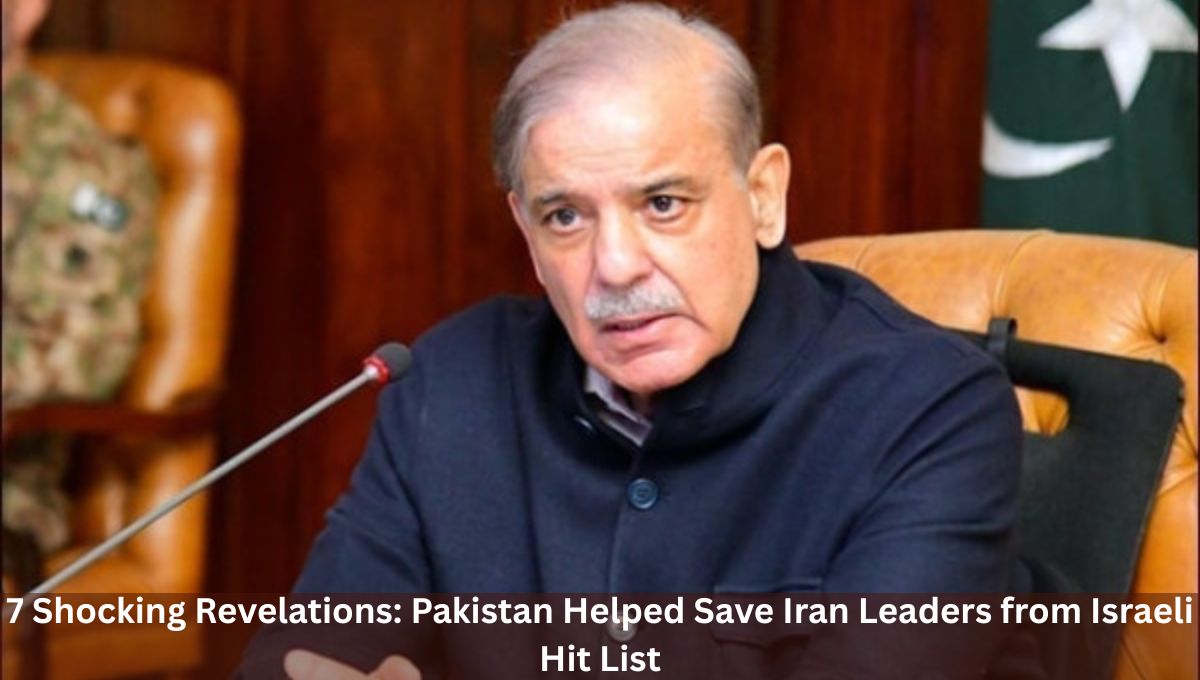
7 Shocking Revelations: Pakistan Helped Save Iran Leaders from Israeli Hit List — A quiet diplomatic move. In a conflict defined by airstrikes, assassinations, and rising global tensions, a quiet diplomatic intervention may have prevented a dramatic escalation. Reports suggest that Pakistan played a crucial behind-the-scenes role in persuading the United States to stop Israel from targeting two of Iran’s most important political figures.
Iranian Foreign Minister Abbas Araqchi and Parliamentary Speaker Mohammad Baqer Qalibaf were reportedly removed from an Israeli “hit list” after Islamabad warned that eliminating them would effectively shut down any possibility of negotiations.
This development is more than just a tactical pause—it could represent a critical inflection point in a war that has already reshaped regional power dynamics and disrupted global energy markets.
7 Shocking Revelations: Pakistan Helped Save Iran Leaders from Israeli Hit List
Who Were the Targets — And Why They Matter
Abbas Araqchi: Iran’s Diplomatic Face
Abbas Araqchi has long been one of Iran’s most experienced diplomats.
Known for his role in past nuclear negotiations, he is widely seen as a key figure capable of engaging with Western powers, even amid deep hostility.
In the current crisis, Araqchi has emerged as a central figure in managing Iran’s international messaging while maintaining a firm stance against direct negotiations under pressure.
Mohammad Baqer Qalibaf: Political Power Broker
Qalibaf, Iran’s parliamentary speaker, is a powerful figure within the country’s political and military establishment.
A former commander with deep ties to Iran’s security apparatus, he plays a pivotal role in shaping domestic and strategic decisions.
Together, these two leaders represent both the diplomatic and political pillars of Iran’s governance structure—making them high-value targets in any strategy aimed at weakening Tehran.
The Reported Israeli Plan
According to multiple reports, Israeli intelligence had obtained precise coordinates of both leaders and was preparing potential strikes as part of its broader campaign targeting Iran’s leadership.
This strategy aligns with a wider pattern seen throughout the conflict—systematic attempts to dismantle Iran’s command structure by eliminating key figures in both military and political domains.
Such “decapitation strikes” are designed to disrupt decision-making, create internal instability, and reduce an adversary’s ability to coordinate responses.
However, targeting senior political leaders carries significant risks, particularly when diplomatic channels are already fragile.
Pakistan’s Strategic Intervention
A Pragmatic Argument
A Pakistani source familiar with the discussions revealed a straightforward but powerful argument presented to Washington:
If these leaders are eliminated, there will be no one left to negotiate with.
This reasoning appears to have resonated with U.S. officials, who then reportedly urged Israel to hold back.
Why Pakistan Matters
Pakistan’s role in this situation is not accidental.
Unlike many countries, Islamabad maintains working relationships with both Washington and Tehran, allowing it to act as a rare bridge between adversaries.
Its involvement highlights an emerging reality:
traditional diplomatic channels in the region are largely frozen, and unconventional intermediaries are becoming essential.
Temporary Immunity: A Tactical Pause
Reports indicate that the removal of Araqchi and Qalibaf from the hit list is not permanent.
Instead, it is a temporary measure—lasting approximately four to five days—aligned with a potential negotiation window.
This “tactical pause” suggests that military objectives are being momentarily adjusted to create space for diplomacy.
However, the limited timeframe also underscores the fragility of the situation. If talks fail to materialize, the threat could quickly return.
The Broader Diplomatic Landscape
Multiple Mediators at Work
Pakistan is not alone in its efforts. Countries such as Egypt and Turkey are also actively engaged in mediation attempts between the United States and Iran.
These efforts reflect a growing urgency to prevent the conflict from spiraling further out of control.
Backchannel Communications
Despite public denials from Tehran, there are increasing indications that messages are being exchanged through intermediaries.
This kind of indirect communication—often referred to as backchannel diplomacy—is common in high-stakes conflicts where direct talks are politically sensitive or publicly unacceptable.
The 15-Point Proposal: What’s on the Table
At the center of these diplomatic efforts is a reported 15-point proposal from the United States aimed at ending the conflict.
Key Elements Include:
- Removal of Iran’s stockpile of highly enriched uranium
- A halt to nuclear enrichment activities
- Restrictions on Iran’s ballistic missile program
- Reduction or elimination of support for regional allies
- Reopening of the Strait of Hormuz
These demands reflect longstanding U.S. concerns but also represent significant concessions that Iran has historically resisted.
Iran’s Public Position vs Private Signals
Public Denial
Iran has consistently denied that any negotiations are taking place. Officials have emphasized that exchanging messages through intermediaries does not constitute formal talks.
This stance is partly driven by domestic considerations, where appearing to negotiate under pressure could be politically damaging.
Private Flexibility
At the same time, reports suggest that Iranian officials may be more open behind closed doors.
There are indications that Tehran could consider meeting U.S. negotiators in a neutral location.
This gap between public rhetoric and private actions is a common feature of high-stakes diplomacy.
Why Keeping These Leaders Alive Matters
Preserving Negotiation Channels
Araqchi and Qalibaf are not just political figures—they are essential nodes in any potential negotiation framework.
Removing them would:
- Disrupt communication channels
- Delay or derail diplomatic efforts
- Increase the likelihood of prolonged conflict
Avoiding Escalation
Targeting senior leaders often triggers retaliation, escalating conflicts rather than resolving them.
By stepping back, Israel and the U.S. may be signaling a willingness—however limited—to prioritize strategic outcomes over immediate tactical gains.
Impact on the Strait of Hormuz Crisis
The Strait of Hormuz remains one of the most critical flashpoints in the conflict.
Global Importance
- Roughly 20% of the world’s oil passes through the strait
- Disruptions have already caused major price spikes
- Shipping activity has dropped dramatically
Iran’s Leverage
Iran has used its control over the strait as a strategic tool, restricting access for adversaries while allowing passage for select countries.
Any meaningful resolution to the conflict will almost certainly involve reopening this vital waterway.
Economic Fallout: A Global Concern
The ongoing crisis has had immediate and severe economic implications.
Oil Market Volatility
Global oil prices have surged significantly, with benchmarks rising sharply since the conflict began.
Supply Chain Disruptions
Reduced shipping through the Gulf has affected:
- Energy supplies
- Global trade routes
- Industrial production
Wider Economic Risks
Experts warn that prolonged instability could:
- Trigger inflation worldwide
- Slow economic growth
- Increase geopolitical risk premiums
Contradictions in U.S. Messaging
The United States has sent mixed signals regarding the situation.
Claims of Progress
U.S. officials have suggested that negotiations are underway and that Iran is interested in reaching a deal.
Iran’s Rejection
Tehran, however, has publicly dismissed these claims, insisting that no talks are taking place.
This disconnect highlights the opaque nature of the current diplomatic efforts and the challenges of interpreting developments accurately.
Israel’s Strategic Calculus
Israel’s decision to temporarily remove key Iranian figures from its target list reflects a nuanced strategic approach.
Balancing Military and Political Goals
While eliminating leadership figures can weaken an adversary, it can also eliminate opportunities for negotiation.
Maintaining Pressure
Even with this temporary pause, Israel continues its broader campaign, maintaining pressure on Iran across multiple fronts.
The Role of Backchannel Diplomacy
Backchannel diplomacy is playing a central role in this conflict.
Why It Matters
- Allows communication without public commitments
- Reduces political risk for leaders
- Enables incremental progress
Risks
- Lack of transparency
- Potential for miscommunication
- Limited accountability
Despite these challenges, backchannels often provide the only viable path forward in deeply polarized conflicts.
What Happens Next?
The coming days will be critical.
Possible Scenarios
- Breakthrough in Talks
Negotiations begin, leading to a temporary ceasefire - Stalemate Continues
Diplomacy stalls, but major escalation is avoided - Return to Escalation
Military operations intensify, and targeted strikes resume
The temporary reprieve for Araqchi and Qalibaf suggests that all sides are at least considering the first option.
Conclusion: A Narrow Window for Peace
The reported intervention by Pakistan has created a narrow but meaningful window for diplomacy in one of the most dangerous conflicts in recent years.
By preventing the elimination of key Iranian leaders, Islamabad may have preserved the possibility—however fragile—of dialogue.
Yet, the situation remains highly volatile. Military operations continue, rhetoric remains hostile, and the gap between public positions and private signals persists.
Whether this moment becomes a turning point or just a brief pause will depend on what happens next.
For now, the world is watching closely, aware that decisions made in the coming days could shape not only the future of the Middle East but also the stability of the global economy.
Also Read: 8 Shocking Developments in the Pakistan–Afghanistan Conflict After Deadly Kabul Airstrikes
Also Read: Why is Pakistan rushing to help end Iran war? It’s not because of peace
Related Posts:
- 5 Shocking Reasons Trump Paused Iran Strikes and…
- 12 Shocking Changes in H-1B Visa Bill That Could…

- 7 Powerful Shifts: Trump’s New H-1B Rules Shake Up India

- 7 Shocking Impacts of Iran’s ‘Tehran Tollbooth’ on…
- 11 Explosive Facts as Trump Declares Iran War ‘Over’…
- 7 Critical Revelations Behind the Global Airbus A320…
