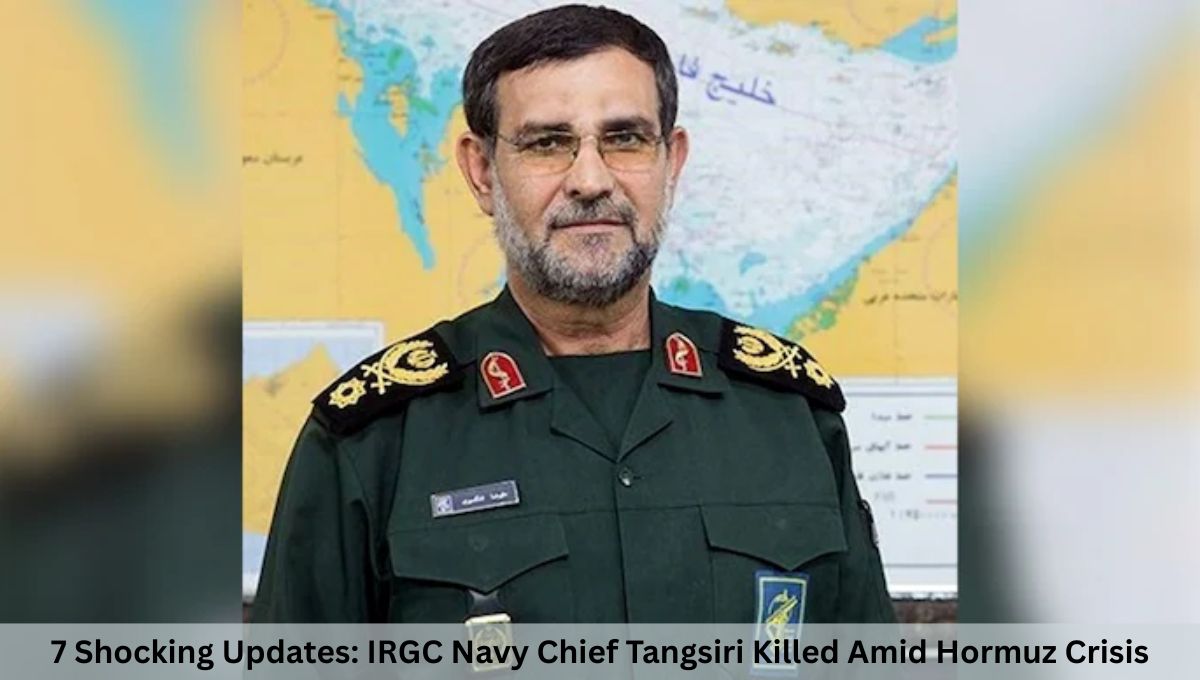
7 Shocking Updates: IRGC Navy Chief Tangsiri Killed Amid Hormuz Crisis, escalating a deeper global energy crisis. The escalating conflict in West Asia has taken a dramatic turn with reports claiming that Iran’s elite naval commander, Alireza Tangsiri, has been killed in a targeted strike near the strategically vital Strait of Hormuz.
The reported killing—attributed by Israeli media to a strike near the Iranian port city of Bandar Abbas—marks one of the most significant developments in the ongoing war involving Iran, Israel, and the United States.
However, as of now, there has been no official confirmation from Iran or Israel, leaving the situation fluid and highly sensitive.
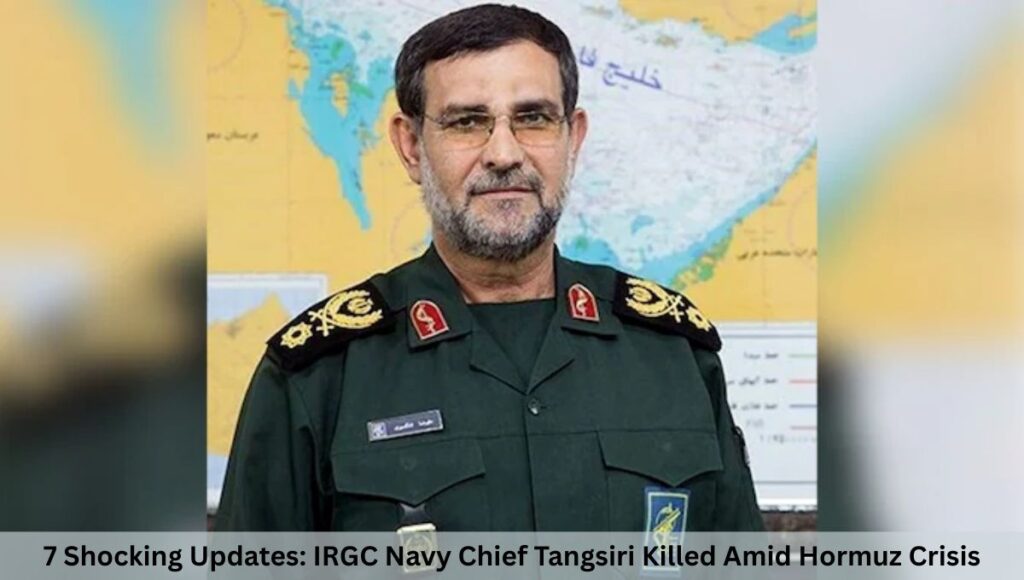
Who Was Alireza Tangsiri?
Alireza Tangsiri was a central figure in Iran’s military establishment and one of the most influential commanders within the Islamic Revolutionary Guard Corps (IRGC).
Key Highlights of His Career
- Commander of IRGC Navy since 2018
- Veteran of the Iran-Iraq War and “Tanker Wars”
- Architect of Iran’s aggressive maritime strategy in the Persian Gulf
- Played a key role in enforcing the Strait of Hormuz blockade
Tangsiri was known for his hardline stance and had recently issued warnings that US-linked oil infrastructure would be treated as military targets.
What Happened: Strike Near Hormuz
According to multiple reports citing Israeli officials:
- Tangsiri was killed in a precision strike in Bandar Abbas
- The strike targeted IRGC naval operations infrastructure
- Several of his aides may also have been killed
If confirmed, this would represent a major blow to Iran’s naval command structure, especially at a time when the country is asserting control over global shipping lanes.
Why the Strait of Hormuz Matters
The Strait of Hormuz is arguably the most critical maritime chokepoint in the world.
Key Facts
- Handles ~20% of global oil and LNG trade
- Connects the Persian Gulf to global markets
- Vital for major economies including India, China, Japan, and Europe
Since the war began, Iran has:
- Severely restricted shipping
- Allowed only “friendly” or “non-hostile” vessels
- Reduced traffic by nearly 95%
This disruption has triggered:
- Rising oil prices (above $100/barrel)
- Supply chain shocks worldwide
- Energy insecurity across Asia and Europe
Iran’s Hormuz Strategy Under Tangsiri
Under Tangsiri’s leadership, Iran implemented a multi-layered maritime control system, including:
1. Selective Blockade
Iran allowed passage only to:
- Friendly nations (India, China, Russia)
- Ships complying with Iranian regulations
2. Military Enforcement
- Deployment of IRGC naval patrols
- Use of drones and missile systems
- Monitoring and interception of vessels
3. “Toll Booth” System
Reports suggest Iran introduced:
- Transit fees (up to $2 million per vessel)
- Mandatory documentation checks
- Security escort requirements
This effectively turned Hormuz into a controlled corridor under Iranian oversight.
Massive Drop in Global Shipping
The impact of Iran’s chokehold has been unprecedented:
- Daily traffic dropped from ~120 ships to just a handful
- Only 155 crossings recorded between March 1–25
- Majority of vessels were oil and gas carriers
This sharp decline highlights the scale of disruption to global energy flows.
Killing of Iranian Leaders: A Pattern Emerges
Tangsiri’s reported death is part of a broader trend of targeted strikes on Iran’s leadership.
Other Key Figures Reportedly Killed
- Ali Khamenei (reported earlier in conflict)
- Ali Larijani
- IRGC spokesperson Ali Mohammad Naini
These assassinations indicate a systematic effort to weaken Iran’s command structure.
But Iran’s System Remains Intact
Despite losses:
- Iran’s governance is institutionally layered
- Power is distributed across military, clerical, and political bodies
- Operational continuity has been maintained
US Military Build-Up Intensifies
The United States has significantly increased its military presence in the region:
- Deployment of 82nd Airborne Division troops
- Amphibious assault ships like USS Tripoli
- Thousands of Marines positioned near the Gulf
These moves suggest:
- Preparation for possible escalation
- Pressure tactics to reopen Hormuz
- Contingency planning for wider conflict
Regional Fallout and Rising Tensions
The reported killing has heightened tensions across the Middle East:
Missile and Drone Activity
- Sirens reported in Israeli cities like Tel Aviv
- Drone interceptions in Saudi Arabia
- Missile threats across Gulf nations
Wider Threats
Iran has warned it could:
- Target US bases
- Strike Gulf infrastructure
- Disrupt other chokepoints like the Bab al-Mandeb Strait
Global Economic Impact
The Hormuz crisis, compounded by leadership losses, is having far-reaching consequences:
Energy Markets
- Oil prices surged above $100/barrel
- LNG supply disruptions
- Increased shipping insurance costs
Supply Chains
- Rising transport costs
- Delays in fuel and fertilizer shipments
- Pressure on global food production
Key Impacted Regions
- Asia (especially India and China)
- Europe
- Developing economies dependent on imports
Ceasefire Talks: Reality or Illusion?
US President Donald Trump has claimed:
- Talks with Iran are ongoing
- A deal could be close
However, Iran has:
- Denied any negotiations
- Reaffirmed its war stance
- Presented its own conditions for peace
This disconnect suggests:
- Diplomatic channels are fragile
- Conflict may continue in the near term
What Happens Next?
The reported death of Tangsiri raises several critical questions:
1. Will Iran Escalate Further?
Likely, especially if the strike is confirmed.
2. Who Replaces Tangsiri?
A more hardline commander could take over, intensifying tensions.
3. Will Hormuz Reopen Fully?
Unlikely in the short term without a ceasefire.
4. Risk of Wider War
Increasing, particularly with:
- US troop buildup
- Iranian retaliation threats
- Ongoing Israeli strikes
Conclusion
The reported killing of Alireza Tangsiri marks a potentially pivotal moment in the ongoing Middle East conflict.
As the architect of Iran’s naval strategy and a key figure behind the Strait of Hormuz blockade, his loss could reshape Iran’s military posture—but not necessarily weaken its resolve.
With global energy markets on edge, military tensions rising, and diplomacy uncertain, the world is watching closely.
Whether this development leads to de-escalation or a broader conflict will depend on the next moves by Tehran, Washington, and Tel Aviv.
For now, one thing is clear:
the stakes in the Gulf have never been higher.
Also Read: Israel Strikes Iran’s Nuclear Sites in Operation Rising Lion, Killing IRGC Chief
Also Read: Iranian naval commander Alireza Tangsiri killed in attack, Israel says
Related Posts:
- Deadly Blast at Iran's Bandar Abbas Port: Death Toll…
- 12 Explosive Claims as Donald Trump Says Iran War…
- 10 Explosive Signals Trump Says Iran War Could End…
- 3 Explosive Conditions Iran Sets to End War with US…
- 10 Explosive Strikes: Israel Bombs Tehran Oil Depots…

- 10 Explosive Warnings as Donald Trump Calls Iran…