
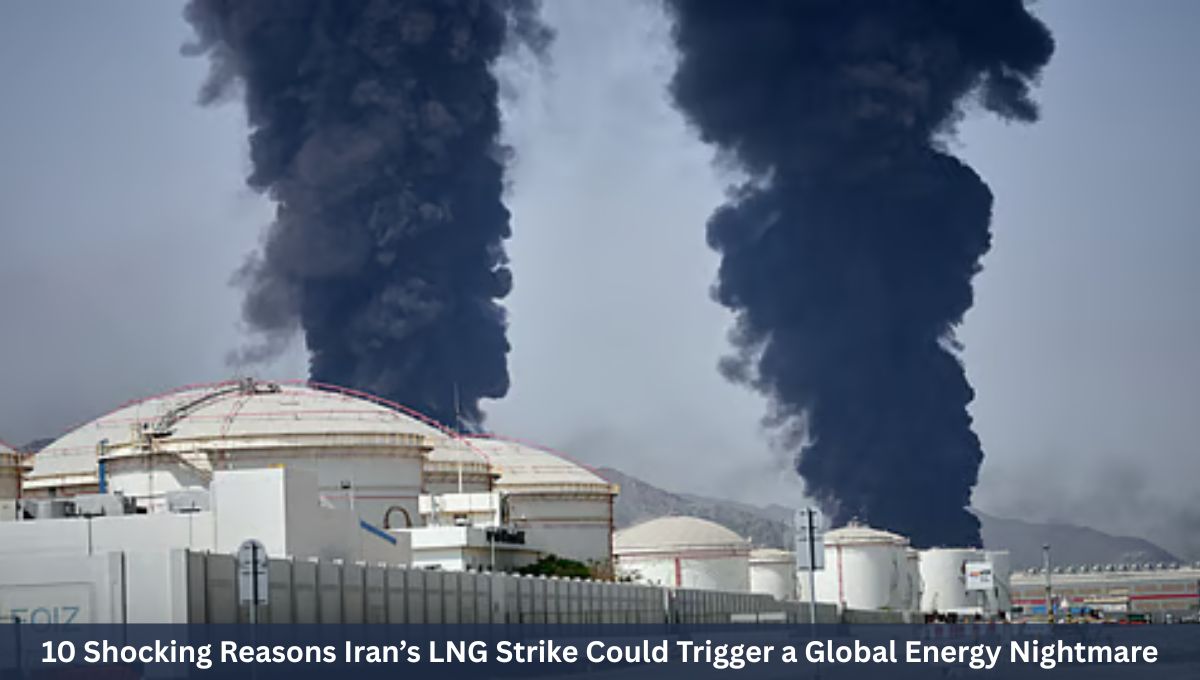
10 Shocking Reasons Iran’s LNG Strike Could Trigger a Global Energy Nightmare, threatening supply chains across Europe and Asia. The world may be standing at the edge of one of the most severe energy disruptions in modern history.
What began as a regional conflict in the Middle East has now escalated into a full-blown global concern, with direct consequences for energy markets, economies, and geopolitical stability.
Iran’s missile strikes on Qatar’s Ras Laffan industrial complex — the largest liquefied natural gas (LNG) hub in the world — have sent shockwaves across global markets.
The scale of the attack, combined with the strategic importance of the facility, has raised fears of what many analysts are calling an “Armageddon scenario” for energy-dependent regions, particularly Europe and Asia.
This is not just another geopolitical flare-up. It is a structural shock to the global energy system.
10 Shocking Reasons Iran’s LNG Strike Could Trigger a Global Energy Nightmare
What Happened at Ras Laffan?
A Strike on the Heart of Global LNG Supply
Ras Laffan is not just any industrial site. It is the backbone of Qatar’s LNG exports and one of the most critical energy hubs on the planet.
The facility processes vast natural gas reserves into LNG, enabling transport to markets across continents.
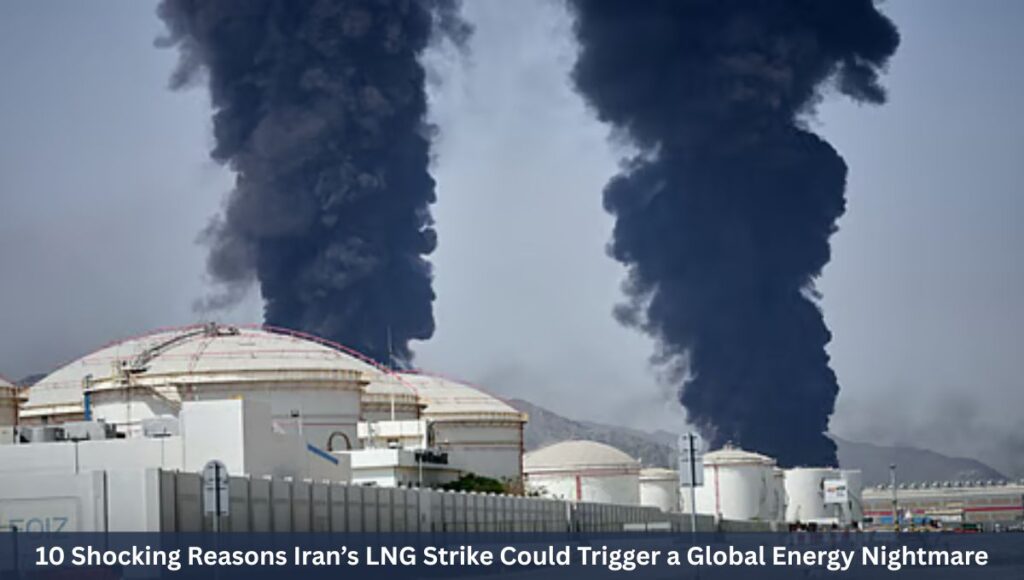
Iran’s coordinated missile strikes targeted this infrastructure in two waves, causing significant damage to key liquefaction units.
Early assessments suggest that at least two LNG trains have been knocked offline, representing a substantial portion of Qatar’s export capacity.
Why Ras Laffan Matters Globally
- Supplies roughly 20% of global LNG demand
- Produces 77 million tonnes annually
- Supports long-term contracts with Europe and Asia
- Acts as a stabilizing force in global energy markets
The scale of the disruption is unprecedented. Losing even a fraction of this capacity creates ripple effects across continents.
Immediate Market Shock: Prices Surge Worldwide
Oil Prices Spike
Global oil markets reacted instantly. Brent crude surged past $119 per barrel, marking one of the sharpest increases in recent years.
Although prices later stabilized, volatility remains extremely high.
Gas Prices Surge in Europe
European gas markets experienced an immediate shock:
- Prices surged up to 35%
- Stabilized around €70 per megawatt hour
- Still significantly elevated compared to pre-crisis levels
Electricity Costs Set to Rise
Since electricity pricing in Europe is closely tied to gas costs, consumers and industries are now bracing for:
- Higher power bills
- Increased inflation
- Reduced industrial competitiveness
Why This Is Being Called an “Armageddon Scenario”
Energy analysts have long warned about the vulnerability of concentrated LNG infrastructure. Ras Laffan represented a worst-case scenario — and now that scenario is unfolding.
Key Reasons for the Alarm
1. Scale of Supply Loss
Around 17% of Qatar’s LNG output has been disrupted, with repairs expected to take years.
2. No Quick Replacement
LNG infrastructure is complex and cannot be easily substituted. New projects take years to build.
3. Global Dependence
Countries like Japan, South Korea, China, and much of Europe rely heavily on Qatari LNG.
4. Timing
The disruption comes at a time when global energy markets are already strained due to geopolitical tensions.
Europe Faces a Renewed Energy Crisis
Post-Russia Dependency Backfires
After reducing reliance on Russian gas, Europe turned heavily toward LNG imports — particularly from Qatar. That strategy is now under severe stress.
Key Challenges Ahead
- Difficulty filling gas storage before winter
- Increased competition with Asian buyers
- Potential return to coal-based energy
Economic Impact
- Rising inflation
- Industrial slowdown
- Risk of recession in energy-intensive economies
Asia’s Energy Security Under Threat
Asia, already dealing with tight energy supplies, now faces an even more precarious situation.
Major Risks
- Supply shortages for Japan and South Korea
- Increased costs for developing economies
- Industrial disruptions in Southeast Asia
Shift to Alternative Energy Sources
Some countries may:
- Increase coal usage
- Delay energy transition goals
- Compete aggressively for U.S. LNG supplies
Years of Repair: Why Recovery Won’t Be Quick
Complexity of LNG Infrastructure
LNG plants involve:
- Cryogenic processing systems
- High-pressure pipelines
- Specialized storage and transport mechanisms
Damage to these systems requires:
- Extensive engineering work
- Secure conditions for repairs
- Significant financial investment
Timeline Estimates
- Repairs could take 3 to 5 years
- Expansion projects likely delayed
- Full recovery uncertain even after conflict ends
Global Supply Chain Fallout
The disruption extends beyond LNG:
- LPG supply shortages affecting households
- Reduced helium impacting semiconductor industries
- Declines in petrochemical outputs
Industries at Risk
- Manufacturing
- Technology (chip production)
- Transportation
- Food and agriculture
Geopolitical Tensions Intensify
A Wider Conflict Emerging
The strikes are part of a broader escalation involving multiple countries in the region. Attacks on energy infrastructure have transformed the conflict into an economic war.
Strategic Implications
- Increased militarization of energy corridors
- Rising tensions among global powers
- Greater risk of supply chain disruptions
Cracks in Global Alliances
Diverging Strategies
Recent developments suggest differences in how major allies approach the conflict. While some focus on limiting escalation, others pursue aggressive strategies targeting critical infrastructure.
Impact on War Dynamics
- Reduced coordination among allies
- Increased unpredictability
- Higher risk of miscalculation
The Strait of Hormuz Factor
A Critical Chokepoint
The Strait of Hormuz remains one of the most important energy transit routes globally, handling:
- Around 20% of global oil supply
- Significant LNG shipments
Rising Risks
- Potential blockades
- Attacks on shipping
- Insurance and shipping cost spikes
Any disruption here would amplify the current crisis dramatically.
Energy Markets Enter a New Era of Volatility
From Stability to Chaos
The global energy system is shifting from:
- Predictable supply chains
to - Highly volatile and fragmented markets
New Market Realities
- Frequent price shocks
- Political influence on energy flows
- Regional disparities in energy access
Who Benefits — and Who Suffers?
Potential Winners
- U.S. LNG exporters
- Alternative energy producers
- Oil-rich nations outside the conflict zone
Major Losers
- Energy-importing countries
- Industrial economies
- Developing nations with limited resources
The Risk of a Global Recession
Energy crises have historically triggered economic downturns. This situation carries similar risks.
Warning Signs
- Rising inflation
- Declining industrial output
- Weak consumer demand
If energy prices remain elevated, the global economy could face a prolonged slowdown.
The Shift Back to Fossil Fuels
Ironically, the crisis may reverse progress on clean energy.
Short-Term Adjustments
- Increased coal usage
- Delayed renewable investments
- Emergency energy policies
Long-Term Implications
- Slower energy transition
- Higher emissions
- Policy uncertainty
A Fragmented Energy World
Experts warn of a divided global energy landscape:
- “Energy haves” with secure supply
- “Energy have-nots” facing shortages
This divide could reshape global economics and geopolitics for years.
What Happens Next? Key Scenarios
Scenario 1: Rapid De-escalation
- Limited long-term damage
- Gradual recovery of supply
Scenario 2: Prolonged Conflict
- Sustained high prices
- Structural changes in energy markets
Scenario 3: Full Escalation
- Severe global shortages
- Deep economic crisis
Conclusion: A Turning Point for Global Energy
The attack on Qatar’s LNG infrastructure marks a pivotal moment in the global energy landscape.
It underscores the vulnerability of critical supply chains and the far-reaching consequences of geopolitical conflict.
For Europe and Asia, the implications are immediate and severe. For the world, this could be the beginning of a new era defined by uncertainty, competition, and volatility in energy markets.
Whether this crisis evolves into a full-scale “Armageddon scenario” depends on what happens next — on diplomacy, strategy, and the ability of global leaders to prevent further escalation.
But one thing is clear:
the world’s energy system will never be the same again.
Also Read: 10 Explosive Updates as Trump Warns “No More Attacks” After Iran Strikes Qatar LNG
Also Read: Iran warns it will show ‘zero restraint’ if infrastructure attacked again
Related Posts:
- 7 Critical Ways Iran’s Yuan Oil Plan Could Shake the…
- 7 Urgent Warnings as Saudi Arabia Signals Possible…

- 10 Powerful Revelations from the Trump–Putin Call on…

- 10 Critical Risks if the Strait of Hormuz Closes…

- 7 Explosive Reasons Oil Prices Are Surging as Trump…

- In 8 Moves, EU Targets China-Linked Refineries and…
