

In a major trilateral move, China, Pakistan, and Taliban-Led Afghanistan Expand CPEC in Strategic Response to India’s Outreach. Days after India’s historic diplomatic outreach to the Taliban regime, China convened an informal but highly significant trilateral meeting with Pakistan and Afghanistan. The key outcome: a strategic agreement to extend the China-Pakistan Economic Corridor (CPEC) into Afghanistan, marking a major geopolitical shift in South Asia.
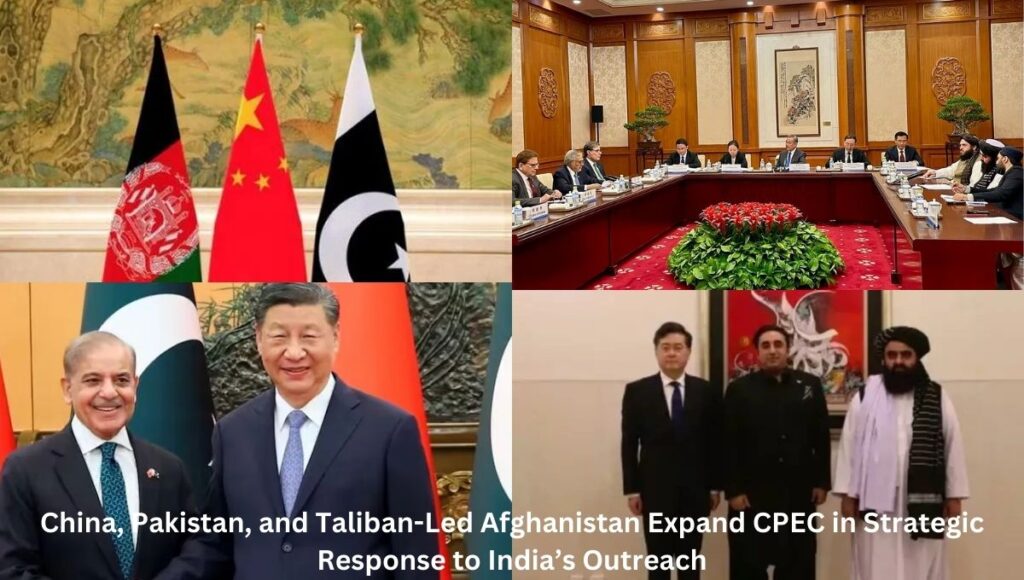
China, Pakistan, and Taliban-Led Afghanistan Expand CPEC in Strategic Response to India’s Outreach
China, Pakistan, and Afghanistan Deepen Trilateral Cooperation, Expand CPEC
China, Pakistan, and Afghanistan agree to expand the China-Pakistan Economic Corridor (CPEC) amid India’s growing engagement with the Taliban. The development signals a new chapter in regional diplomacy and strategic competition.
The meeting, held in Beijing and moderated by Chinese Foreign Minister Wang Yi, brought together Pakistan’s Deputy Prime Minister and Foreign Minister Ishaq Dar and Afghanistan’s acting Foreign Minister Amir Khan Muttaqi.
India’s Taliban Diplomacy Sparks Regional Realignments
India’s External Affairs Minister S. Jaishankar recently held a landmark phone conversation with Amir Khan Muttaqi, marking the first ministerial-level contact between India and the Taliban since August 2021.
This follows a series of earlier diplomatic engagements, including a significant meet in Dubai between Foreign Secretary Vikram Misri and Afghan leaders, covering humanitarian aid, Chabahar Port, and regional security.
CPEC’s Expansion into Afghanistan: A Strategic Gamechanger
The extension of CPEC into Afghanistan, under China’s Belt and Road Initiative (BRI), promises enhanced connectivity and infrastructure development in the war-torn nation. However, the move raises strategic concerns for India:
- Encroachment on Indian Interests: India has long objected to CPEC as it traverses Pakistan-occupied Kashmir (PoK). Extending the project to Afghanistan deepens India’s exclusion from regional trade and infrastructure networks.
- Geopolitical Encirclement: With Chinese presence in Gwadar, Hambantota, and now potentially Afghanistan, India fears a tightening String of Pearls around its borders.
- Security Threats: Pakistan’s frequent claims of Afghan-based terrorism and the Taliban’s alleged inaction have strained ties. A stronger China-Pakistan-Afghanistan axis could embolden cross-border challenges for India, especially in Kashmir.
China’s Diplomatic Offensive
China, the first country to accept an ambassador from the Taliban administration (without formal recognition), used this meeting to reaffirm its intention to foster closer ties with Kabul and Islamabad. According to Chinese Foreign Ministry statements, the three sides agreed to:
- Appoint ambassadors “as soon as possible”
- Deepen trade and transit ties
- Expand cooperation on counter-terrorism
- Support reconstruction and development initiatives
India’s Strategic Projects Face New Headwinds
India’s investments in Chabahar Port and the International North-South Transport Corridor (INSTC) aim to provide alternate access to Central Asia, bypassing Pakistan.
However, with Afghanistan now aligned with CPEC, these initiatives may face competitive pressure from China-backed routes.
India has also quietly allowed the Taliban administration to take over Afghan consulates in New Delhi, Mumbai, and Hyderabad, signaling a practical shift toward functional diplomacy.
Pakistan and Afghanistan Agree to Normalize Diplomatic Ties
Another outcome of the trilateral meeting is the mutual agreement between Islamabad and Kabul to restore ambassadors and upgrade diplomatic ties a significant development given the deteriorating relations since Pakistan’s 2024 airstrikes on Paktika Province, which resulted in civilian casualties.
Next Steps: Trilateral Meeting in Kabul
According to Pakistan’s Foreign Office, the 6th Trilateral Foreign Ministers’ Meeting is scheduled to take place in Kabul soon. The nations reaffirmed commitment to regional security, economic connectivity, and shared prosperity through infrastructure, trade, and anti-terror measures.
Conclusion: A New Regional Axis Emerges
The trilateral alignment between China, Pakistan, and Taliban-led Afghanistan introduces a powerful new dynamic in South Asian geopolitics.
While the initiative offers developmental opportunities for Afghanistan, it also sidelines Indian interests and adds complexity to New Delhi’s regional strategy.
India’s outreach to the Taliban, including high-level contacts and consular recognition, may continue to evolve in response.
However, the strategic implications of a deepened China-Pakistan-Afghanistan corridor are likely to remain a central focus of India’s foreign and security policy in the coming months.
Also Read: China, Pakistan, Bangladesh Push to Replace SAARC: Strategic Bloc Raises Alarm Bells in India
Also Read: China-Pak economic corridor to extend to Afghanistan: Why this is a new headache for India
Related Posts:
- Afghanistan–Pakistan War 2025: Inside the 48-Hour Ceasefire

- ICC Issues Arrest Warrants for Taliban Leaders Over…
- Pakistan–Afghanistan Border Conflict 2025: Ceasefire…

- ‘Dragon and Elephant Must Come Together’: PM Modi…
- 7 Shocking Details: 13-Year-Old Executes Man Before…

- In 8 Moves, EU Targets China-Linked Refineries and…
