
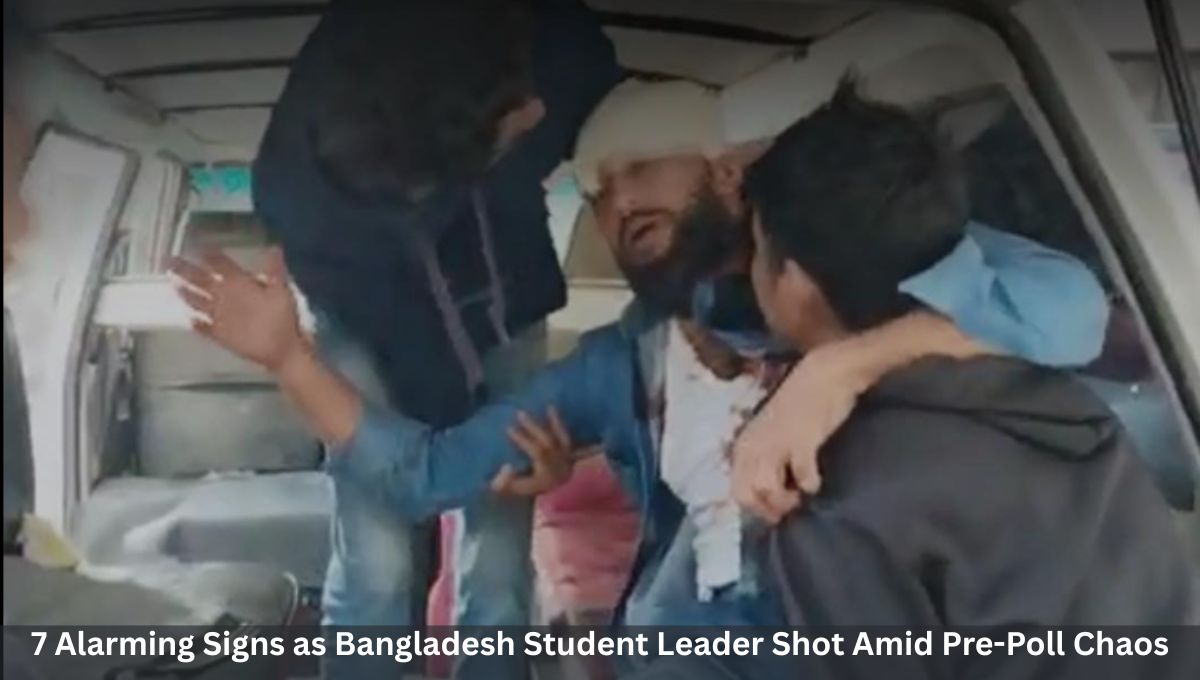
7 Alarming Signs as Bangladesh Student Leader Shot Amid Pre-Poll Chaos sparking nationwide unrest.Bangladesh’s deteriorating law-and-order situation took another alarming turn on Monday after a senior student leader from the National Citizen Party (NCP) was shot in the head in broad daylight in Khulna.
The attack comes just days after the killing of radical youth leader Sharif Osman Hadi, an assassination that unleashed widespread protests, vandalism, and political unrest across the country.
The latest shooting has intensified fears that Bangladesh is sliding into a prolonged phase of political violence as the country prepares for national elections scheduled for February 2026.
With no arrests announced and investigations still unfolding, the incident has deepened anxieties about security, governance, and the safety of political actors.
7 Alarming Signs as Bangladesh Student Leader Shot Amid Pre-Poll Chaos
Who Was Shot: Motaleb Sikder Identified
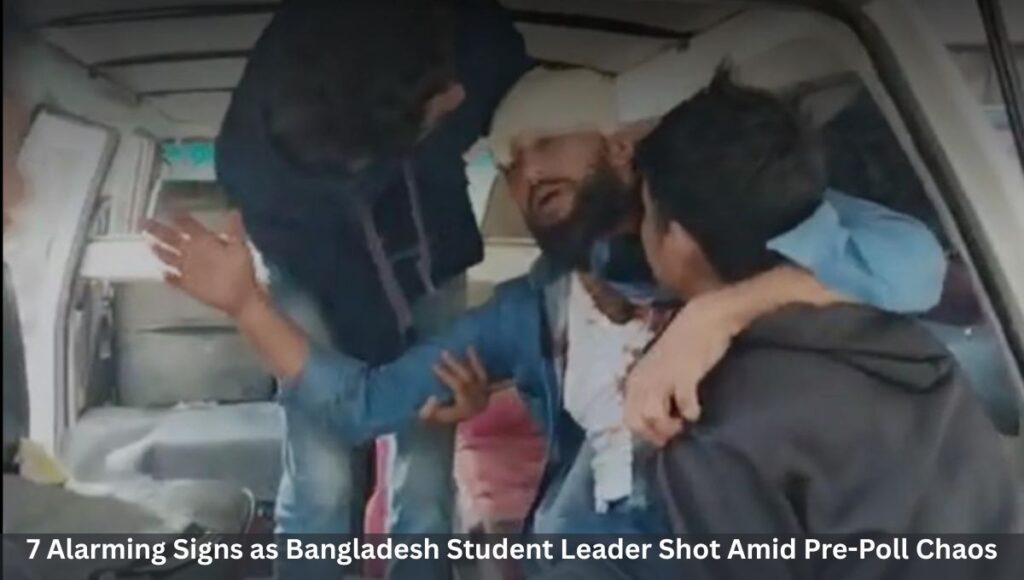
The victim has been identified as Muhammad Motaleb Sikder, 42, a senior leader of the National Citizen Party and a central organiser of its labour wing, Jatiya Sramik Shakti.
According to Bangladeshi media reports, Sikder serves as:
- Khulna divisional chief of the NCP
- Central organiser of NCP Sramik Shakti
- A key figure in labour mobilisation efforts ahead of elections
Party officials described him as a prominent organiser who had been actively preparing for an upcoming divisional labour rally in Khulna.
Details of the Shooting in Khulna
Timeline of the Attack
- Time: Around 11:45 am on Monday
- Location: A house in the Sonadanga area of Khulna city
- Nature of attack: Gunshot fired at close range, targeting the head
According to Prothom Alo, unidentified assailants opened fire while Sikder was inside the house. The attackers fled the scene immediately after the shooting.
Medical Condition: Bullet Grazed the Head
Sikder sustained a gunshot injury to the left side of his head and was rushed to Khulna Medical College Hospital in critical condition.
Police officials later confirmed that:
- The bullet entered through one side of his ear
- Pierced the skin
- Exited from the other side
After emergency treatment, Sikder was shifted to a private diagnostic centre for a CT scan. Doctors later stated that he was out of immediate danger, though he remains under close medical observation.
Police Response and Investigation
Animesh Mandal, Inspector (Investigation) at Sonadanga Police Station, confirmed the shooting and said an investigation is underway.
“He was rushed to Khulna Medical College Hospital after being shot. Further investigation is ongoing,” Mandal said.
Authorities have not yet identified the attackers or established a clear motive. No arrests have been announced so far.
A Second High-Profile Attack in Days
The shooting of Motaleb Sikder occurred just days after the assassination of Sharif Osman Hadi, a polarising youth leader whose death plunged Bangladesh into chaos.
Hadi, 32, was:
- A spokesperson for Inqilab Mancha
- A key figure in the 2024 student uprising
- Known for strong anti-India rhetoric
He was shot by masked assailants on December 12 while campaigning in Dhaka.
Osman Hadi’s Killing and Its Aftermath
Attack and Death
Hadi was shot at close range while leaving a political event in Dhaka’s Bijoynagar area. After initial treatment in Dhaka, he was airlifted to Singapore on December 15 and admitted to the Neurosurgical ICU at Singapore General Hospital.
Despite intensive medical efforts, Hadi succumbed to his injuries on December 18.
Nationwide Protests and Violence
Hadi’s death triggered violent protests across Bangladesh, including:
- Arson and vandalism of public buildings
- Attacks on media houses such as Prothom Alo and The Daily Star
- Stone-pelting at the Assistant Indian High Commissioner’s residence in Chattogram
- Road blockades and clashes with police
The unrest exposed the fragile grip of the interim government on law and order.
Bangladesh’s Interim Government Under Scrutiny
Bangladesh is currently governed by an interim administration led by Nobel Laureate Muhammad Yunus, who is perceived to have close ties with the student-led National Citizen Party.
Critics accuse the interim government of:
- Failing to control escalating political violence
- Allowing radical elements to gain influence
- Losing control over public security
Former Prime Minister Sheikh Hasina, who was ousted during last year’s student uprising and later fled to India, has blamed the Yunus-led administration for worsening instability.
Radical Rhetoric and Anti-India Statements
The NCP, formed earlier this year, has drawn controversy for repeated provocative statements, particularly against India.
Following Hadi’s killing, an NCP leader publicly threatened that Dhaka would:
- Shelter forces hostile to India
- Help sever India’s “Seven Sisters” northeastern states
India dismissed the claims, urging Bangladesh’s interim government to ensure internal law and order and conduct peaceful elections.
Who Is Motaleb Sikder?
Political Profile
- Age: 42
- Residence: Sheikhpara Palli, Sonadanga, Khulna
- Position: NCP Khulna divisional chief
- Role: Central organiser, NCP Sramik Shakti
Sikder rose through the ranks as a labour organiser and was considered a key mobiliser within the student-led political movement.
A ‘Mystery Woman’ Angle Emerges
Bangladeshi news portal Jagonews24 reported that police are examining a possible link involving a “mystery woman” who lived in a rented house near the crime scene.
According to reports:
- The house was searched after the shooting
- Foreign liquor bottles and drug-related items were recovered
- Police are trying to identify the woman and her connection to the attack
Authorities have not officially confirmed whether the angle is politically relevant or criminal in nature.
Violence Spreading Beyond Dhaka
The attack in Khulna highlights how political violence is no longer confined to the capital.
Similar incidents have been reported in:
- Chattogram
- Khulna
- Dhaka outskirts
Security analysts warn that the spread of violence to regional cities signals a deeper breakdown in public order.
Attacks on Minorities Raise Alarm
Amid the unrest, there have been increasing reports of:
- Attacks on Hindu minorities
- Lynchings and mob violence
- Destruction of religious and cultural sites
The killing of Hindu garment worker Dipu Chandra Das has drawn international attention and criticism.
Elections Looming Amid Fear
Bangladesh is expected to hold general elections in February 2026, but the current climate raises serious questions about their feasibility.
Observers note:
- Political killings are increasing
- Law enforcement appears overstretched
- Voters face an atmosphere of fear
Without decisive action, analysts warn the violence could escalate further as campaigning intensifies.
India Suspends Visa Operations in Chattogram
In response to growing security concerns, India has temporarily suspended visa services at its Chattogram centre, reflecting rising diplomatic unease.
The decision underscores how Bangladesh’s internal instability is beginning to affect regional relations.
No Arrests, Few Answers
Despite multiple high-profile attacks, Bangladeshi police have admitted they have no specific information about the whereabouts of key suspects involved in Osman Hadi’s killing.
Hadi’s party issued a 24-hour ultimatum demanding visible progress in arrests—an ultimatum that has since expired without public results.
A Climate of Impunity
Political analysts argue that the lack of swift arrests risks creating a culture of impunity, emboldening attackers and deepening mistrust in institutions.
The shooting of Sikder, so soon after Hadi’s killing, reinforces fears that violence is becoming a political tool.
Conclusion: A Grim Road to the Polls
The shooting of Motaleb Sikder is not an isolated incident but part of a dangerous pattern unfolding across Bangladesh.
With student leaders targeted, protests turning violent, minorities under threat, and political rhetoric hardening, the country faces a critical test ahead of its elections.
Unless law and order is restored swiftly and transparently, Bangladesh risks entering the polls under the shadow of fear, instability, and unresolved bloodshed—conditions that threaten not only democratic legitimacy but national cohesion itself.
Also Read: 7 Shocking Developments After Bangladesh Student Leader’s Assassination
Also Read: If India dares to look at Bangladesh with ill intent…: Pak leader’s war threat
Related Posts:
- 7 Shocking Developments After Bangladesh Student…
- 7 Key Insights as Daylight Saving Time Ends — What…

- 11 Powerful Moments as Tarique Rahman Returns to…

- Pakistan Foreign Minister Ishaq Dar’s Historic Visit…
- 9 Defining Moments as Tarique Rahman Returns to…

- Nepal Lifts Social Media Ban Amid Youth Protests,…
