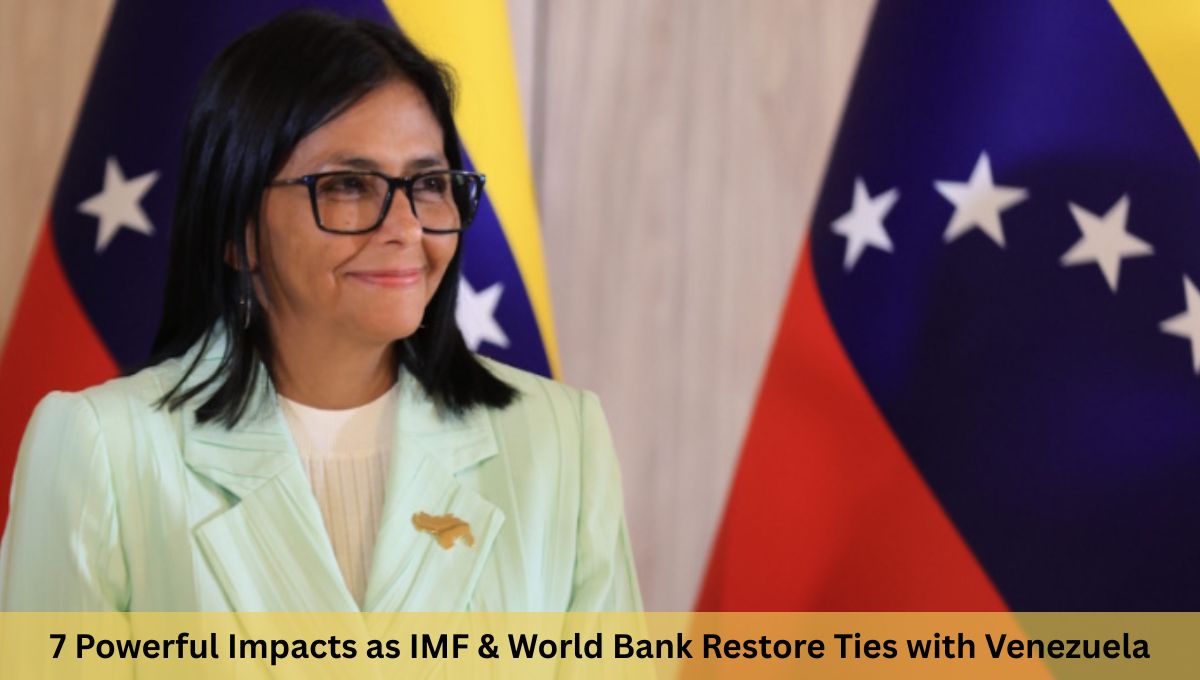
7 Powerful Impacts as IMF & World Bank Restore Ties with Venezuela, paving a global economic comeback. In a major geopolitical and financial development, the International Monetary Fund and the World Bank have officially resumed ties with Venezuela after a years-long suspension.
Thank you for reading this post, don't forget to subscribe!The move marks a significant shift in global recognition and economic engagement with the South American nation, opening the door to financial assistance, debt restructuring, and renewed investor confidence.
For a country grappling with one of the world’s most severe economic crises, this decision could reshape its financial future.
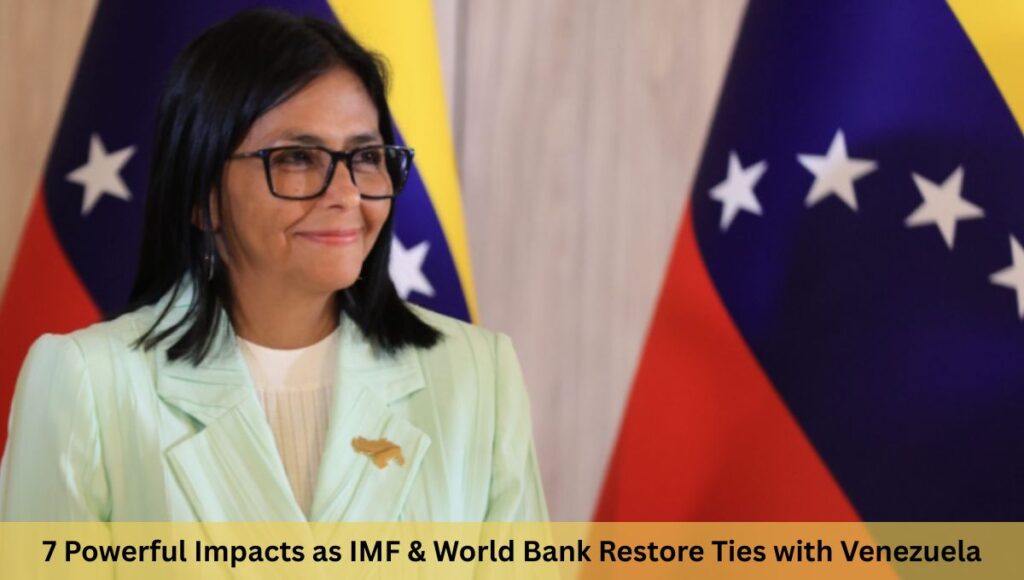
7 Powerful Impacts as IMF & World Bank Restore Ties with Venezuela
Why IMF and World Bank Cut Ties in 2019
To understand the significance of this restoration, it’s critical to revisit why relations were severed in the first place.
Political Crisis and Leadership Dispute
In 2019, Venezuela became the center of a global diplomatic divide.
Following disputed presidential elections, the international community split over whether to recognize:
- Nicolás Maduro
- Juan Guaidó
Due to the lack of consensus, both the IMF and World Bank suspended dealings with Caracas, effectively cutting the country off from multilateral financial support.
Economic Isolation Deepened
The fallout was severe:
- No access to emergency funding
- Limited international financial engagement
- Reduced investor confidence
This isolation compounded Venezuela’s already fragile economic situation.
What Has Changed Now?
The resumption of ties reflects both political and institutional shifts.
Recognition of Interim Leadership
The IMF announced it is now engaging with Venezuela under acting President Delcy Rodríguez.
IMF Managing Director Kristalina Georgieva stated that the decision was guided by the consensus of member nations, allowing the institution to re-engage in a way that benefits the Venezuelan people.
The World Bank followed shortly after, aligning its decision with the IMF.
Role of the United States in the Shift
The policy shift did not happen in isolation.
Washington’s Changing Approach
The administration of Donald Trump has taken steps to legitimize the current Venezuelan leadership, including:
- Lifting sanctions on Delcy Rodríguez
- Encouraging international institutions to re-engage
- Promoting economic opening in Venezuela
This backing played a key role in influencing global financial institutions.
What This Means for Venezuela’s Economy
The restoration of ties is not symbolic—it has tangible economic implications.
Access to IMF Resources
One of the most immediate benefits is potential access to IMF funding mechanisms, including:
- Special Drawing Rights (SDRs)
- Emergency financial assistance
- Technical advisory support
Estimates suggest Venezuela could access up to $5 billion in SDR-related assets.
Debt Restructuring Possibilities
Venezuela faces an enormous debt burden:
- Total external debt: $150–170 billion
- Defaulted bonds: around $60 billion
Re-engagement with the IMF is often a prerequisite for sovereign debt restructuring.
This move could:
- Enable negotiations with creditors
- Establish a sustainable debt framework
- Restore financial credibility
Economic Assessment After Two Decades
The IMF is expected to conduct a full economic assessment of Venezuela for the first time in nearly 20 years.
This process will:
- Provide accurate economic data
- Identify structural weaknesses
- Guide future reforms
Reliable data is critical for both policymakers and investors.
Impact on Global Oil and Investment Markets
Venezuela holds some of the world’s largest oil reserves.
Renewed Interest in Energy Sector
With improved international engagement:
- Foreign investors may return
- Oil production could increase
- Global supply dynamics may shift
Countries and corporations are closely watching developments in Venezuela’s oil and mining sectors.
A Diplomatic Victory for Venezuela
Acting President Delcy Rodríguez described the move as a major achievement.
Strategic Diplomacy Pays Off
Rodríguez credited:
- International support
- Diplomatic outreach
- Policy adjustments
Her government views the restoration as validation of its legitimacy on the global stage.
What the World Bank Brings to the Table
While the IMF focuses on macroeconomic stability, the World Bank plays a different role.
Development and Infrastructure Support
The World Bank can provide:
- Infrastructure financing
- Social development programs
- Poverty reduction initiatives
Notably, its last loan to Venezuela was in 2005, highlighting how long the country has been cut off from such support.
Challenges Ahead: Not a Guaranteed Recovery
Despite optimism, significant risks remain.
Political Uncertainty
Venezuela’s political landscape is still fragile:
- Calls for fresh elections
- Opposition resistance
- Questions over long-term leadership stability
These factors could impact sustained engagement.
Economic Structural Issues
Key challenges include:
- Hyperinflation legacy
- Weak institutions
- Currency instability
- Oil sector inefficiencies
Reforms will be necessary for meaningful recovery.
Security and Investor Confidence
Investors will closely assess:
- Legal protections
- Security conditions
- Policy consistency
Without stability, capital inflows may remain limited.
The Role of Data and Transparency
For years, Venezuela lacked reliable economic data.
Why This Matters
IMF engagement will:
- Improve transparency
- Standardize reporting
- Build investor trust
Accurate data is foundational for economic recovery.
Broader Implications for Latin America
This development extends beyond Venezuela.
Regional Economic Signals
The move could:
- Influence investor sentiment in Latin America
- Encourage reforms in other struggling economies
- Strengthen multilateral cooperation
It also signals that global institutions are willing to re-engage under evolving political conditions.
Timeline: From Isolation to Re-engagement
2019: IMF and World Bank suspend ties
2020: IMF rejects $5 billion emergency loan request
2026 (early): Political transition and leadership change
2026 (now): Ties officially restored
This timeline highlights how quickly geopolitical dynamics can shift.
What Happens Next?
The immediate next steps are likely to include:
Short-Term Actions
- Economic data collection
- Initial IMF consultations
- Technical assistance
Medium-Term Developments
- Potential funding programs
- Debt restructuring talks
- Policy reforms
Long-Term Outlook
- Economic stabilization
- Investment inflows
- Gradual recovery
Global Reactions and Market Sentiment
Markets have responded cautiously but positively.
Investor Perspective
Investors see:
- Opportunity in distressed assets
- Potential for high returns
- Risks tied to political uncertainty
Bond markets, in particular, are watching closely.
Conclusion: A Critical Step, Not the Final Answer
The decision by the IMF and World Bank to restore ties with Venezuela represents a pivotal moment—but not a guaranteed solution.
It opens doors:
- To funding
- To reform
- To global reintegration
But the outcome depends on how Venezuela navigates the next phase.
For now, one thing is clear:
after years of isolation, Venezuela is back on the global financial map.
Also Read: 9 Shocking Facts Behind Germany’s €30 Million Christmas Bank Heist
Also Read: Chevron Expands Heavy Oil Footprint in Venezuela
Related Posts:
- 7 Heartbreaking Facts About Venezuela's Earthquake Disaster
- 7 Key Highlights That Will Shape the High-Stakes G20…

- 5 Major Takeaways from the US Supreme Court's…

- 7 Powerful Facts About Ayatollah Ali Khamenei’s…

- 7 Powerful Measures: Trump Sanctions Russian Oil…

- 3 Explosive Conditions Iran Sets to End War with US…