7 Critical Moves as 22 Nations Pressure Iran to Reopen Strait of Hormuz amid rising global energy concerns. The escalating crisis surrounding the Strait of Hormuz has reached a critical juncture, as a coalition of 22 countries has issued a unified call urging Iran to halt attacks on commercial shipping and restore safe passage through one of the world’s most vital energy corridors.
Thank you for reading this post, don't forget to subscribe!This growing geopolitical standoff is no longer a regional concern—it has rapidly evolved into a global economic and security issue.
With approximately 20% of the world’s oil and liquefied natural gas (LNG) passing through the Strait, any disruption has immediate and far-reaching consequences for energy markets, inflation, and international trade.
As tensions intensify following recent military escalations involving the United States and its allies, the situation underscores the fragile balance between military strategy, economic stability, and diplomatic engagement.
7 Critical Moves as 22 Nations Pressure Iran to Reopen Strait of Hormuz
Why the Strait of Hormuz Matters to the World
A Critical Energy Lifeline
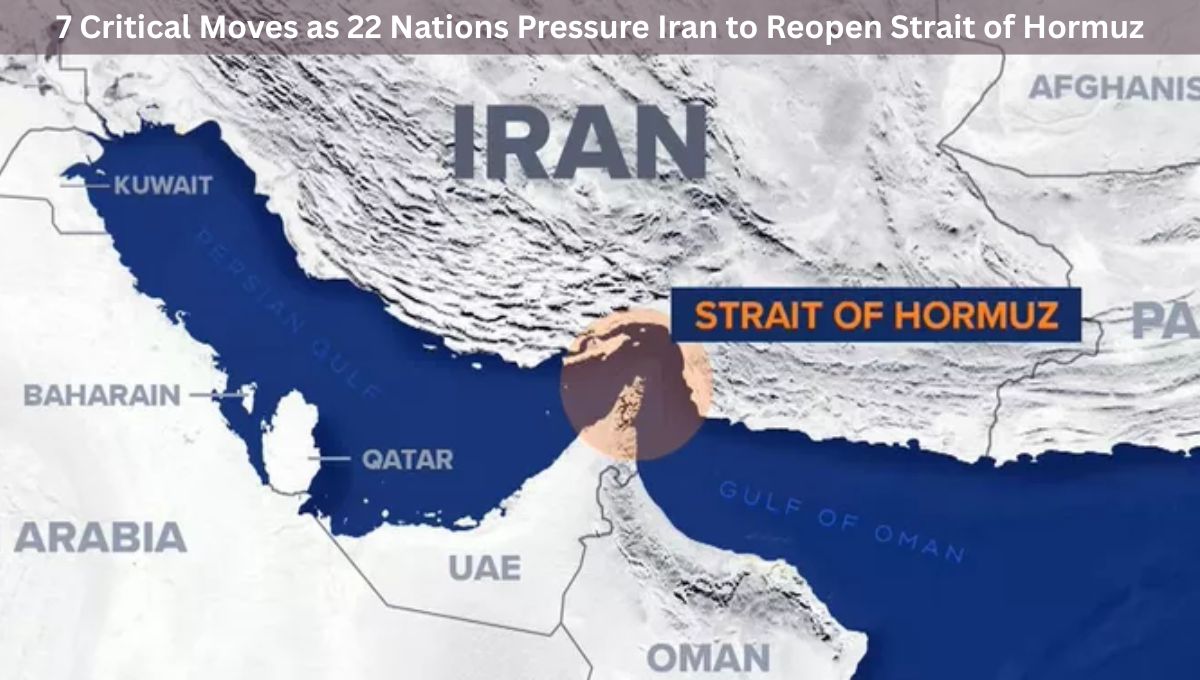
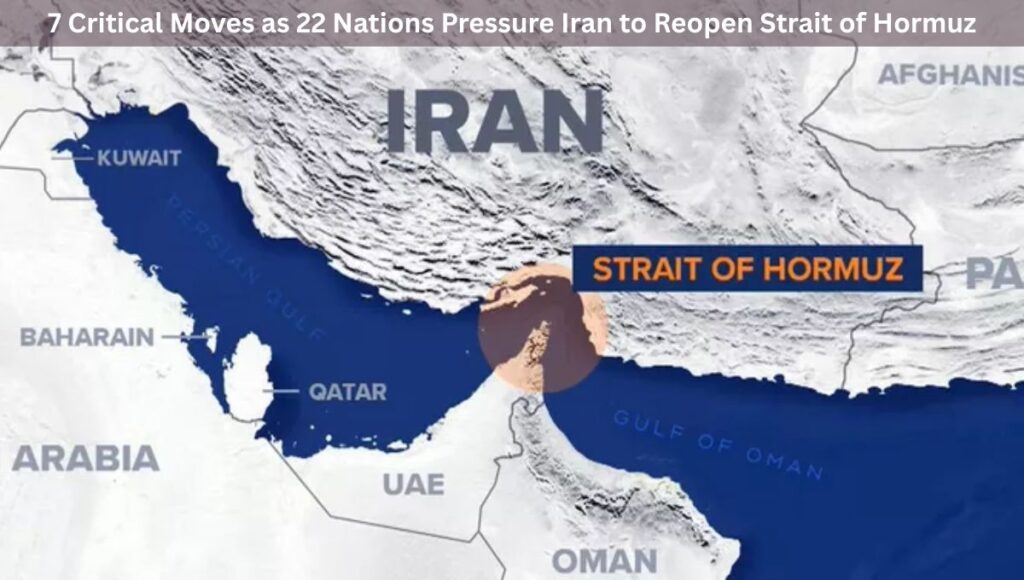
The Strait of Hormuz is widely regarded as the most important oil transit chokepoint in the world.
It connects the Persian Gulf to the Arabian Sea and serves as a gateway for oil exports from major producers like Saudi Arabia, Iraq, the UAE, and Kuwait.
- Roughly one-fifth of global oil supply flows through the strait
- A significant share of LNG exports, especially to Asia, depends on it
- Key economies like Japan, South Korea, India, and China rely heavily on this route
Any disruption here doesn’t just impact oil-producing nations—it reverberates across global supply chains, affecting fuel prices, transportation costs, and even food inflation.
A Strategic and Military Flashpoint
Beyond economics, the Strait is also a critical military zone. Control over this narrow passage gives Iran significant leverage over global trade routes.
Recent developments suggest that Iran has used a mix of:
- Naval presence
- Drone surveillance
- Missile capabilities
- Selective access controls
to assert influence over maritime traffic.
22 Nations Unite: A Rare Show of Global Consensus
In a strongly worded joint statement, 22 countries—including major economies and strategic partners—condemned Iran’s actions and urged immediate de-escalation.
Key Countries Involved
The coalition includes:
- United Kingdom
- France
- Germany
- Japan
- Australia
- United Arab Emirates
- Bahrain
- Canada
- South Korea
This diverse grouping highlights the global stakes involved, cutting across continents and economic blocs.
What the Joint Statement Said
The countries expressed deep concern over:
- Attacks on unarmed commercial vessels
- Strikes on civilian infrastructure, including oil and gas facilities
- The “de facto closure” of the Strait of Hormuz
They emphasized that:
“The effects of Iran’s actions will be felt by people in all parts of the world, especially the most vulnerable.”
The statement also reaffirmed the importance of freedom of navigation, a cornerstone of international maritime law under the United Nations Convention on the Law of the Sea (UNCLOS).
US Military Claims: Iran’s Capabilities ‘Degraded’
According to statements from US Central Command, recent military operations have significantly weakened Iran’s operational capabilities in the region.
What Was Targeted
US forces reportedly struck:
- Underground coastal facilities
- Missile radar systems
- Intelligence and surveillance sites
These assets were believed to support Iran’s ability to:
- Track ship movements
- Launch anti-ship cruise missiles
- Coordinate maritime disruptions
Admiral Brad Cooper stated that these actions have “degraded Iran’s ability to threaten freedom of navigation.”
Reality on the Ground: Strait Still Disrupted
Despite US claims, the Strait remains effectively restricted.
Data indicates:
- Shipping traffic has dropped by up to 95% compared to normal levels
- Only a limited number of vessels are passing through
- Many ships are either rerouting or halting operations entirely
This contradiction highlights the complexity of the situation:
military gains do not necessarily translate into immediate operational stability.
Iran’s Position: Selective Access, Strategic Leverage
Iran has denied fully closing the Strait, instead claiming it is restricting access selectively.
What Iran Says
Iranian officials argue:
- The Strait is open to “friendly” or neutral nations
- Restrictions apply only to countries considered hostile
- Passage can be negotiated on a case-by-case basis
Reports suggest that Iran has established a controlled maritime corridor, allowing certain ships to transit under strict conditions.
A New Model of Maritime Control
This approach effectively transforms the Strait into:
- A political bargaining tool
- A revenue-generating mechanism (through controlled passage)
- A strategic pressure point against adversaries
In some reported cases, ship operators have paid substantial fees to secure safe passage—raising concerns about the commercialization of international waterways.
Global Energy Markets React: Prices Surge
The disruption has already triggered significant volatility in global energy markets.
Key Impacts
- Oil prices have surged past $100 per barrel
- LNG supply chains are under strain
- Energy-importing nations face rising costs
The International Energy Agency has responded by authorizing a coordinated release of strategic petroleum reserves.
Ripple Effects on the Global Economy
The consequences extend beyond energy:
- Increased transportation costs
- Rising inflation worldwide
- Pressure on developing economies
- Disruptions in manufacturing and trade
For countries heavily dependent on imports, the crisis poses a serious economic threat.
G7 Steps In: Ready to Act
The G7 has also weighed in, expressing strong support for maintaining maritime security and global energy stability.
Key Takeaways from G7 Statement
- Condemnation of attacks on civilian and energy infrastructure
- Commitment to safeguarding shipping routes
- Willingness to take “necessary measures” to stabilize supply
The G7 emphasized that disruptions in the Strait of Hormuz represent a threat to international peace and security.
Military Escalation vs Diplomatic Solutions
Rising Military Risks
The situation remains volatile, with:
- Continued drone and missile threats
- Potential naval confrontations
- Increased military presence in the region
The risk of escalation into a broader conflict is significant.
Diplomatic Openings
Despite tensions, there are signs of potential diplomacy:
- Iran has signaled willingness to work with the International Maritime Organization
- Talks with countries like Japan are ongoing
- Some vessels have been granted safe passage
However, these efforts remain fragile and uncertain.
Impact on Developing Nations: The Hidden Crisis
While major powers dominate headlines, the most severe consequences may be felt elsewhere.
Why Vulnerable Countries Are at Risk
- Higher fuel prices strain public finances
- Increased food costs worsen poverty
- Limited reserves reduce resilience
The joint statement explicitly warned that the “most vulnerable” populations would bear the brunt of the crisis.
Shipping Industry Under Pressure
The maritime sector is facing unprecedented challenges:
- Insurance costs have skyrocketed
- Shipping routes are being rerouted
- Delays are impacting global supply chains
Many vessels remain stranded in the Gulf, awaiting clarity and security guarantees.
Historical Context: A Familiar Crisis with New Stakes
The Strait of Hormuz has long been a geopolitical flashpoint, but the current crisis is unique in scale and complexity.
What Makes This Different
- Integration of drone warfare
- Selective maritime restrictions
- Coordinated global response
- Higher dependency on energy imports
This is not just a regional dispute—it is a systemic global risk.
What Happens Next? Possible Scenarios
1. De-escalation and Negotiation
- Iran eases restrictions
- International mediation succeeds
- Shipping resumes gradually
2. Prolonged Standoff
- Continued disruption
- High energy prices persist
- Economic strain increases globally
3. Military Intervention
- Coalition forces secure the Strait
- Risk of wider regional war escalates
Conclusion: A Crisis That Demands Urgent Resolution
The situation in the Strait of Hormuz is a stark reminder of how interconnected the modern world is.
A single chokepoint, when disrupted, can send shockwaves across continents, industries, and economies.
The unified stance of 22 nations underscores the urgency of the moment—but also highlights the complexity of achieving a resolution.
As global powers balance military strategy with diplomatic engagement, one reality remains clear:
The stability of global energy markets—and by extension, the global economy—depends heavily on what happens next in the Strait of Hormuz.
The coming days will be critical in determining whether the world moves toward de-escalation—or deeper into crisis.
Also Read: 9 Explosive Reasons Donald Trump Slams NATO Over Hormuz Crisis
Related Posts:
- 9 Explosive Claims as Trump Says US Winning Iran War

- 7 Powerful Facts About Ayatollah Ali Khamenei’s…

- In 8 Moves, EU Targets China-Linked Refineries and…

- 3 Explosive Conditions Iran Sets to End War with US…

- Strait of Hormuz Standoff: Iran Rejects Oman's…
- 7 Explosive Reasons Oil Prices Are Surging as Trump…